
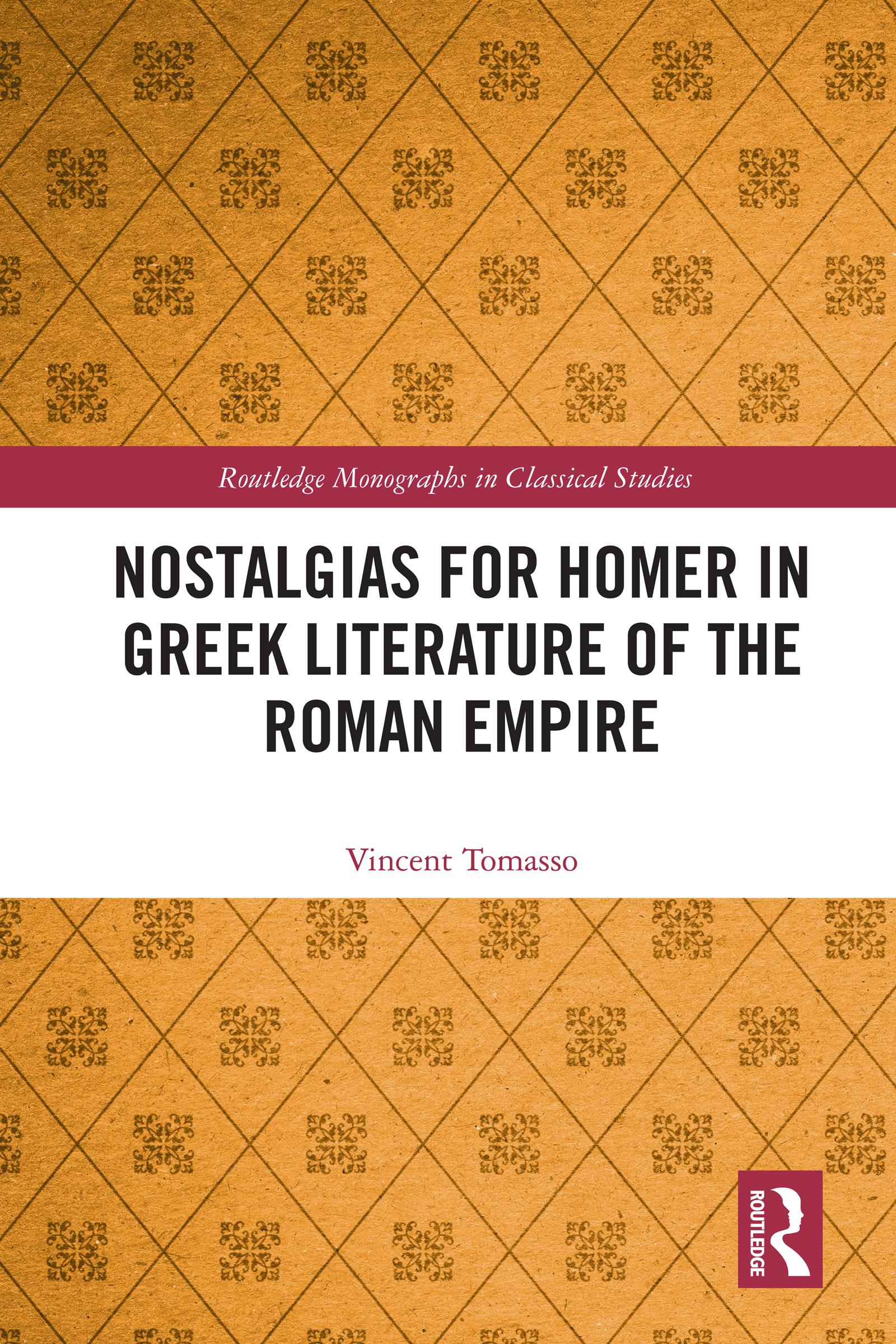
This volume investigates how versions of Trojan War narratives written in Greek in the first through fifth centuries C.E. created nostalgias for audiences.
In ancient education, the Iliad and the Odyssey were used as models through which students learned Greek language and literature. This, combined with the ruling elite’s financial encouragement of re-creations of the Greek literature of the past, created a culture of nostalgia. This book explores the different responses to this climate, particularly in the case of the third-century C.E. poet Quintus of Smyrna’s epic Posthomerica. Positioning itself as a sequel to the Iliad and a prequel to the Odyssey, the Posthomerica is unique in its middle-of-the-road response to nostalgia for Homer’s epics. This book contrasts Quintus’ poem with other responses to nostalgia for Homeric narratives in Greek literature of the Roman Empire. Some authors contradict pivotal events of the Iliad and Odyssey, such as the first-century orator Dio Chrysostom’s Trojan Speech, which claims that the Trojan hero Hector did not in fact die, contrary to the Iliad’s account. Others re-created Homeric narratives but did not contradict them, improvising some elements and adding others. Quintus strikes a compromise in his epic, re-imagining Homeric narrative by introducing new characters and scenarios, while at the same time retaining the Iliad and Odyssey’s aesthetics.
Nostalgias for Homer in Greek Literature of the Roman Empire is of interest to students and scholars working on Homeric reception and the Greek literature of the Roman Empire, as well as those interested in classical literature and reception more broadly.
Płać wygodnie kartą, Klarną, Apple Pay lub Google Pay. Nie jesteś zadowolony? Zawsze masz 14-dniową gwarancję zwrotu pieniędzy. Więcej przeczytasz w naszych warunkach. Masz pytania? Napisz do nas na hello@memmo.org.
Memmo ułatwia naukę – gdziekolwiek jesteś na świecie. U nas znajdziesz podręczniki i sprytne narzędzia do nauki w jednym miejscu: streszczenia, quizy, podcasty i fiszki. A do tego Ted, Twój kumpel do nauki, który odpowie na wszystko, co Cię nurtuje. Ponad 50 000 studentów już tu się uczy – stworzone, byś uczył się szybciej i mniej stresował.