
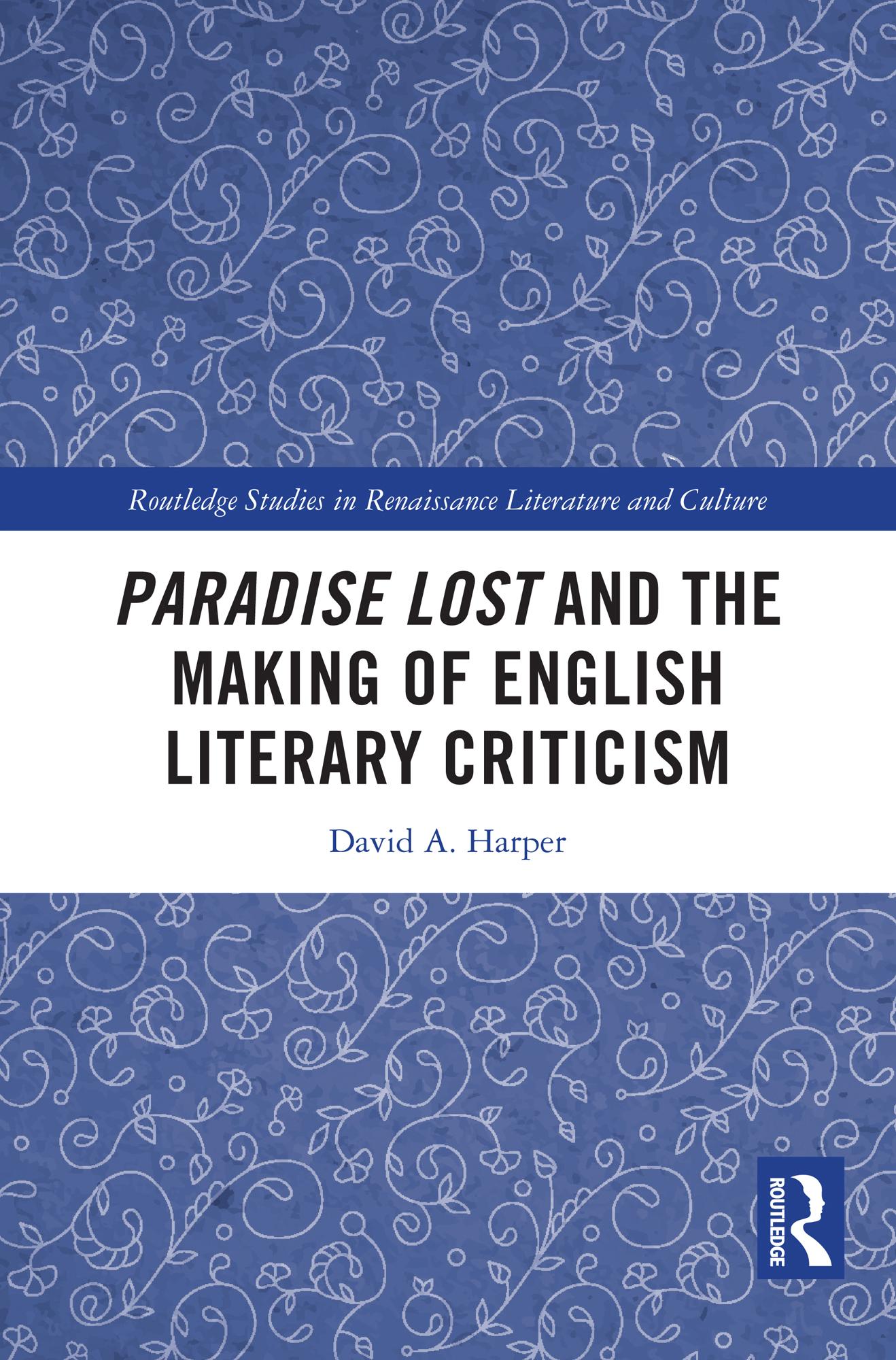
Paradise Lost and the Making of English Literary Criticism identifies the early reception of Paradise Lost as a site of contest over the place of literature in political and religious controversy. Milton’s earliest readers and critics (Dryden, Addison, Dennis, Hume, and Bentley) confronted a poem and author at odds with the prevailing culture and the revanchist conservatism of the restored monarchy. Grappling with the epic required navigating Milton’s reputation as a “fanatick” who had called in print for Charles I’s execution, inveighed openly against monarchy on the eve of Charles II’s return, and held heretical views on the trinity, baptism, and divorce. Harper argues that foundational figures in English literary criticism rose to this challenge by innovating new ways of reading: producing creative (and subversive) rewritings of Paradise Lost, articulating new theories of the sublime, explaining the poem in the first substantial body of annotations for an English vernacular text, and by pioneering early forms of textual criticism and editing.
Płać wygodnie kartą, Klarną, Apple Pay lub Google Pay. Nie jesteś zadowolony? Zawsze masz 14-dniową gwarancję zwrotu pieniędzy. Więcej przeczytasz w naszych warunkach. Masz pytania? Napisz do nas na hello@memmo.org.
Memmo ułatwia naukę – gdziekolwiek jesteś na świecie. U nas znajdziesz podręczniki i sprytne narzędzia do nauki w jednym miejscu: streszczenia, quizy, podcasty i fiszki. A do tego Ted, Twój kumpel do nauki, który odpowie na wszystko, co Cię nurtuje. Ponad 50 000 studentów już tu się uczy – stworzone, byś uczył się szybciej i mniej stresował.