
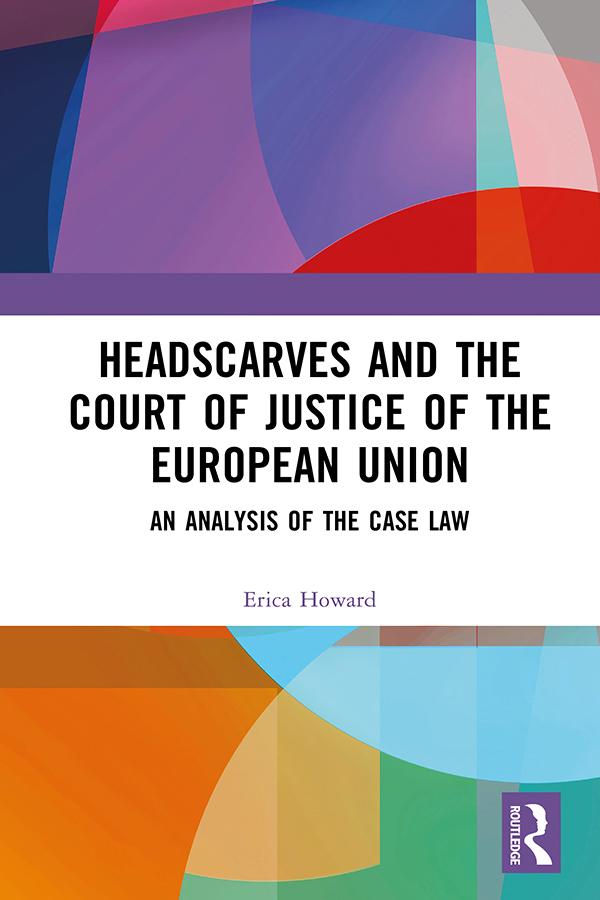
This book contains an in-depth examination of the Islamic headscarf cases of the Court of Justice of the European Union (CJEU) and places these against the background of the Islamophobia existing across Europe. It assesses how EU law can best protect women who want to wear headscarves at work for religious reasons and why this protection is important not only for the women themselves but also for the EU, taking into account its values as laid down in the Treaties, the Charter of Fundamental Rights of the EU and in the anti-discrimination Directives. It puts forward arguments for a finding that workplace neutrality bans constitute direct religion or belief discrimination and examines the way that the justification test for indirect discrimination has been applied by the CJEU. The work suggests that such bans could be more successfully challenged as gender and/or racial or ethnic origin discrimination, because the protection against these forms of discrimination is stronger. It also suggests that a claim for intersectional discrimination – on the grounds of gender, racial and ethnic origin, and religion or belief – should be possible in EU anti-discrimination law. The book will be of interest to academics, researchers and policy-makers working in the areas of equality and non-discrimination law, EU law and law and religion.
Płać wygodnie kartą, Klarną, Apple Pay lub Google Pay. Nie jesteś zadowolony? Zawsze masz 14-dniową gwarancję zwrotu pieniędzy. Więcej przeczytasz w naszych warunkach. Masz pytania? Napisz do nas na hello@memmo.org.
Memmo ułatwia naukę – gdziekolwiek jesteś na świecie. U nas znajdziesz podręczniki i sprytne narzędzia do nauki w jednym miejscu: streszczenia, quizy, podcasty i fiszki. A do tego Ted, Twój kumpel do nauki, który odpowie na wszystko, co Cię nurtuje. Ponad 50 000 studentów już tu się uczy – stworzone, byś uczył się szybciej i mniej stresował.