
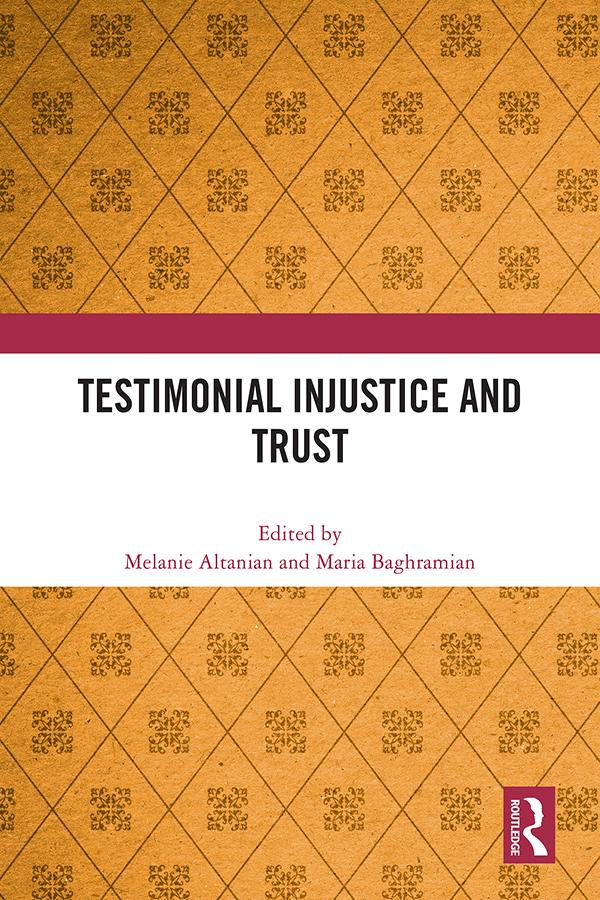
This book presents novel approaches and perspectives to scholarship on epistemic injustice and particularly, testimonial injustice and their connections with public trust.
Drawing from different philosophical schools of thought and approaches, the book provides a comprehensive analysis of the conditions, mechanisms and normative implications of testimonial injustice, a term most prominently introduced by Fricker (2007), and the role that trust can play in fostering testimonial justice. Through the application of theories of epistemic injustice, and testimonial injustice, to new contexts and cases, including gendered violence, disability, indigenous knowledge, genocide, vaccine hesitancy and the COVID-19 pandemic, the book sheds light on the real-world significance of these philosophical concepts.
Testimonial Injustice and Trust introduces new directions for further research and will appeal to scholars and students in (critical) social and political epistemology, normative ethics as well as social and political philosophy more generally. The chapters in this book were originally published in the International Journal of Philosophical Studies, Social Epistemology and Educational Philosophy and Theory.
Płać wygodnie kartą, Klarną, Apple Pay lub Google Pay. Nie jesteś zadowolony? Zawsze masz 14-dniową gwarancję zwrotu pieniędzy. Więcej przeczytasz w naszych warunkach. Masz pytania? Napisz do nas na hello@memmo.org.
Memmo ułatwia naukę – gdziekolwiek jesteś na świecie. U nas znajdziesz podręczniki i sprytne narzędzia do nauki w jednym miejscu: streszczenia, quizy, podcasty i fiszki. A do tego Ted, Twój kumpel do nauki, który odpowie na wszystko, co Cię nurtuje. Ponad 50 000 studentów już tu się uczy – stworzone, byś uczył się szybciej i mniej stresował.