
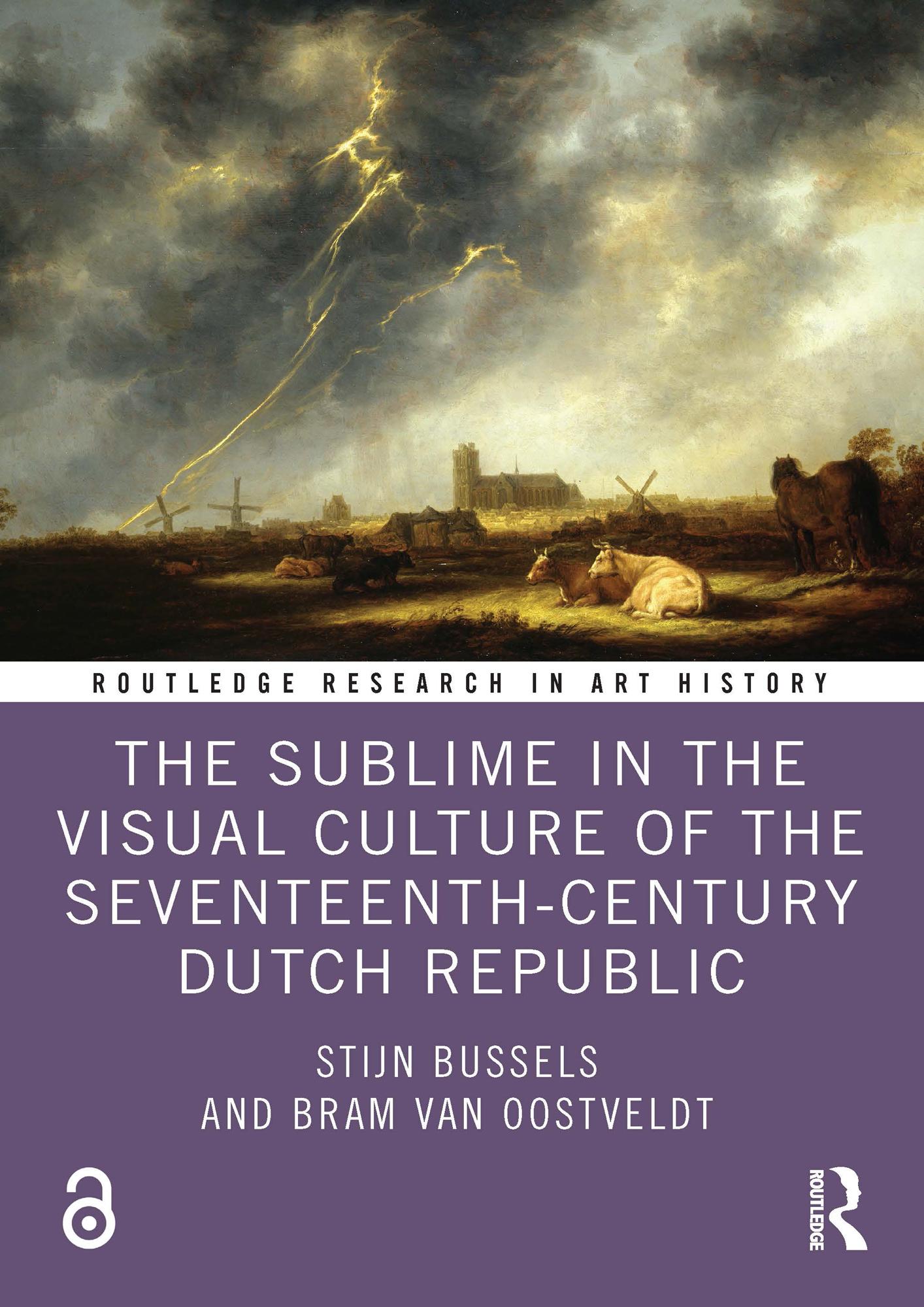
Contrary to what Kant believed about the Dutch (and their visual culture) as “being of an orderly and diligent position” and thus having no feeling for the sublime, this book argues that the sublime played an important role in seventeenth-century Dutch visual culture.
By looking at different visualizations of exceptional heights, divine presence, political grandeur, extreme violence, and extraordinary artifacts, the authors demonstrate how viewers were confronted with the sublime, which evoked in them a combination of contrasting feelings of awe and fear, attraction and repulsion. In studying seventeenth-century Dutch visual culture through the lens of notions of the sublime, we can move beyond the traditional and still widespread views on Dutch art as the ultimate representation of everyday life and the expression of a prosperous society in terms of calmness, neatness, and order.
The book will be of interest to scholars working in art history, visual culture, architectural history, and cultural history.
The Open Access version of this book, available at www.taylorfrancis.com, has been made available under a Creative Commons Attribution-Non Commercial-No Derivatives (CC-BY-NC-ND 4.0) 4.0 International license. Funded by Ghent University.
Płać wygodnie kartą, Klarną, Apple Pay lub Google Pay. Nie jesteś zadowolony? Zawsze masz 14-dniową gwarancję zwrotu pieniędzy. Więcej przeczytasz w naszych warunkach. Masz pytania? Napisz do nas na hello@memmo.org.
Memmo ułatwia naukę – gdziekolwiek jesteś na świecie. U nas znajdziesz podręczniki i sprytne narzędzia do nauki w jednym miejscu: streszczenia, quizy, podcasty i fiszki. A do tego Ted, Twój kumpel do nauki, który odpowie na wszystko, co Cię nurtuje. Ponad 50 000 studentów już tu się uczy – stworzone, byś uczył się szybciej i mniej stresował.