
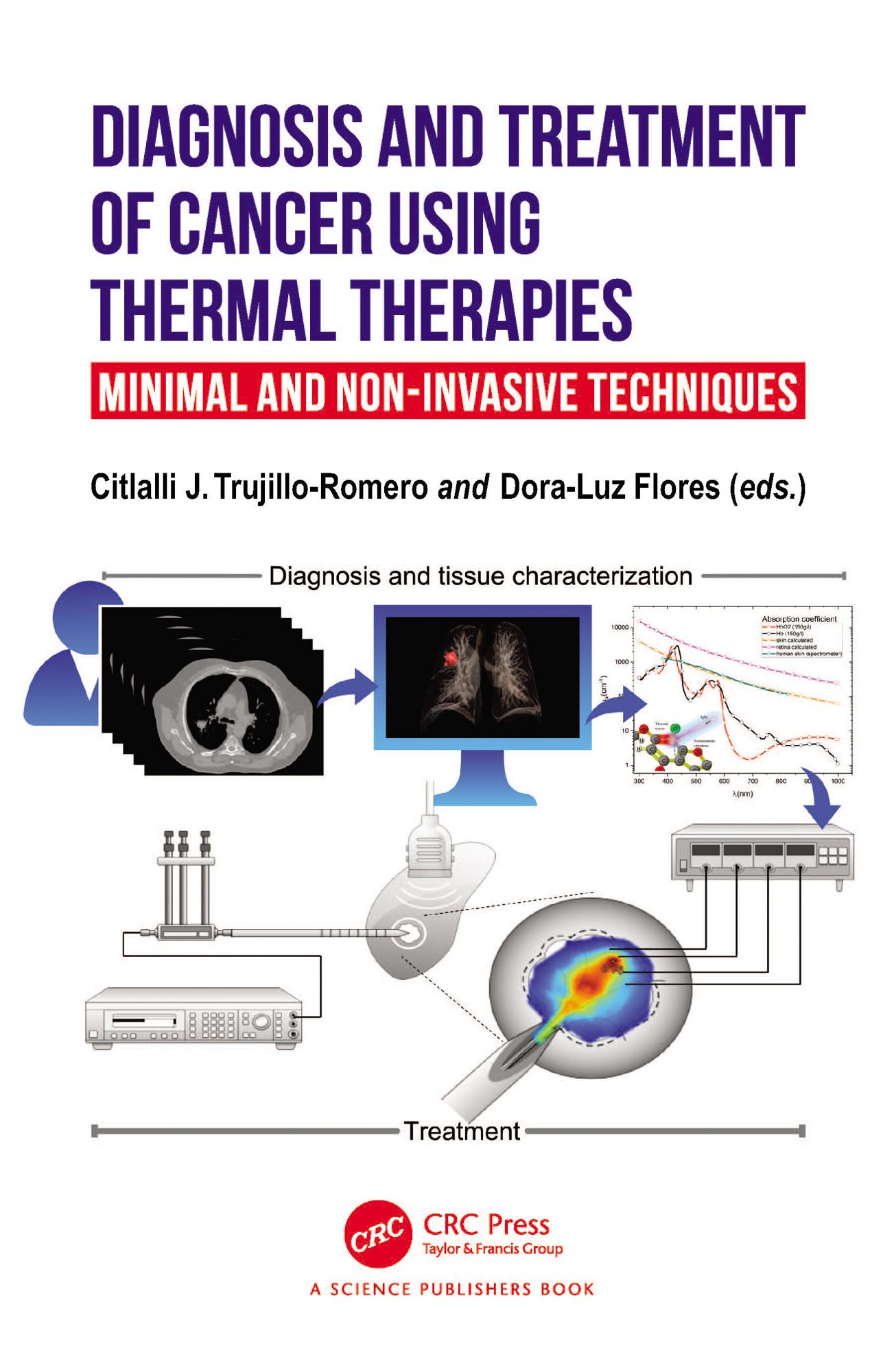
New research is being conducted in the diagnosis and new treatments of cancer that has high efficacy and are minimally invasiveness. Artificial intelligence, bioimpedance, thermal images and nanomaterials have been used to provide early diagnosis. New treatments based on the generation of microwaves, radiofrequency, or ultrasound have been proposed in the last couple of decades. Although thermotherapies have been shown to be efficient, for them to be considered as a primary treatment, they must overcome some hurdles. One of the main challenges is to ensure applicators that point the electromagnetic or the mechanical waves at a tumor, don't affect the surrounding healthy tissues. In some cases, nanoparticles have also been designed to achieve better focus. The design of new applicators can be made by computational models based on methods such as the finite element. However, to efficiently predict the applicator’s performance, it is important that dielectric, thermal, and acoustic properties (tissue characterization) are included in the models. Not only healthy tissue, but also tumors must be characterized. Patient specific treatment planning, which consists of a 3D patient model based on medical images, can be developed to implement a safety treatment. Moreover, tissue properties as well as the applicator must be defined. Parameters such as temperature increase, and heat pattern must be evaluated to ensure patient safety and treatment success.
Płać wygodnie kartą, Klarną, Apple Pay lub Google Pay. Nie jesteś zadowolony? Zawsze masz 14-dniową gwarancję zwrotu pieniędzy. Więcej przeczytasz w naszych warunkach. Masz pytania? Napisz do nas na hello@memmo.org.
Memmo ułatwia naukę – gdziekolwiek jesteś na świecie. U nas znajdziesz podręczniki i sprytne narzędzia do nauki w jednym miejscu: streszczenia, quizy, podcasty i fiszki. A do tego Ted, Twój kumpel do nauki, który odpowie na wszystko, co Cię nurtuje. Ponad 50 000 studentów już tu się uczy – stworzone, byś uczył się szybciej i mniej stresował.