
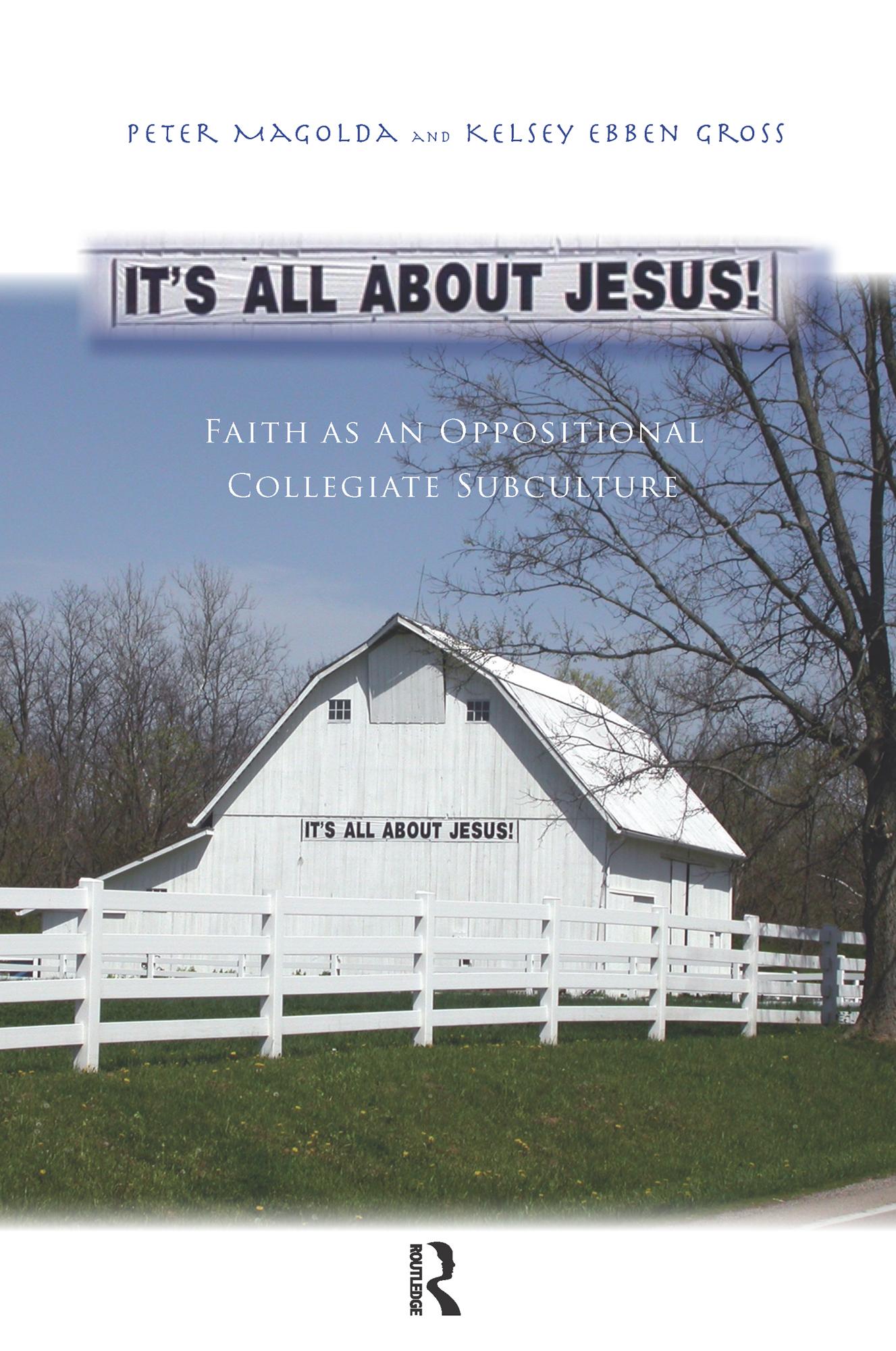
What is it like to be a collegian involved in a Christian organization on a public college campus? What roles do Christian organizations play in the lives of college students enrolled in a public college? What are evangelical student organizations’ political agendas, and how do they mobilize members to advance these agendas? What is the optimal equilibrium between the secular and the sacred within public higher education? What constitutes safe space for evangelical students, and who should provide this space? This book presents a two-year ethnographic study of a collegiate evangelical student organization at a public university, authored by two “non-evangelicals.” The authors provide a glimpse into the lives of college students who join evangelical student organizations and who subscribe to an evangelical way of life during their college years. They offer empirically derived insights as to how students’ participation in a homogeneous evangelical student organization enhances their satisfaction of their collegiate experience and helps them develop important life lessons and skills. Ironically, while Christian students represent the religious majority on the campus under study, Christian organizations on this campus mobilize members by capitalizing on members’ shared sense of marginalization, and position themselves as cultural outsiders. This evangelical student organization serves as a safe space for students to express their faith within the larger secular university setting.The narratives and interpretations aim not only to enrich understanding of a particular student organization but more importantly to spark intellectual discourse about the value of faith-based organizations within public higher education. The role of religion in public higher education, student involvement in the co-curriculum, and peer education are three examples of critical issues in higher education for which this idiosyncratic case study offers broad understanding. It’s All About Jesus! targets multiple audiences – both sacred and secular. For readers unfamiliar with evangelical collegiate organizations and the students they serve, the authors hope the narratives make the unfamiliar familiar and the dubious obvious. For evangelicals, the authors hope that the thickly described narratives not only make the familiar, familiar and the obvious, obvious, but also uncover the tacit meaning embedded in these familiar, but seldom examined subculture rituals.The authors hope this book spurs discussion on topics such as campus power and politics, how organizations interact with the secular world around them, and how members can improve their organizations. Additionally, this text urges secular readers in student affairs to consider the many benefits, as well as liabilities, of “parachurches” as co-curricular learning sites on campus.Lastly, given that the authors lay bare their methodology, their use of theory, and the tensions between their perspectives and those of the participants, this book will serve as a compelling case study for courses on qualitative research within religion studies, anthropology, sociology, and cultural studies fields.
Płać wygodnie kartą, Klarną, Apple Pay lub Google Pay. Nie jesteś zadowolony? Zawsze masz 14-dniową gwarancję zwrotu pieniędzy. Więcej przeczytasz w naszych warunkach. Masz pytania? Napisz do nas na hello@memmo.org.
Memmo ułatwia naukę – gdziekolwiek jesteś na świecie. U nas znajdziesz podręczniki i sprytne narzędzia do nauki w jednym miejscu: streszczenia, quizy, podcasty i fiszki. A do tego Ted, Twój kumpel do nauki, który odpowie na wszystko, co Cię nurtuje. Ponad 50 000 studentów już tu się uczy – stworzone, byś uczył się szybciej i mniej stresował.