
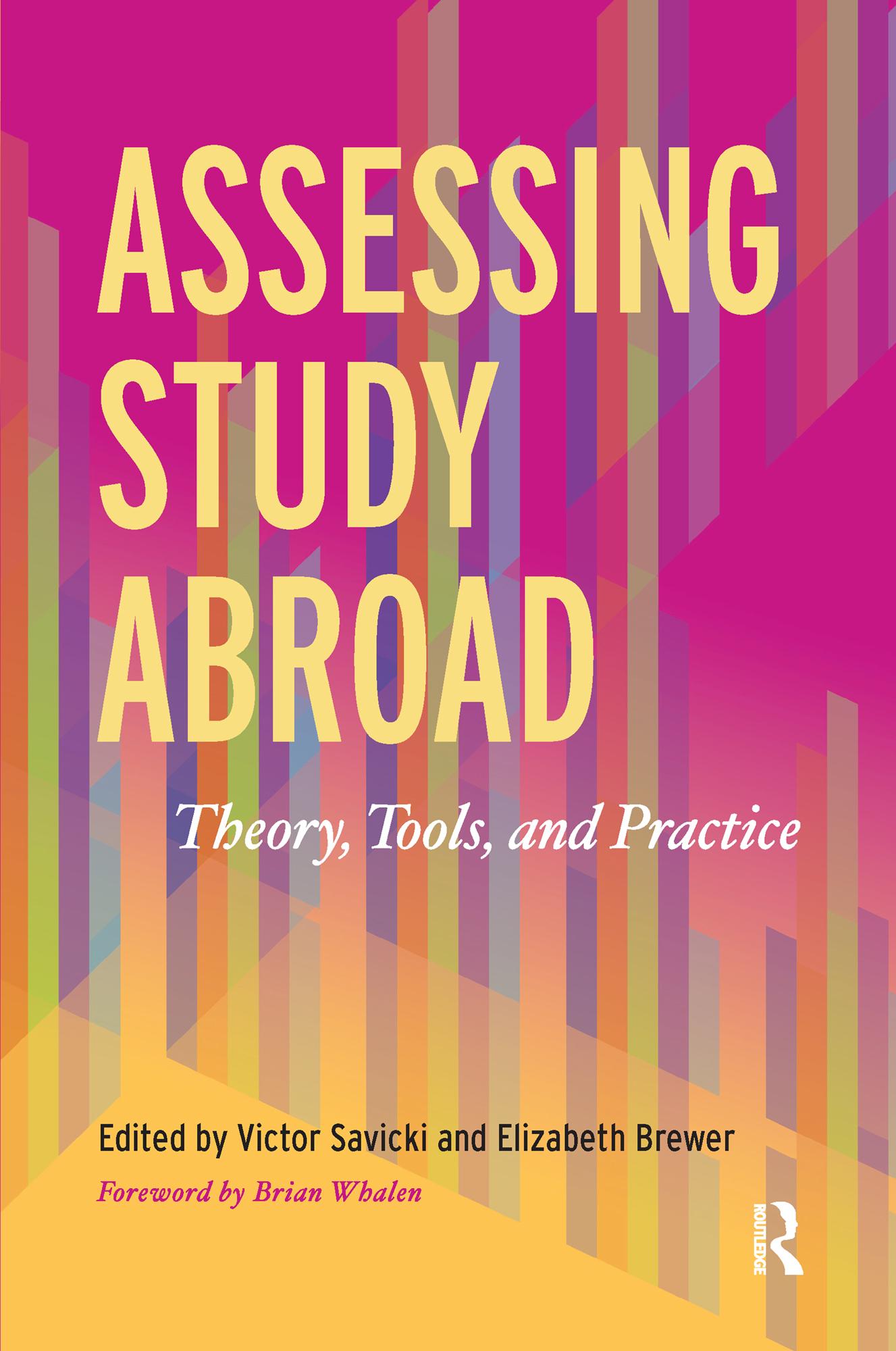
This book is intended to guide advisors, administrators, and faculty members engaged with study abroad who are concerned with answering the question: what does study abroad achieve? It will also inform the work of study abroad organizations as well as institutions receiving study abroad students. Offering a broad-based approach to assessment, the book will appeal to those starting out. However, an array of case studies, illustrating the often untidy process of implementation, will equally appeal to those further along by offering creative – and often simple – approaches to common problems. Following an account of how, and why, assessment in the field has evolved, the first part of the book sets the stage for the reader to consider the role of mission and context in determining purpose, goals and outcomes; to identify and consult with stakeholders; determine what data and expertise may already be available on campus; match methods and tools to questions; and create realistic plans to communicate findings, and to act upon them. The second part of the book offers an overview of appropriate tools and strategies for assessing study abroad, emphasizing the importance of carefully formulating and prioritizing assessment questions and understanding the advantages and drawbacks of different instruments. It describes an array of qualitative, quantitative, and mixed methods, illustrating their application with examples of practice, and concludes by outlining the process of putting a plan into action.The book concludes with ten case studies that illustrate various approaches to planning, experimentation, and implementation, some revealing false starts and lessons learned, and all conveying the message that assessment is an iterative, on-going process that needs constant refinement. The cases represent a wide variety of institutional and organizational types and demonstrate how each selected methods suited to their capacities and cultures.
Płać wygodnie kartą, Klarną, Apple Pay lub Google Pay. Nie jesteś zadowolony? Zawsze masz 14-dniową gwarancję zwrotu pieniędzy. Więcej przeczytasz w naszych warunkach. Masz pytania? Napisz do nas na hello@memmo.org.
Memmo ułatwia naukę – gdziekolwiek jesteś na świecie. U nas znajdziesz podręczniki i sprytne narzędzia do nauki w jednym miejscu: streszczenia, quizy, podcasty i fiszki. A do tego Ted, Twój kumpel do nauki, który odpowie na wszystko, co Cię nurtuje. Ponad 50 000 studentów już tu się uczy – stworzone, byś uczył się szybciej i mniej stresował.