
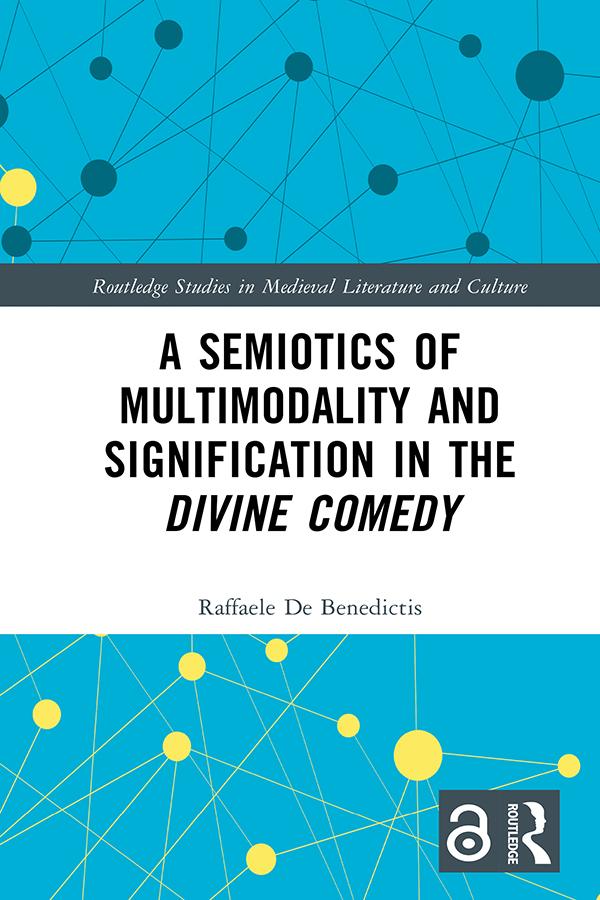
A new critical method for the Divine Comedy which focuses not only on language-as-writing but also and equally on other discursive modes that the Divine Comedy authorizes. Multimodality was already present in Dante’s time, and the reception of the Divine Comedy took place multimodally. Thus, a theoretical study of multimodality carried out under the semiotic lens sheds light on how and why a mode is more effective than another and/or how they may combine in producing signification and new ontologies warranted by Dante’s text. Also, we do not yet have a critical theory that allows us to understand the function of multimodality for the creation of new forms of signification and of clarifying the ontological boundaries set forth by different modalities. It is a new and original study which contributes to the advancement of Dante Studies, Literary Criticism (with a focus on literary semiotics), Multimedia/Multiliteracy, philosophy of language, communication, and education.
Chapters 1, 2, and 5 of this book are freely available as a downloadable Open Access PDF at http://www.taylorfrancis.com under a Creative Commons Attribution-Non Commercial-No Derivatives (CC-BY-NC-ND) 4.0 license. .
Płać wygodnie kartą, Klarną, Apple Pay lub Google Pay. Nie jesteś zadowolony? Zawsze masz 14-dniową gwarancję zwrotu pieniędzy. Więcej przeczytasz w naszych warunkach. Masz pytania? Napisz do nas na hello@memmo.org.
Memmo ułatwia naukę – gdziekolwiek jesteś na świecie. U nas znajdziesz podręczniki i sprytne narzędzia do nauki w jednym miejscu: streszczenia, quizy, podcasty i fiszki. A do tego Ted, Twój kumpel do nauki, który odpowie na wszystko, co Cię nurtuje. Ponad 50 000 studentów już tu się uczy – stworzone, byś uczył się szybciej i mniej stresował.