
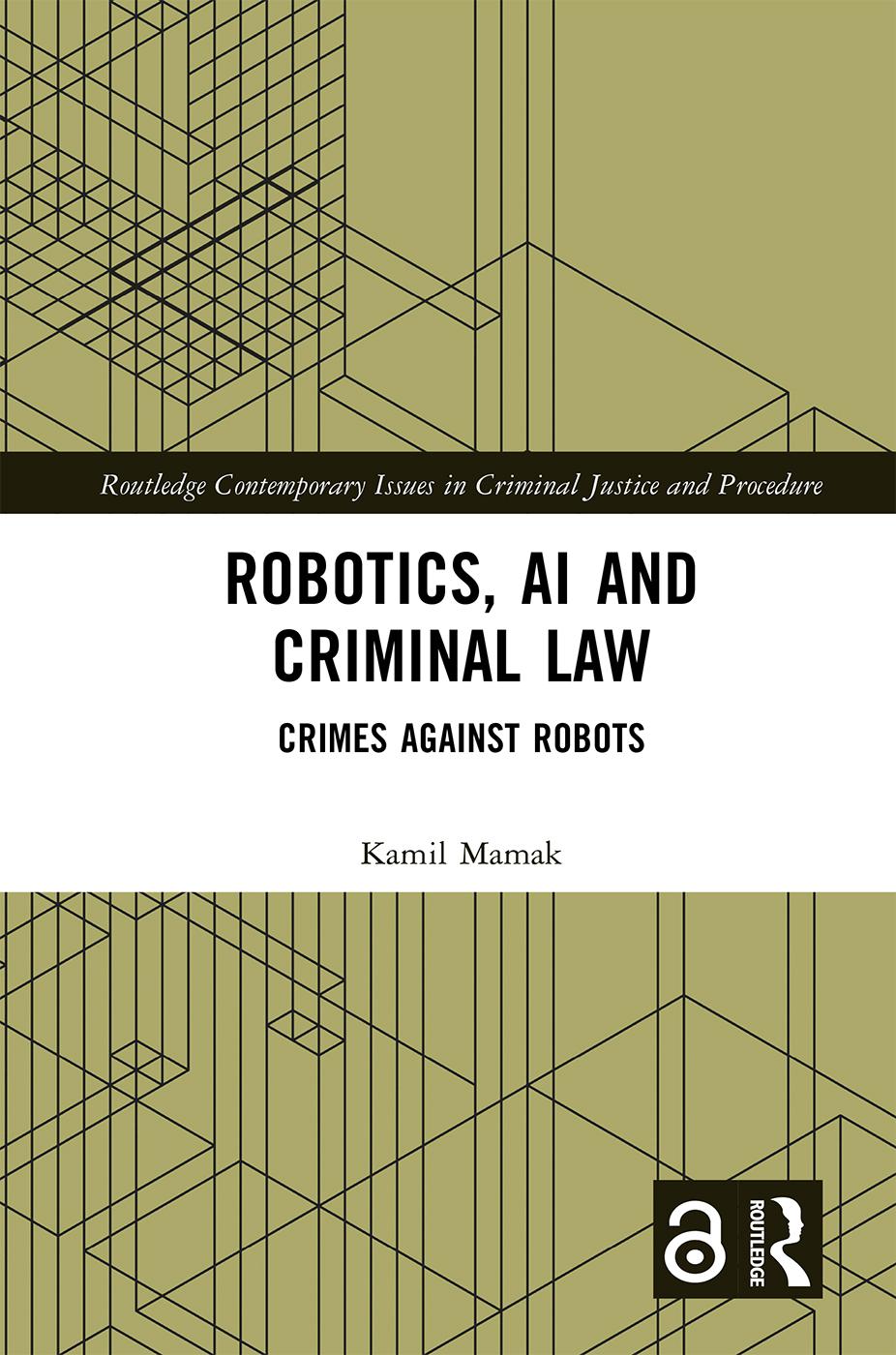
This book offers a phenomenological perspective on the criminal law debate on robots. Today, robots are protected in some form by criminal law. A robot is a person’s property and is protected as property. This book presents the different rationale for protecting robots beyond the property justification based on the phenomenology of human-robot interactions. By focusing on robots that have bodies and act in the physical world in social contexts, the work provides an assessment of the issues that emerge from human interaction with robots, going beyond perspectives focused solely on artificial intelligence (AI). Here, a phenomenological approach does not replace ontological concerns, but complements them. The book addresses the following key areas: Regulation of robots and AI; Ethics of AI and robotics; and philosophy of criminal law.
It will be of interest to researchers and academics working in the areas of Criminal Law, Technology and Law and Legal Philosophy.
Płać wygodnie kartą, Klarną, Apple Pay lub Google Pay. Nie jesteś zadowolony? Zawsze masz 14-dniową gwarancję zwrotu pieniędzy. Więcej przeczytasz w naszych warunkach. Masz pytania? Napisz do nas na hello@memmo.org.
Memmo ułatwia naukę – gdziekolwiek jesteś na świecie. U nas znajdziesz podręczniki i sprytne narzędzia do nauki w jednym miejscu: streszczenia, quizy, podcasty i fiszki. A do tego Ted, Twój kumpel do nauki, który odpowie na wszystko, co Cię nurtuje. Ponad 50 000 studentów już tu się uczy – stworzone, byś uczył się szybciej i mniej stresował.