
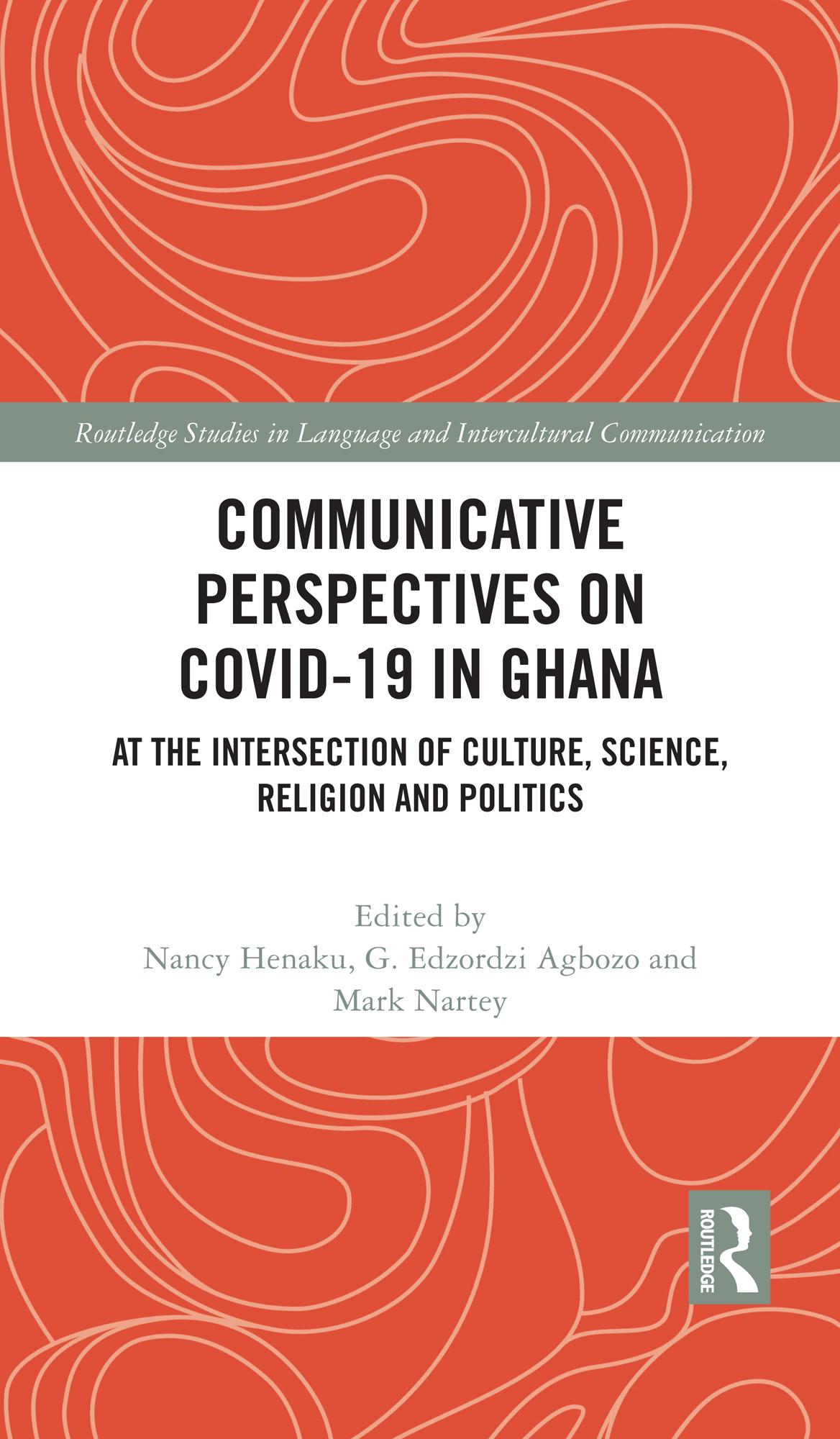
This collection explores the communicative dimensions of the COVID-19 pandemic in Ghana, redressing the absence of perspectives from Africa and the Global South in pandemic discourses and highlighting the importance of considering the impact of local contexts in global crises.
The volume critically reflects on the significance of communicative dimensions, understood here as the effects of communication on bidirectional flows between senders and receivers, on many different aspects of the coronavirus pandemic. Grounded in transnational and interdisciplinary perspectives and drawing on data from the Ghanian experience, the book showcases how important it is for local factors to be taken into account by governments, medical professionals, social commentators, and everyday people in communicating during a pandemic, when local cultures, histories, and infrastructures all play a role in shaping communication and the dissemination of knowledge. Chapter examines such topics as the role of metaphor, the use of social media in disinformation, and the range of strategies and channels employed by stakeholders. This volume centers the pandemic experience in a Global South context, demonstrating the importance of a greater focus on local contexts in understanding communication in a time of pandemic.
This book will be of interest to students and scholars in intercultural communication, crisis communication, health communication, discourse analysis, and African studies.
Płać wygodnie kartą, Klarną, Apple Pay lub Google Pay. Nie jesteś zadowolony? Zawsze masz 14-dniową gwarancję zwrotu pieniędzy. Więcej przeczytasz w naszych warunkach. Masz pytania? Napisz do nas na hello@memmo.org.
Memmo ułatwia naukę – gdziekolwiek jesteś na świecie. U nas znajdziesz podręczniki i sprytne narzędzia do nauki w jednym miejscu: streszczenia, quizy, podcasty i fiszki. A do tego Ted, Twój kumpel do nauki, który odpowie na wszystko, co Cię nurtuje. Ponad 50 000 studentów już tu się uczy – stworzone, byś uczył się szybciej i mniej stresował.