
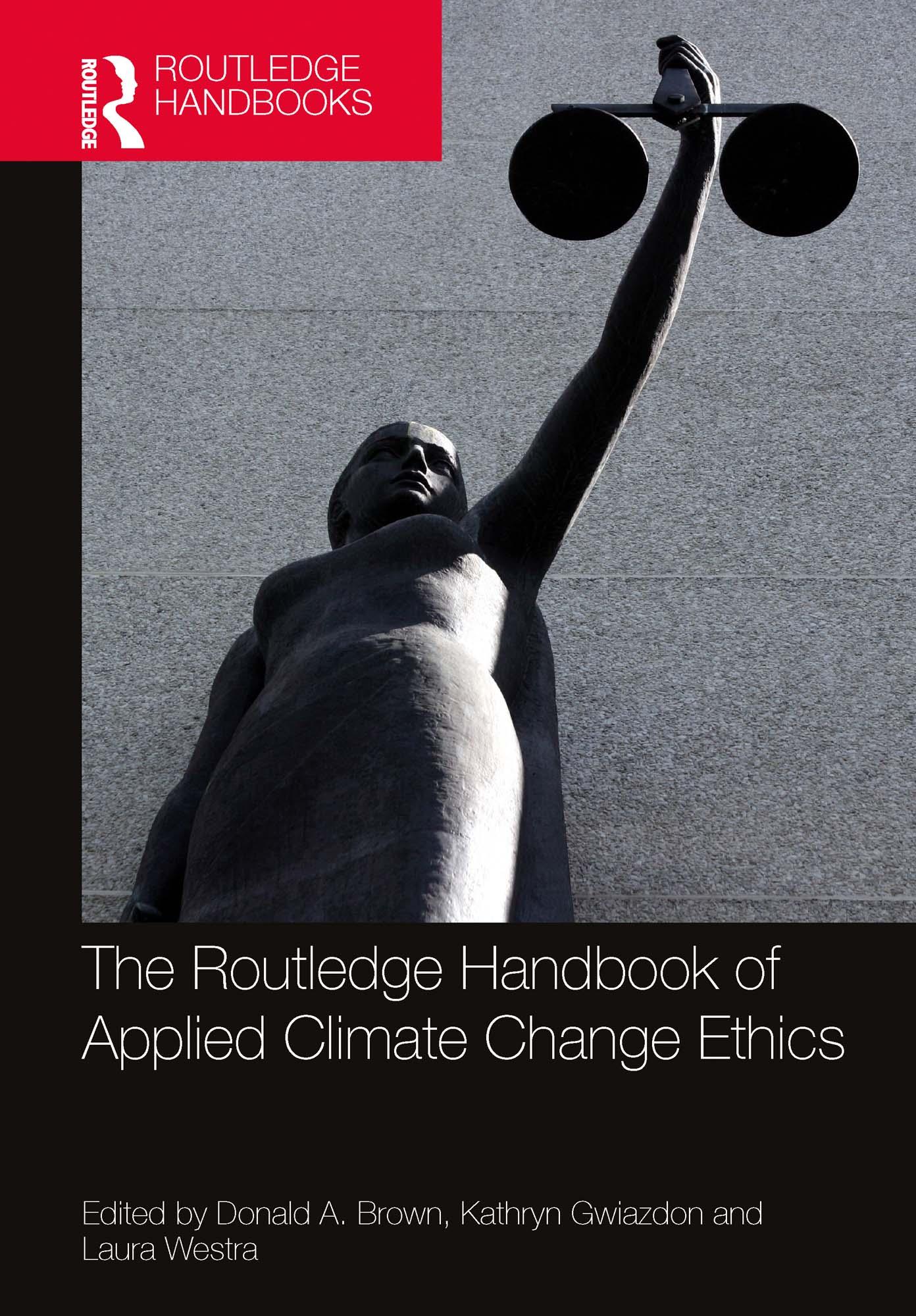
The Routledge Handbook of Applied Climate Change Ethics is a powerful reference source for the identification and exploration of the underlying ethical issues in climate change law and policy. Bridging theory with practice, it takes ethical engagement out of the classroom and into the halls of governance.
The Handbook‘s 39 chapters--written by a diverse and inter-disciplinary team of experts from around the world--are case studies divided into five parts. Parts I-IV highlight the ethical issues that arise in climate change policy formation, from duties not to harm to duties to consider the views and voices of those who will be, or are being, harmed; from the role of human rights, justice, and democracy to how to identify and respond to disinformation and denialism. It also raises the ethics of various policy responses, such as cap-and-trade, carbon taxing, and geo-engineering. Part V offers a way forward, with strategies on how to expressly consider ethics in climate change policy formation, from negotiations to education, media, communication, and the power and potential of shaming.
The volume is essential reading for students, professors, and practitioners who wish to better engage with government and non-government organizations on climate policy, to better understand the practical application of the theory and philosophy of ethics, and how to more strongly draft and defend ethical action in negotiating, drafting, and defending climate change law and policy.
Płać wygodnie kartą, Klarną, Apple Pay lub Google Pay. Nie jesteś zadowolony? Zawsze masz 14-dniową gwarancję zwrotu pieniędzy. Więcej przeczytasz w naszych warunkach. Masz pytania? Napisz do nas na hello@memmo.org.
Memmo ułatwia naukę – gdziekolwiek jesteś na świecie. U nas znajdziesz podręczniki i sprytne narzędzia do nauki w jednym miejscu: streszczenia, quizy, podcasty i fiszki. A do tego Ted, Twój kumpel do nauki, który odpowie na wszystko, co Cię nurtuje. Ponad 50 000 studentów już tu się uczy – stworzone, byś uczył się szybciej i mniej stresował.