
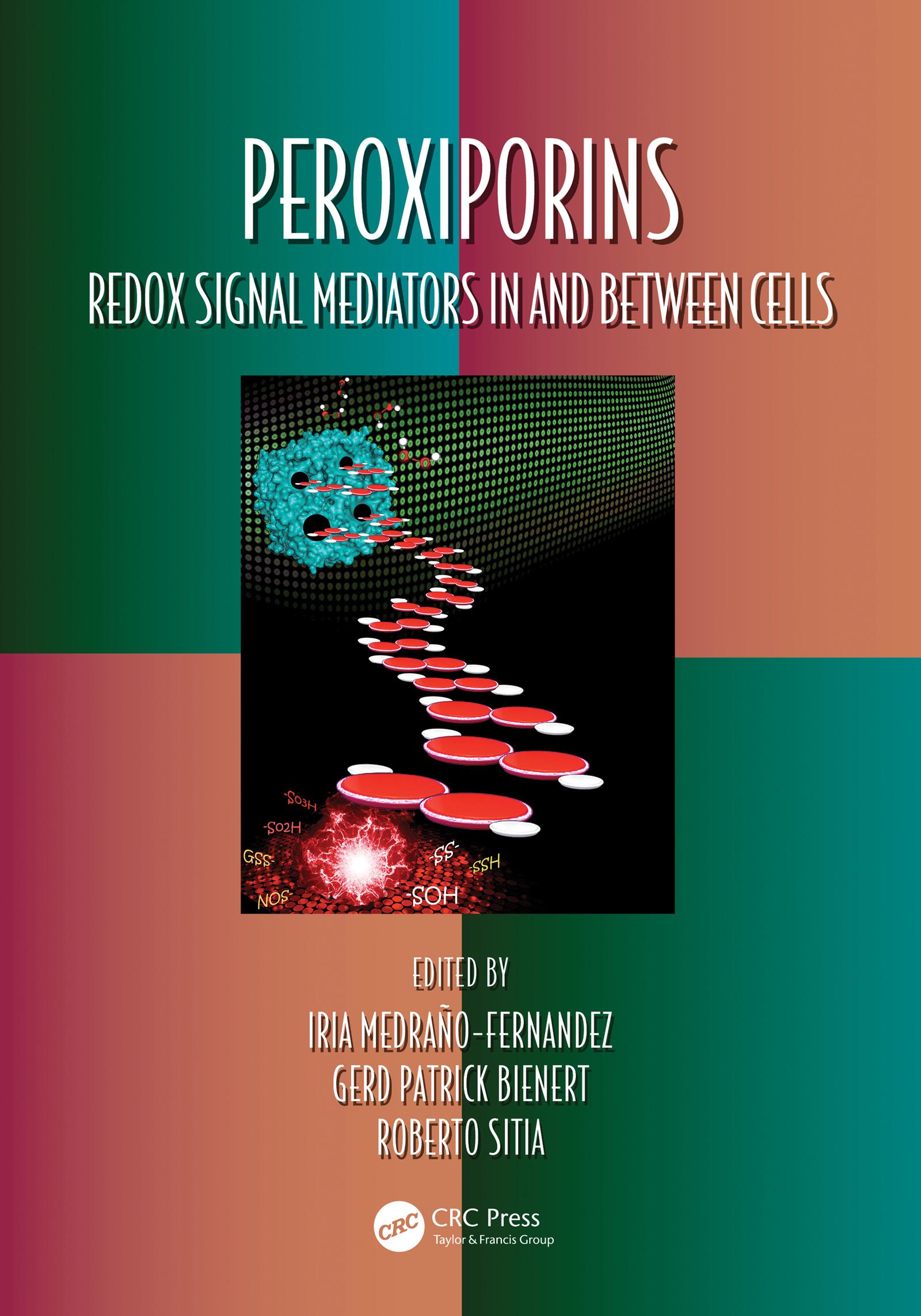
To produce energy, aerobic organisms transform oxygen molecules into water. This reductive mechanism yields toxic radical intermediates, collectively known as reactive oxygen species (ROS). Paradoxically, these physiological processes entail the production of potentially damaging species. Evolution has turned this apparent disadvantage into an opportunity for transmitting information. As a result, redox signaling within the cell is an efficient exquisitely organized process. A key element for its regulation is the physical separation of sources and targets into different cell compartments. Peroxiporins, H2O2 transporting proteins spanning biological membranes, distribute the signal from emitters to receptors. Thus, these channels are strategically situated in the thin line between life and death, guaranteeing adequate but safe signaling.
Key Features:
- Provides a brief history of the discovery and characterization of peroxiporins
- Reviews key findings on hydrogen peroxide transport across biological membranes
- Discusses the cartography of redox signaling in crowded cells
- Includes lavish illustrations and comprehensive images to facilitate teaching
- Highlights recent findings, outstanding controversies and open questions
Płać wygodnie kartą, Klarną, Apple Pay lub Google Pay. Nie jesteś zadowolony? Zawsze masz 14-dniową gwarancję zwrotu pieniędzy. Więcej przeczytasz w naszych warunkach. Masz pytania? Napisz do nas na hello@memmo.org.
Memmo ułatwia naukę – gdziekolwiek jesteś na świecie. U nas znajdziesz podręczniki i sprytne narzędzia do nauki w jednym miejscu: streszczenia, quizy, podcasty i fiszki. A do tego Ted, Twój kumpel do nauki, który odpowie na wszystko, co Cię nurtuje. Ponad 50 000 studentów już tu się uczy – stworzone, byś uczył się szybciej i mniej stresował.