
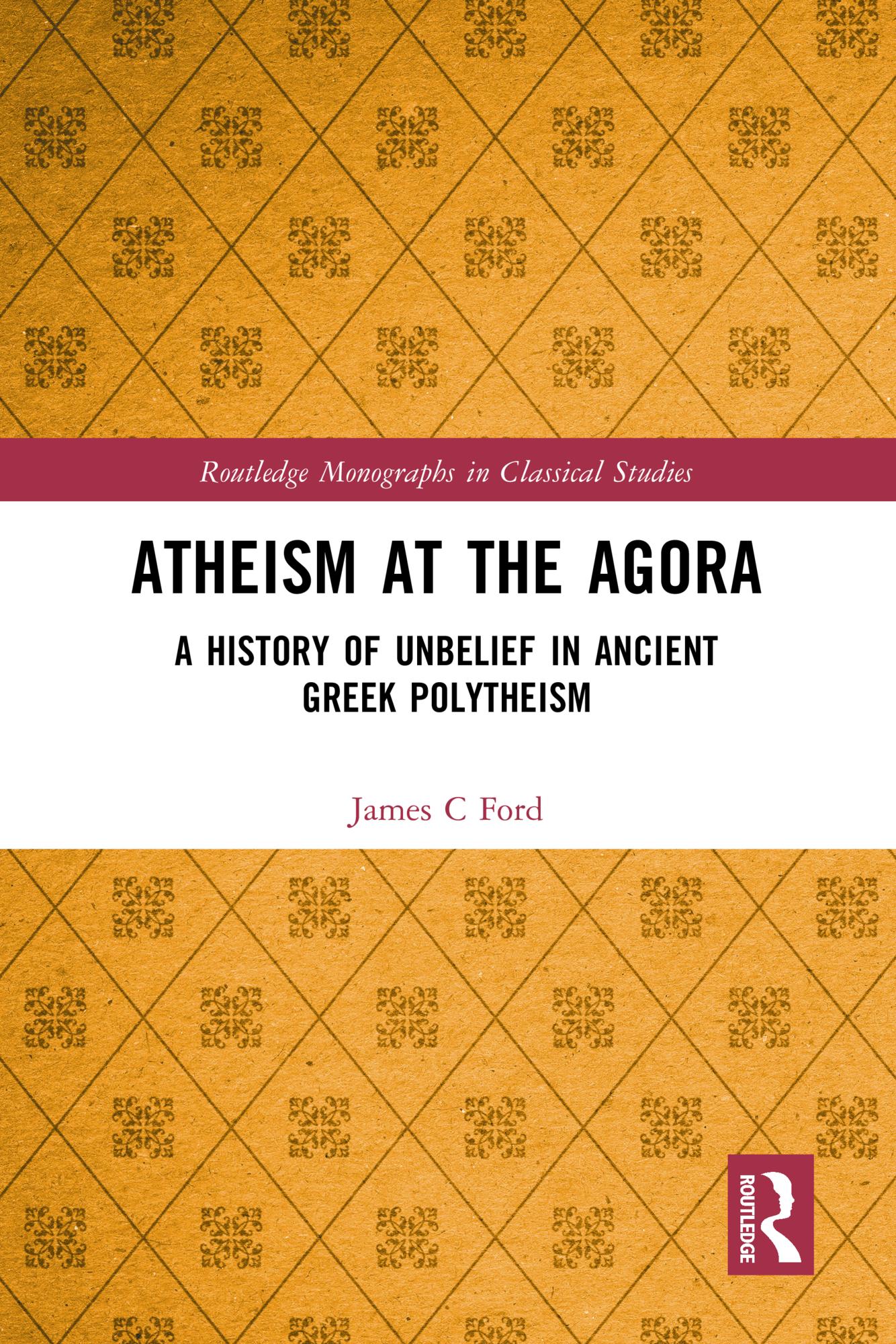
This fresh, comprehensive study of ancient Greek atheism aims to dismantle the current consensus that atheism was ‘unthinkable’ in ancient Greece, demonstrating instead that atheism was not only thinkable but inextricably embedded in the Greek religious environment.
Through careful analysis of a wide range of source material provided in modern English translation, and drawing on philosophy, theology, sociology, and other disciplines, Ford unpicks a two and a half thousand-year history of marginalisation, clearing the way for a new analysis. He lays out in clear terms the nature and form of ancient Greek atheism as the ancient Greeks conceived of it, through a series of themes and lenses. Topics such as religious socialisation, the interaction of atheist philosophy and theology, identity formation through alterity, and the use of atheism in scapegoating are considered not only in broad terms, using a synthesis of modern scholarship to mark out an overview in line with modern consensus, but also by drawing on the unique perspective of ancient atheism Ford is able to provide innovative theories about a range of subjects.
Atheism at the Agora is of interest to students and scholars in Classics, particularly Greek religion and culture, as well as those studying atheism in other historical and contemporary areas, religious studies, philosophy, and theology.
Płać wygodnie kartą, Klarną, Apple Pay lub Google Pay. Nie jesteś zadowolony? Zawsze masz 14-dniową gwarancję zwrotu pieniędzy. Więcej przeczytasz w naszych warunkach. Masz pytania? Napisz do nas na hello@memmo.org.
Memmo ułatwia naukę – gdziekolwiek jesteś na świecie. U nas znajdziesz podręczniki i sprytne narzędzia do nauki w jednym miejscu: streszczenia, quizy, podcasty i fiszki. A do tego Ted, Twój kumpel do nauki, który odpowie na wszystko, co Cię nurtuje. Ponad 50 000 studentów już tu się uczy – stworzone, byś uczył się szybciej i mniej stresował.