
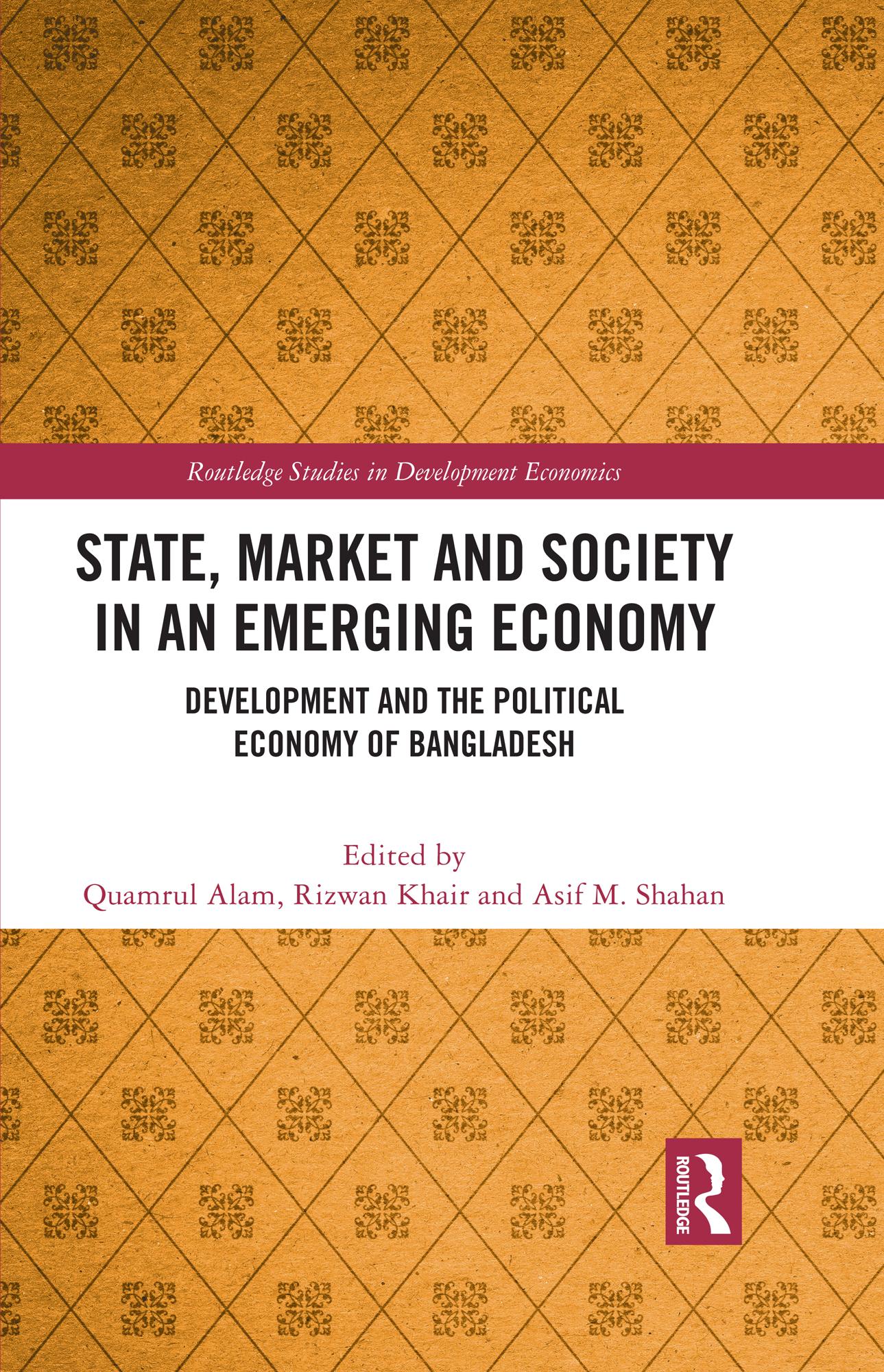
The economic and social development that Bangladesh has achieved in the past two decades has made Bangladesh a development paradox. This book tries to explain this paradox through a political economy lens. The book explains the linkages between the state, changing society and emerging private sector, and examines whether the social transformation taking place in Bangladesh has the potential to live up to the expectations of a middle- income country.
The early part of the book unravels the myriad relations between the state, society and market to project the aspirations of a newly independent nation. It analyzes how political turmoil, militarization of politics, politicization of institutions, reforms initiatives, industrial and social development policies, and the power nexus influenced the nature of the political economy of Bangladesh. The book goes on to examine how domestic appetite for capital and raw materials, the digital revolution, and the capacity of the local market to absorb expanded economic activities have created an environment that catalyzes innovation and entrepreneurship. The book also explains how the country has attempted to transform from an agrarian to a manufacturing- based economy, with rapid growth in the ready- made garment industry, pisciculture, pharmaceuticals and the ICT sector.
Bangladesh’s journey from an emerging economy towards a developed country would interest those researching on development economics and those in policy making.
Płać wygodnie kartą, Klarną, Apple Pay lub Google Pay. Nie jesteś zadowolony? Zawsze masz 14-dniową gwarancję zwrotu pieniędzy. Więcej przeczytasz w naszych warunkach. Masz pytania? Napisz do nas na hello@memmo.org.
Memmo ułatwia naukę – gdziekolwiek jesteś na świecie. U nas znajdziesz podręczniki i sprytne narzędzia do nauki w jednym miejscu: streszczenia, quizy, podcasty i fiszki. A do tego Ted, Twój kumpel do nauki, który odpowie na wszystko, co Cię nurtuje. Ponad 50 000 studentów już tu się uczy – stworzone, byś uczył się szybciej i mniej stresował.