
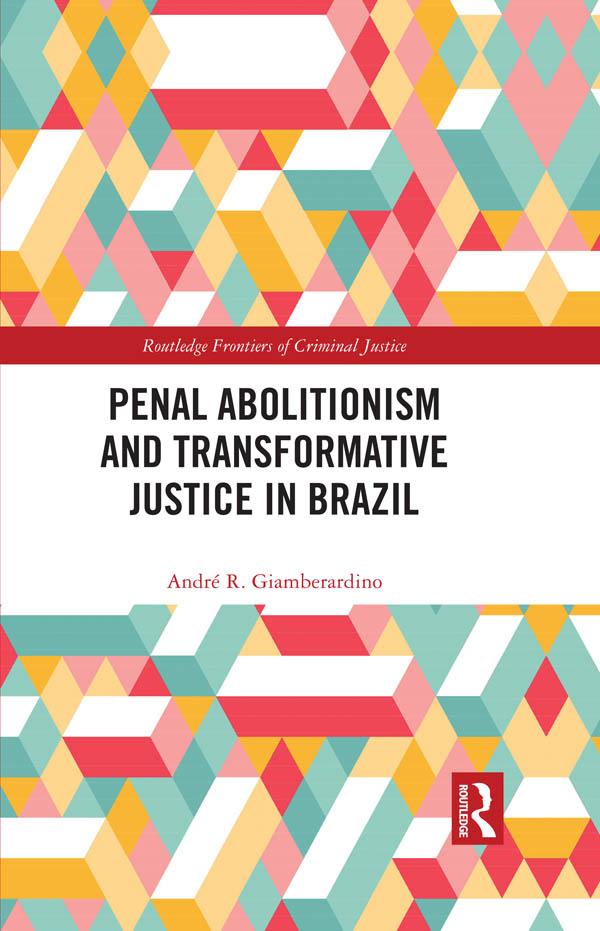
Penal Abolitionism and Transformative Justice in Brazil discusses how penal abolitionism provides fundamental theoretical bases and practical references for the construction of a transformative justice in Brazil, supporting the claim that justice is a socially constructed conception and that victims do not unanimously stand for punishment.
The book explores how the active participation of the protagonists of a conflict in a face-to-face negotiation of symbolic reparation, can produce a sense of justice without the need to punish or impose suffering on anyone. Mapping the ways that restorative justice in Brazil has distanced itself from the potential of transformative justice, to the extent that it fails to politicize the conflict and give voice to victims, the book shows how it has resulted in becoming just a new version of penal alternatives with correctionalist content. Moving away from traditional criminal justice language and also from conservative approaches to restorative justice, the author argues that the communicative potential of the transformative kind of redress can be dissociated from the unproved assumption that legal punishment is essential or even likely to achieve justice or deterrence. The arguments are grounded in the Brazilian reality, where life is marked by deep social inequalities and a high level of police violence. By providing a review of the literature on restorative justice, transformative justice, and abolitionism, the book contextualizes the abolitionist debate in Brazil and its history in the 19th century.
Penal Abolitionism and Transformative Justice in Brazil is important reading for students and scholars who study punishment and penal abolitionism, to think about what it is possible to do in societies so deeply marked by social injustice and a history of oppression.
Płać wygodnie kartą, Klarną, Apple Pay lub Google Pay. Nie jesteś zadowolony? Zawsze masz 14-dniową gwarancję zwrotu pieniędzy. Więcej przeczytasz w naszych warunkach. Masz pytania? Napisz do nas na hello@memmo.org.
Memmo ułatwia naukę – gdziekolwiek jesteś na świecie. U nas znajdziesz podręczniki i sprytne narzędzia do nauki w jednym miejscu: streszczenia, quizy, podcasty i fiszki. A do tego Ted, Twój kumpel do nauki, który odpowie na wszystko, co Cię nurtuje. Ponad 50 000 studentów już tu się uczy – stworzone, byś uczył się szybciej i mniej stresował.