
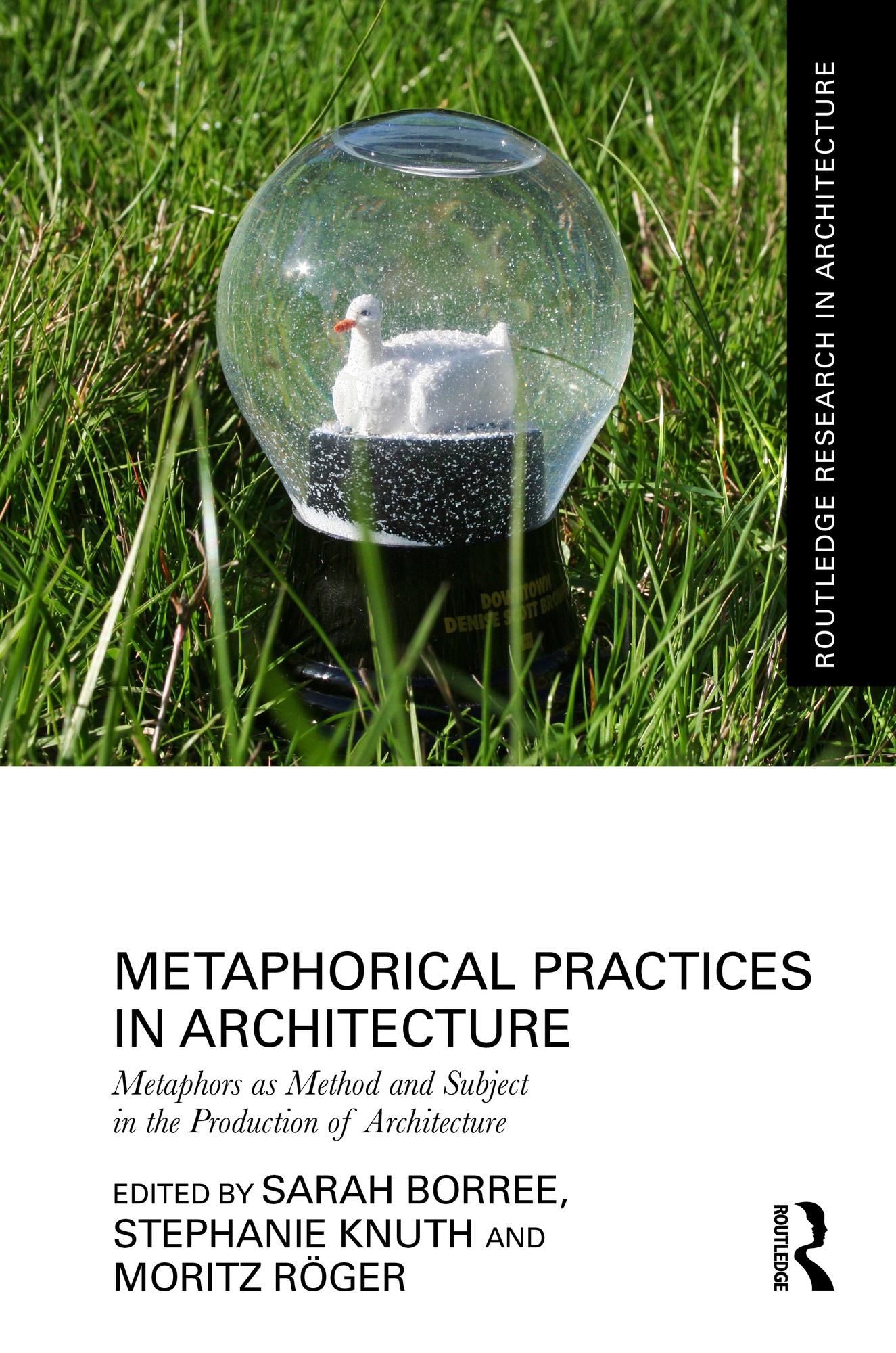
Metaphors are diversly and intricately embedded in architectural practice and discourse. Precisely for this reason, this volume argues and sets out to explore, how they can be engaged to critically interrogate architecture’s social, cultural and political dimensions – past and present – and to productively challenge and intervene with established perspectives, debates and practices.
Mapping out not just potentials but also addressing the challenges, limitations and dangers inherent in using metaphors in architectural research and practice, the volume prominently illustrates the ambiguity and contradictoriness inherent in both metaphors and the process of engaging and exploiting them. Covering a broad range of historical and geographical cases and concerns, the contributions illustrate effectively that metaphors can expand or narrow our engagement with architecture, and consolidate or legitimise but also destabilise and challenge established social, cultural, disciplinary and political structures, concepts and categories.
With its aim to explore metaphors as both subject and method to critically challenge and expand established practices, perspectives and standards in architectural research and practice, the volume will be of interest for scholars working across the architectural humanities, including architectural history, theory, culture, design and urbanism, as well as for researchers concerned with architecture and the city from fields such as cultural, visual and area studies as well as art history.
Płać wygodnie kartą, Klarną, Apple Pay lub Google Pay. Nie jesteś zadowolony? Zawsze masz 14-dniową gwarancję zwrotu pieniędzy. Więcej przeczytasz w naszych warunkach. Masz pytania? Napisz do nas na hello@memmo.org.
Memmo ułatwia naukę – gdziekolwiek jesteś na świecie. U nas znajdziesz podręczniki i sprytne narzędzia do nauki w jednym miejscu: streszczenia, quizy, podcasty i fiszki. A do tego Ted, Twój kumpel do nauki, który odpowie na wszystko, co Cię nurtuje. Ponad 50 000 studentów już tu się uczy – stworzone, byś uczył się szybciej i mniej stresował.