
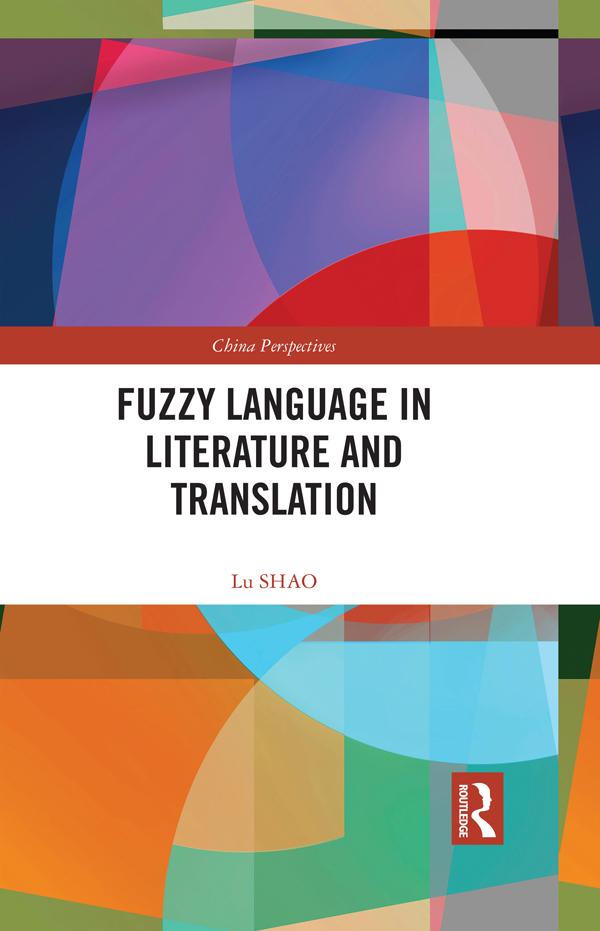
Bringing a fuzzy logic-based approach into translation studies and drawing on the theory of information entropy, this book discusses the translation of fuzzy language in literary works and advances a new method of measuring text fuzziness between translation and source text.
Based on illustrative examples from the popular novel The Da Vinci Code and its two translated Chinese versions, the study demonstrates the fuzziness measuring method through an algorithmic process. More specifically, information entropy is applied to measure the uncertainty associated with readers’ understanding of the original and its corresponding target texts. The underlying hypothesis is that the probability distribution in which readers will understand identified fuzzy discourse is measurable. By further explicating the validity of the hypothesis, it seeks to solve translational “fuzzy” problems in the translation process and offers an alternative, novel approach to the study of “fuzzy” literary texts and their translation. Hopefully, the argument of the book that the intrinsic uncertainty of fuzzy language can be evaluated through Shannon’s information entropy will open up a new avenue to the quantitative description of the fuzziness of language and translation.
This book will be of interest to scholars and students in translation studies, applied linguistics, and literary criticism.
Płać wygodnie kartą, Klarną, Apple Pay lub Google Pay. Nie jesteś zadowolony? Zawsze masz 14-dniową gwarancję zwrotu pieniędzy. Więcej przeczytasz w naszych warunkach. Masz pytania? Napisz do nas na hello@memmo.org.
Memmo ułatwia naukę – gdziekolwiek jesteś na świecie. U nas znajdziesz podręczniki i sprytne narzędzia do nauki w jednym miejscu: streszczenia, quizy, podcasty i fiszki. A do tego Ted, Twój kumpel do nauki, który odpowie na wszystko, co Cię nurtuje. Ponad 50 000 studentów już tu się uczy – stworzone, byś uczył się szybciej i mniej stresował.