
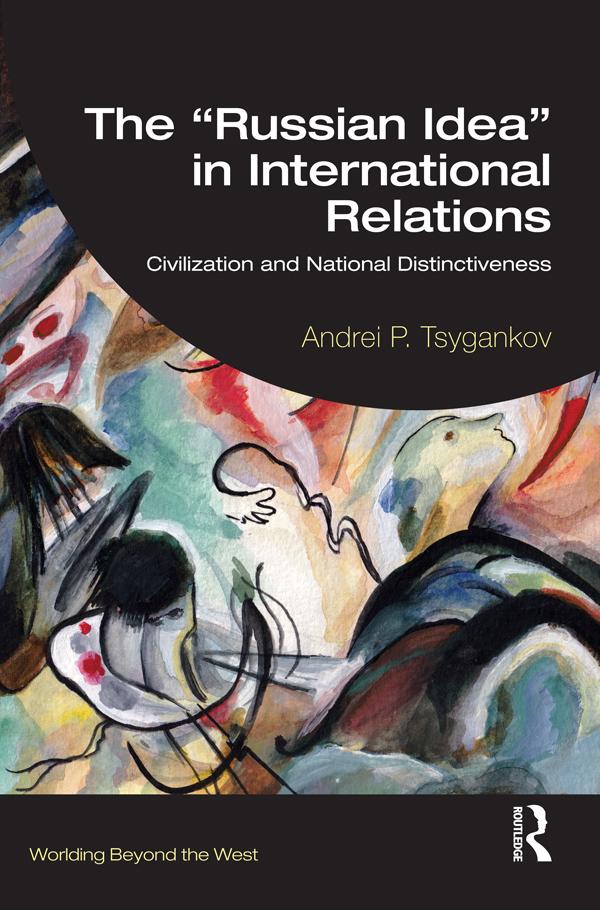
The "Russian Idea" in International Relations identifies different approaches within Russian Civilizational tradition — Russia’s nationally distinctive way of thinking — by situating them within IR literature and connecting them to practices of the country’s international relations.
Civilizational ideas in IR theory express states’ cultural identification and stress religious traditions, social customs, and economic and political values. This book defines Russian civilizational ideas by two criteria: the values they stress and their global ambitions. The author identifies leading voices among those positioning Russia as an exceptional and globally significant system of values and traces their arguments across several centuries of the country’s development. In addition, the author explains how and why Russian civilizational ideas rise, fall, and are replaced by alternative ideas. The book identifies three schools of Russian civilizational thinking about international relations – Slavophiles, Communists, and Eurasianists. Each school focuses on Russia’s distinctive spiritual, social, and geographic roots, respectively. Each one is internally divided between those claiming Russia’s exceptionalism, potentially resulting in regional autarchy or imperial expansion, and those advocating the Russian Idea as global in its appeal. Those favoring the latter perspective have stressed Russia’s unique capacity for understanding different cultures and guarding the world against extremes of nationalism and hegemony in international relations.
This book will be of interest to students and scholars of Russian foreign policy, Russia–Western relations, IR theory, diplomatic studies, political science, and European history, including the history of ideas.
Płać wygodnie kartą, Klarną, Apple Pay lub Google Pay. Nie jesteś zadowolony? Zawsze masz 14-dniową gwarancję zwrotu pieniędzy. Więcej przeczytasz w naszych warunkach. Masz pytania? Napisz do nas na hello@memmo.org.
Memmo ułatwia naukę – gdziekolwiek jesteś na świecie. U nas znajdziesz podręczniki i sprytne narzędzia do nauki w jednym miejscu: streszczenia, quizy, podcasty i fiszki. A do tego Ted, Twój kumpel do nauki, który odpowie na wszystko, co Cię nurtuje. Ponad 50 000 studentów już tu się uczy – stworzone, byś uczył się szybciej i mniej stresował.