
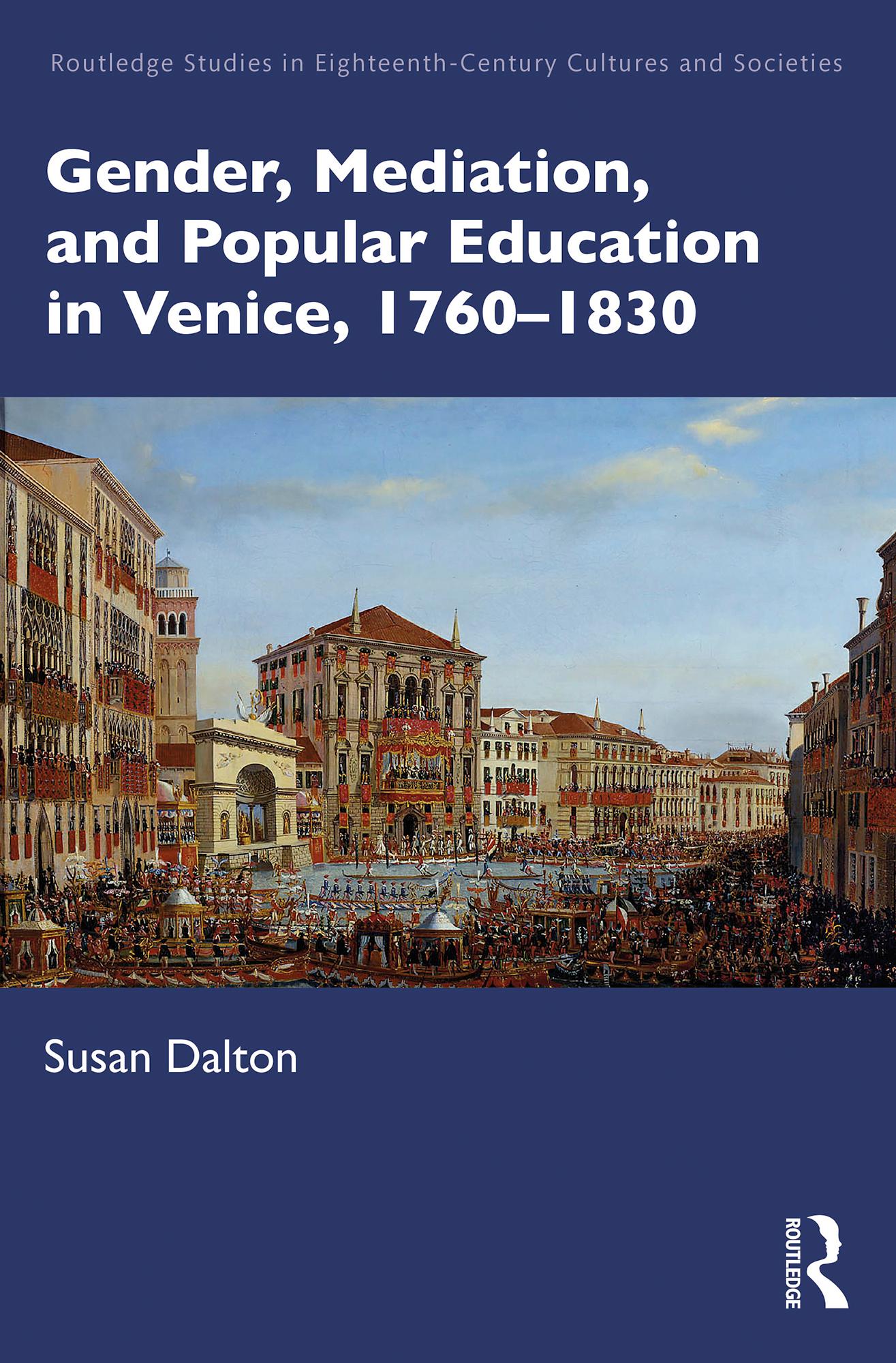
Gender, Mediation, and Popular Education in Venice, 1760–1830, examines how women with enough cultural capital could turn their identity as representatives of "the public" – those on the receiving end of education – to their advantage, producing knowledge under the guise of relaying it.
Author Susan Dalton demonstrates how elite women turned their reputation for ignorance into an opportunity to establish themselves as published authors at the dawn of the nineteenth century in Venice. Many literary figures saw women as a group in need of education. By deploying essentialist understandings of femininity, whereby women possessed superior moral virtue but deficient rationality, these women entered the world of print as cultural mediators, identified by contemporaries as key players in the social projects of public education and moral edification central to the European Enlightenment. Focussing on Isabella Teotochi Albrizzi and Giustina Renier Michiel, both renowned Venetian authors, Dalton introduces two well-known Italian women of letters to English-speaking scholars, re-evaluates the impact of their writing in Italy and raises questions about female authorship across Europe, broadens our conceptions of gender norms, and enriches our knowledge of a little-known period of women’s writing in Italy.
This volume is an essential resource for students and scholars alike interested in women’s and gender history, early modern history and social and cultural history.
Płać wygodnie kartą, Klarną, Apple Pay lub Google Pay. Nie jesteś zadowolony? Zawsze masz 14-dniową gwarancję zwrotu pieniędzy. Więcej przeczytasz w naszych warunkach. Masz pytania? Napisz do nas na hello@memmo.org.
Memmo ułatwia naukę – gdziekolwiek jesteś na świecie. U nas znajdziesz podręczniki i sprytne narzędzia do nauki w jednym miejscu: streszczenia, quizy, podcasty i fiszki. A do tego Ted, Twój kumpel do nauki, który odpowie na wszystko, co Cię nurtuje. Ponad 50 000 studentów już tu się uczy – stworzone, byś uczył się szybciej i mniej stresował.