
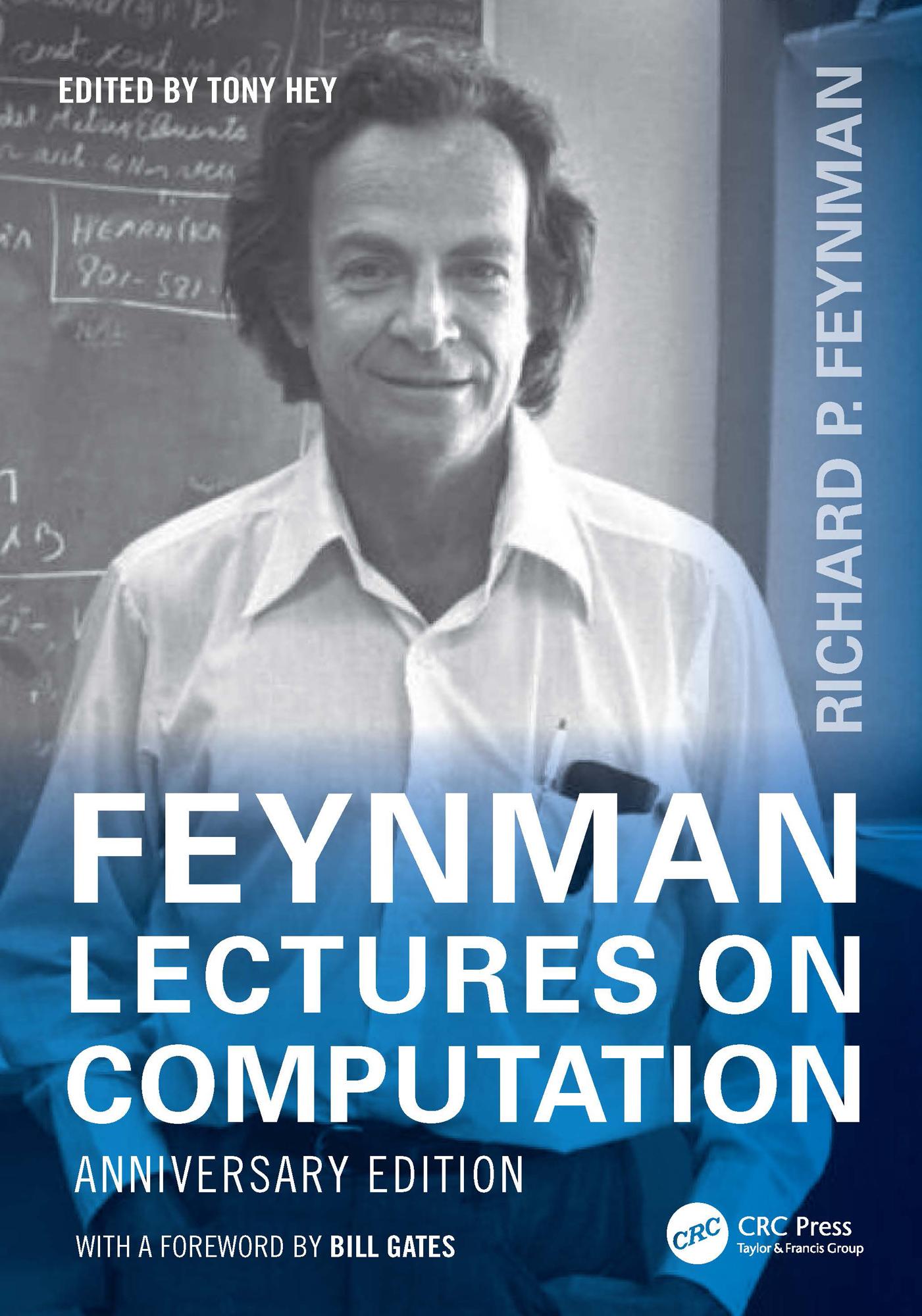
The last lecture course that Nobel Prize winner Richard P. Feynman gave
to students at Caltech from 1983 to 1986 was not on physics but on computer
science. The first edition of the Feynman Lectures on Computation, published
in 1996, provided an overview of standard and not-so-standard topics in
computer science given in Feynman’s inimitable style. Although now
over 20 years old, most of the material is still relevant and interesting, and
Feynman’s unique philosophy of learning and discovery shines through.
For this new edition, Tony Hey has updated the lectures with an invited
chapter from Professor John Preskill on “Quantum Computing 40 Years
Later”. This contribution captures the progress made toward building a
quantum computer since Feynman’s original suggestions in 1981. The last
25 years have also seen the “Moore’s law” roadmap for the IT industry
coming to an end. To reflect this transition, John Shalf, Senior Scientist
at Lawrence Berkeley National Laboratory, has contributed a chapter
on “The Future of Computing beyond Moore’s Law”. The final update
for this edition is an attempt to capture Feynman’s interest in artificial
intelligence and artificial neural networks. Eric Mjolsness, now a Professor
of Computer Science at the University of California Irvine, was a Teaching
Assistant for Feynman’s original lecture course and his research interests
are now the application of artificial intelligence and machine learning
for multi-scale science. He has contributed a chapter called “Feynman
on Artificial Intelligence and Machine Learning” that captures the early
discussions with Feynman and also looks toward future developments.
This exciting and important work provides key reading for students and
scholars in the fields of computer science and computational physics.
Płać wygodnie kartą, Klarną, Apple Pay lub Google Pay. Nie jesteś zadowolony? Zawsze masz 14-dniową gwarancję zwrotu pieniędzy. Więcej przeczytasz w naszych warunkach. Masz pytania? Napisz do nas na hello@memmo.org.
Memmo ułatwia naukę – gdziekolwiek jesteś na świecie. U nas znajdziesz podręczniki i sprytne narzędzia do nauki w jednym miejscu: streszczenia, quizy, podcasty i fiszki. A do tego Ted, Twój kumpel do nauki, który odpowie na wszystko, co Cię nurtuje. Ponad 50 000 studentów już tu się uczy – stworzone, byś uczył się szybciej i mniej stresował.