
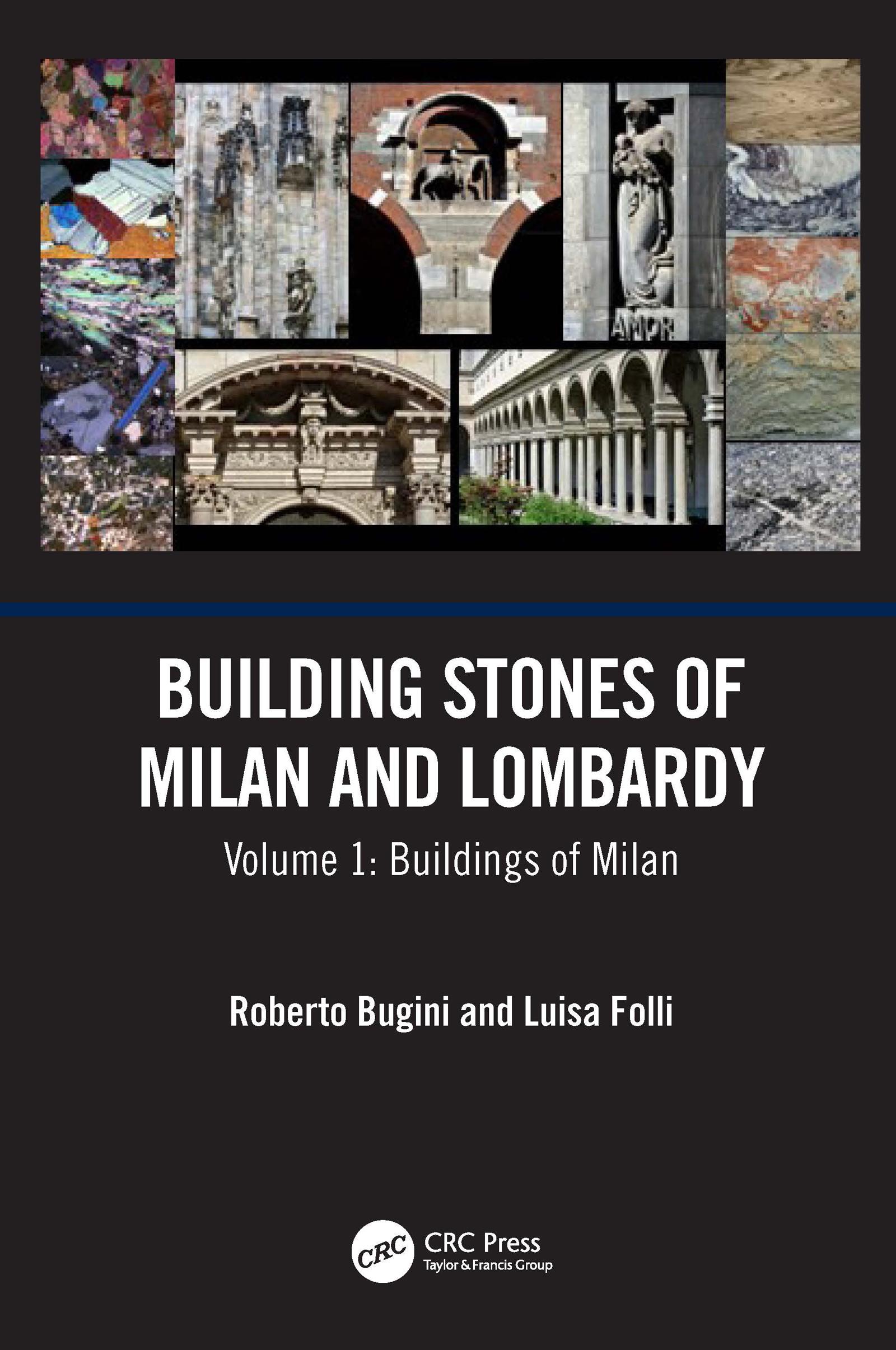
Milan has played an important role in the Italian country since the Roman period. This importance is reflected also by the diffusion of stone architecture: a persisting trait of Milan architecture was the use of different stones in the same building. Milan lies in the middle of the alluvial plain of the Po, far from the stone quarries; some waterways were dug out in order to supply the building stones from the surrounding territories.
The study of stone as a building material was significant at the end of 19th century, but then it was largely neglected by both architects and geologists. So it is significant to suggest a study about the stones employed to build in Milan (Volume 1) in relationship with a petrographic study about the features of the stones quarried in the whole Lombard territory (Volume 2).
The present volume contains a record of Milanese edifices marking the different historical periods. Each edifice is described in a "card" containing: the building history, the architect, the kind of stone employed and subdivided according to the different parts of the building and the shape of stone elements. A particular investigation is addressed to the stones used during the 20th century; a great part of them were never used before in Milan (or in Lombardy).
Płać wygodnie kartą, Klarną, Apple Pay lub Google Pay. Nie jesteś zadowolony? Zawsze masz 14-dniową gwarancję zwrotu pieniędzy. Więcej przeczytasz w naszych warunkach. Masz pytania? Napisz do nas na hello@memmo.org.
Memmo ułatwia naukę – gdziekolwiek jesteś na świecie. U nas znajdziesz podręczniki i sprytne narzędzia do nauki w jednym miejscu: streszczenia, quizy, podcasty i fiszki. A do tego Ted, Twój kumpel do nauki, który odpowie na wszystko, co Cię nurtuje. Ponad 50 000 studentów już tu się uczy – stworzone, byś uczył się szybciej i mniej stresował.