
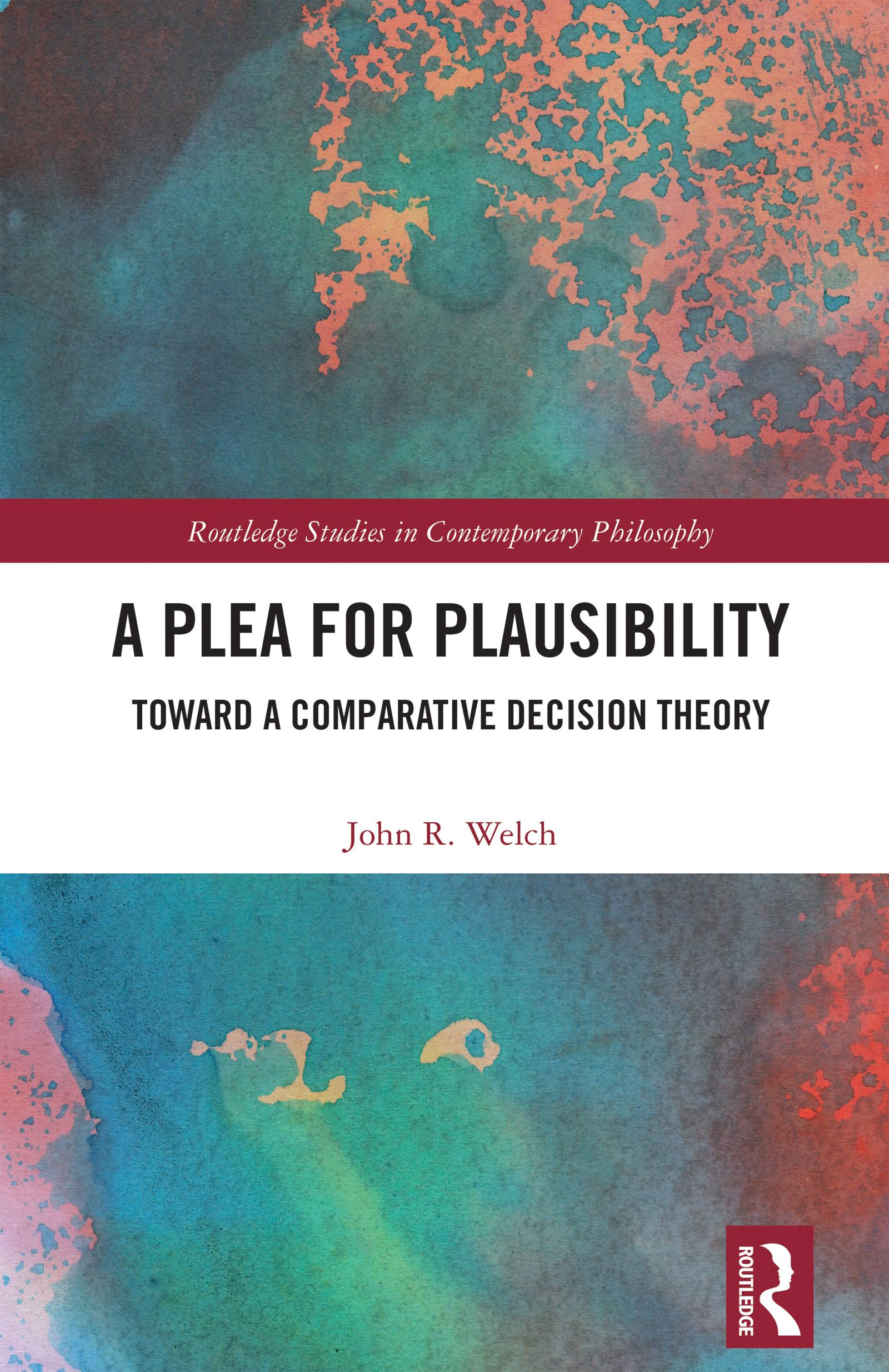
This book develops an original theory of decision-making based on the concept of plausibility. The author advocates plausible reasoning as a general philosophical method and demonstrates how it can be applied to problems in argumentation theory, scientific theory choice, risk management, ethics, law, economics, and epistemology.
Human decisions are conditioned by formidable uncertainty. The standard resource for dealing rationally with uncertainty is the mathematical concept of probability. The probability calculus is well-known, but since the numerical demands for applying it cannot usually be met, it is not widely applicable. By contrast, the concept of plausibility is widely applicable, but it is little known. This book relies on a generalized concept of plausibility whose strength is its adaptability. The adaptability is due to a novel form of decision theory that takes plausibilities as inputs. This form of decision theory remains applicable to decisions informed by sharp probabilities and utilities, but it can also be applied to decisions that must be made without them. It can aid in the rationally critical enterprise of discriminating good arguments from bad, and this can foster philosophical progress.
A Plea for Plausibility will be of interest to scholars and advanced students working in argumentation theory, philosophy of science, ethics, epistemology, economics, law, and risk management.
Płać wygodnie kartą, Klarną, Apple Pay lub Google Pay. Nie jesteś zadowolony? Zawsze masz 14-dniową gwarancję zwrotu pieniędzy. Więcej przeczytasz w naszych warunkach. Masz pytania? Napisz do nas na hello@memmo.org.
Memmo ułatwia naukę – gdziekolwiek jesteś na świecie. U nas znajdziesz podręczniki i sprytne narzędzia do nauki w jednym miejscu: streszczenia, quizy, podcasty i fiszki. A do tego Ted, Twój kumpel do nauki, który odpowie na wszystko, co Cię nurtuje. Ponad 50 000 studentów już tu się uczy – stworzone, byś uczył się szybciej i mniej stresował.