
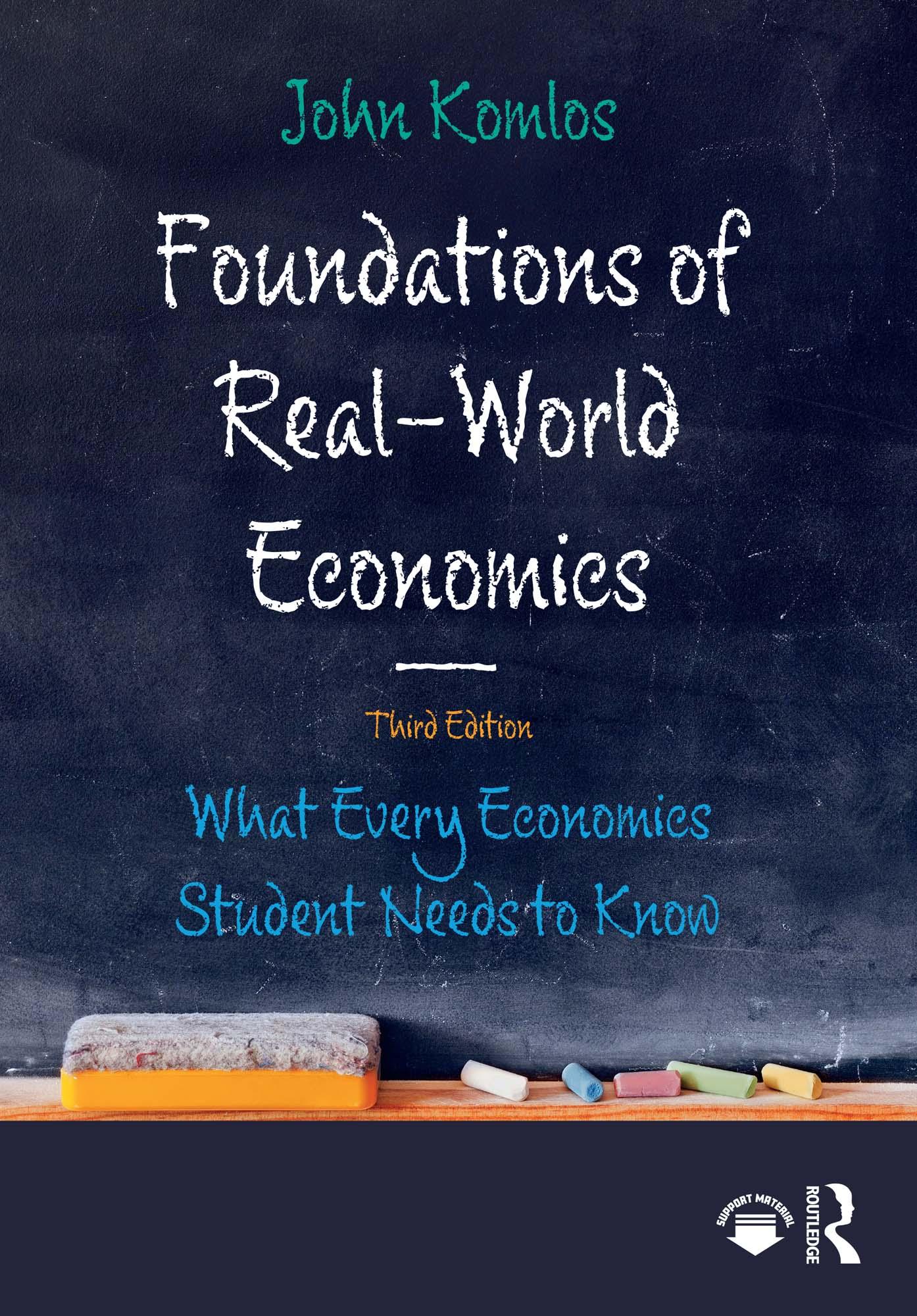
The 2008 financial crisis, the rise of Trumpism, and the other populist movements which have followed in their wake have grown out of the frustrations of those hurt by the economic policies advocated by conventional economists for generations. Despite this, textbooks remain frozen in time, continuing to uphold traditional policies as though nothing has happened.
Foundations of Real-World Economics demonstrates how misleading it can be to apply oversimplified models of perfect competition to the real world. The math works well on college blackboards but not so well on the Main Streets of America. This volume explores the realities of oligopolies, the real impact of the minimum wage, the double-edged sword of free trade, and other ways in which powerful institutions cause distortions in mainstream models. Bringing together the work of key scholars like Kahneman, Minsky, and Schumpeter, this textbook takes into consideration the inefficiencies that arise when the perfectly competitive model is applied to the real world dominated by multinational oligopolies. The third edition has been updated throughout, bringing in new material on the financial crises, the rise of populism, racism, inequality, climate change, and the Covid-19 pandemic.
A must-have for students studying the principles of economics as well as micro- and macroeconomics, this textbook redresses the existing imbalance in economic teaching as John Komlos focuses on the paradigm of humanistic economics.
Płać wygodnie kartą, Klarną, Apple Pay lub Google Pay. Nie jesteś zadowolony? Zawsze masz 14-dniową gwarancję zwrotu pieniędzy. Więcej przeczytasz w naszych warunkach. Masz pytania? Napisz do nas na hello@memmo.org.
Memmo ułatwia naukę – gdziekolwiek jesteś na świecie. U nas znajdziesz podręczniki i sprytne narzędzia do nauki w jednym miejscu: streszczenia, quizy, podcasty i fiszki. A do tego Ted, Twój kumpel do nauki, który odpowie na wszystko, co Cię nurtuje. Ponad 50 000 studentów już tu się uczy – stworzone, byś uczył się szybciej i mniej stresował.