
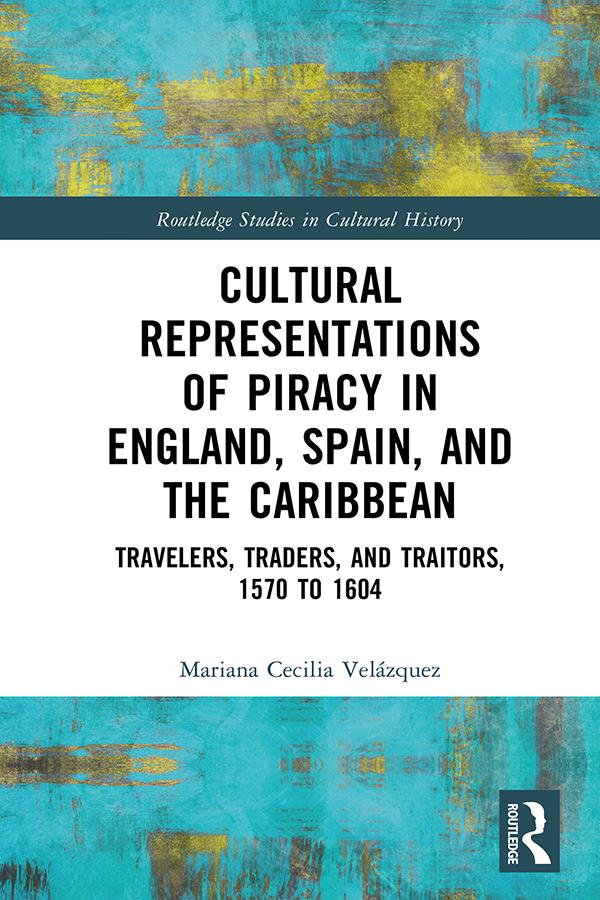
This book examines the concept of piracy as an instrument for the advancement of legal, economic, and political agendas associated with early modern imperial conflicts in the Caribbean.
Drawing on historical accounts, literary texts, legal treatises, and maps, the book traces the visual and narrative representations of Sir Francis Drake, who serves as a case study to understand the various usages of the terms "pirate" and "corsair." Through a comparative analysis, the book considers the connotations of the categories related to maritime predation—pirate, corsair, buccaneer, and filibuster—and nationalistic and religious denominations—Lutheran, Catholic, heretic, Spaniard, English, and Creole—to argue that the flexible usage of these terms corresponds to unequal colonial and imperial relations and ideological struggles.
The book chronologically records the process by which piracy changed from an unregulated phenomenon to becoming legally defined after the Treaty of London (1604) and the Treaty of Westphalia (1648). The research demonstrates that as piracy grew less ambiguous through legal and linguistic standardization, the concept of piracy lost its polemical utility.
This interdisciplinary volume is ideal for researchers working in piracy studies, early modern history, and imperial history.
Płać wygodnie kartą, Klarną, Apple Pay lub Google Pay. Nie jesteś zadowolony? Zawsze masz 14-dniową gwarancję zwrotu pieniędzy. Więcej przeczytasz w naszych warunkach. Masz pytania? Napisz do nas na hello@memmo.org.
Memmo ułatwia naukę – gdziekolwiek jesteś na świecie. U nas znajdziesz podręczniki i sprytne narzędzia do nauki w jednym miejscu: streszczenia, quizy, podcasty i fiszki. A do tego Ted, Twój kumpel do nauki, który odpowie na wszystko, co Cię nurtuje. Ponad 50 000 studentów już tu się uczy – stworzone, byś uczył się szybciej i mniej stresował.