
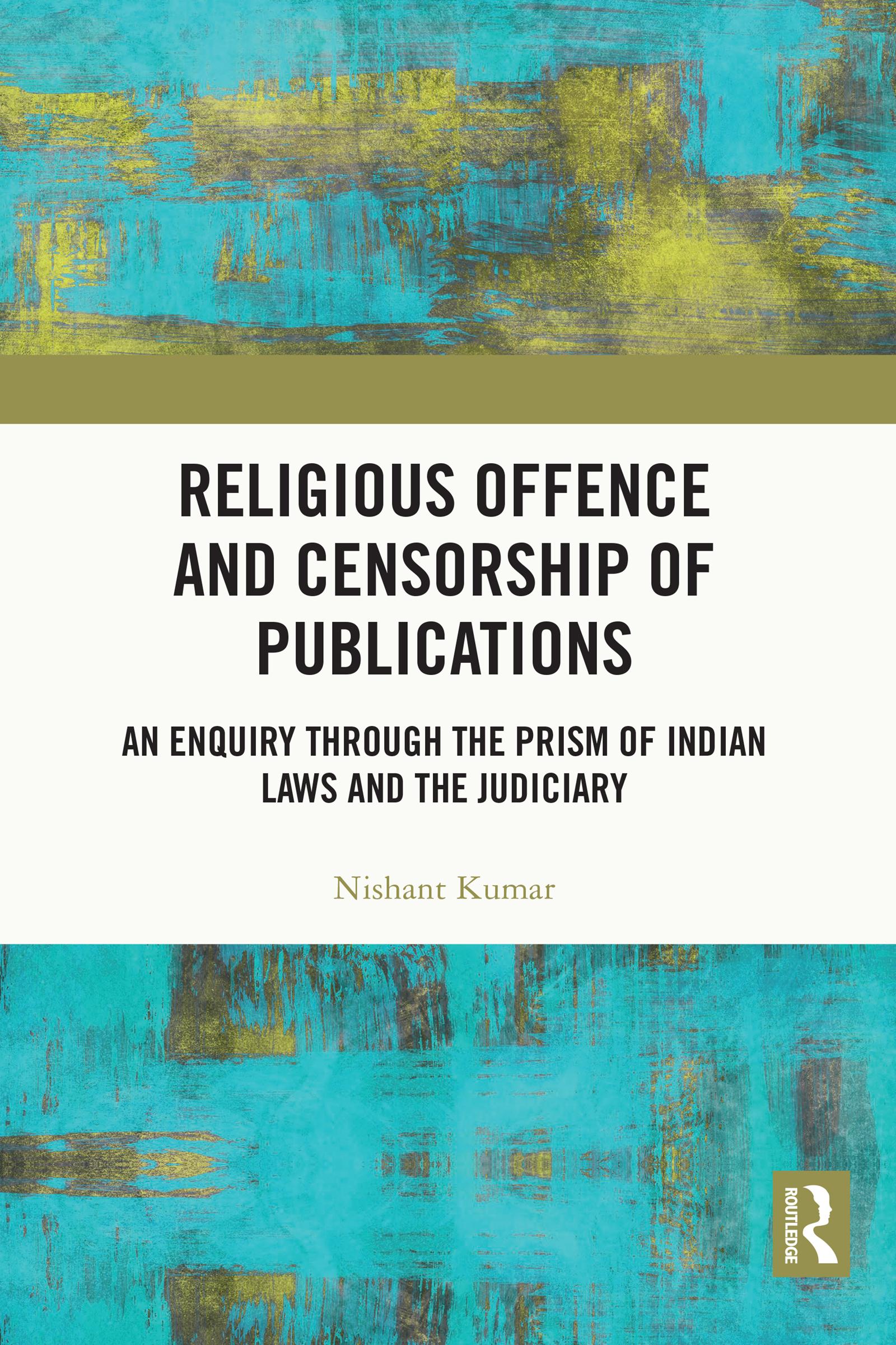
This book analyzes the role of laws and the judiciary in the process of censorship in India. It examines the rationales and observations produced by the judiciary when demands for censorship are directed against publications that allegedly offend religious sentiments. Focusing on a micro-level analysis of censorship of publications, it presents a hard case to understand the limitations of freedom of expression and the role played by the judiciary in defining its boundaries. The volume traces the evolution of laws governing freedom of expression since the colonial period and the context in which these laws were amended after Independence. It also explicates how the legal process – the structural and functional aspects of working of judiciary – affects the fate of freedom of expression in India. Employing comparative legal analysis, it tries to understand and situate the Indian case within the larger discourse of censorship and freedom of expression around the world, thereby marking its similarities and differences. In unravelling the politics of censorship, the author also examines the interaction among different stakeholders like government, non-state actors and the judiciary.
A tract for our times, this book will be of great interest to scholars and researchers of law, especially constitutional law and fundamental rights, politics, especially political theory and Indian politics, modern India and South Asian studies.
Płać wygodnie kartą, Klarną, Apple Pay lub Google Pay. Nie jesteś zadowolony? Zawsze masz 14-dniową gwarancję zwrotu pieniędzy. Więcej przeczytasz w naszych warunkach. Masz pytania? Napisz do nas na hello@memmo.org.
Memmo ułatwia naukę – gdziekolwiek jesteś na świecie. U nas znajdziesz podręczniki i sprytne narzędzia do nauki w jednym miejscu: streszczenia, quizy, podcasty i fiszki. A do tego Ted, Twój kumpel do nauki, który odpowie na wszystko, co Cię nurtuje. Ponad 50 000 studentów już tu się uczy – stworzone, byś uczył się szybciej i mniej stresował.