
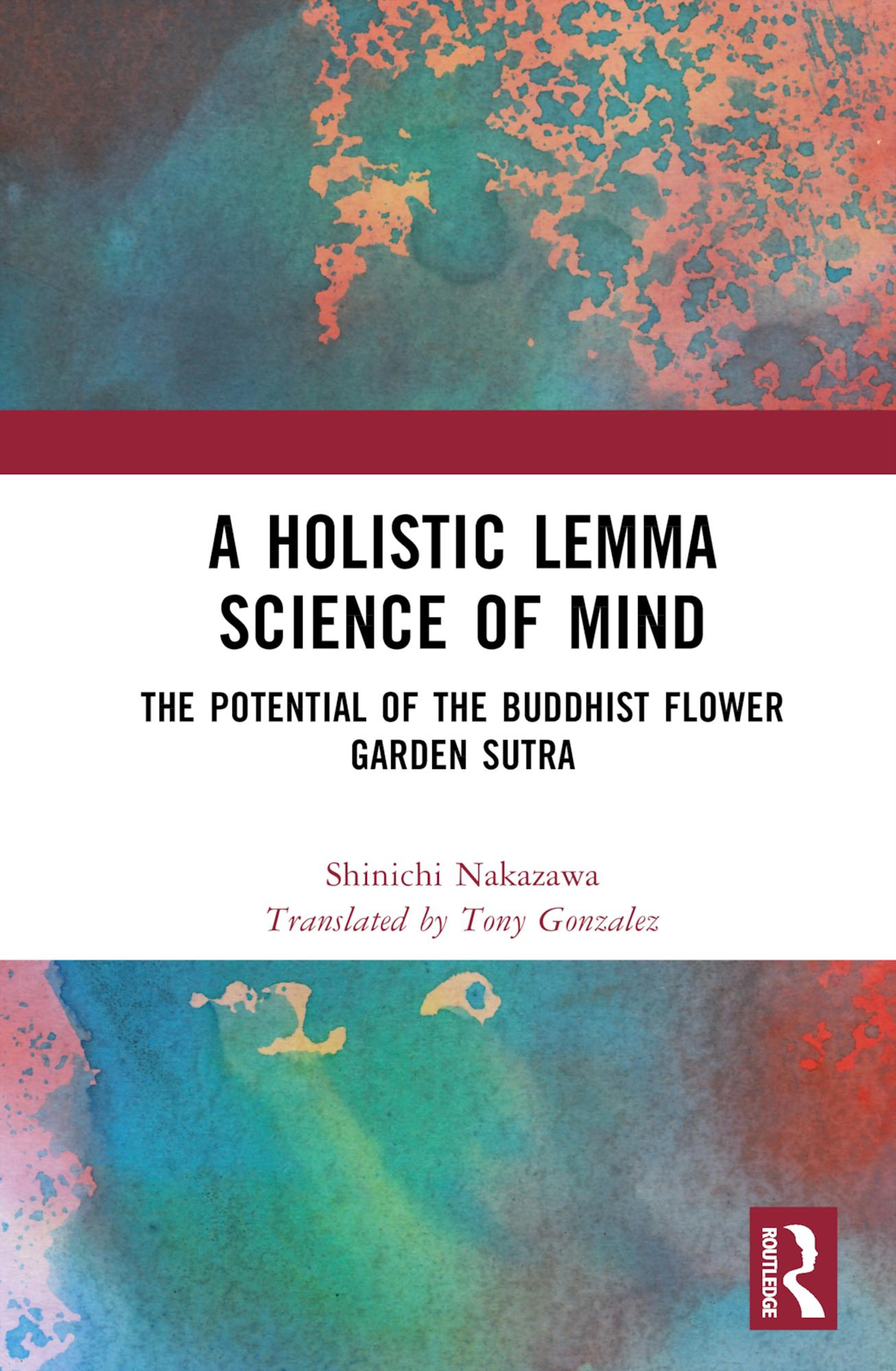
Nakazawa connects Buddhist philosophy with modern sciences such as psychology, quantum theory, and mathematics, as well as linguistics and the arts to present a perspective on understanding the mind in a world built on interconnection and networks of relations.
While Lemma Science is a new and modern study of humans, its provenance is deeply rooted in the Eastern thought tradition. The ancient Greeks identified two modes of human intelligence: the logos and lemma intellects. Etymologically, logos signifies to "arrange and organize what has been gathered in front of one's self." To practice logos-based thinking, one must rely on language. Thus, humans organize and understand the objects in the universe according to linguistic syntax. In contrast, lemma etymologically signifies the intellectual capacity to "grasp the whole at once." Instead of arranging objects along a time axis, as language does, the lemma intellect perceives the world in an intuitive, non-linear and non-causal manner, comprehending the whole in an instant. This book embarks on a venture to establish a new science based upon the lemma intellect. Using non-logos-based materials, rigorously following lemma-based methods, and transgressing the boundaries of academic fields, Nakazawa seeks to construct this new science as a fluid, dynamic entity.
This book will be of great interest to researchers across the fields of Japanese studies, Buddhist studies, psychology and linguistics.
Płać wygodnie kartą, Klarną, Apple Pay lub Google Pay. Nie jesteś zadowolony? Zawsze masz 14-dniową gwarancję zwrotu pieniędzy. Więcej przeczytasz w naszych warunkach. Masz pytania? Napisz do nas na hello@memmo.org.
Memmo ułatwia naukę – gdziekolwiek jesteś na świecie. U nas znajdziesz podręczniki i sprytne narzędzia do nauki w jednym miejscu: streszczenia, quizy, podcasty i fiszki. A do tego Ted, Twój kumpel do nauki, który odpowie na wszystko, co Cię nurtuje. Ponad 50 000 studentów już tu się uczy – stworzone, byś uczył się szybciej i mniej stresował.