
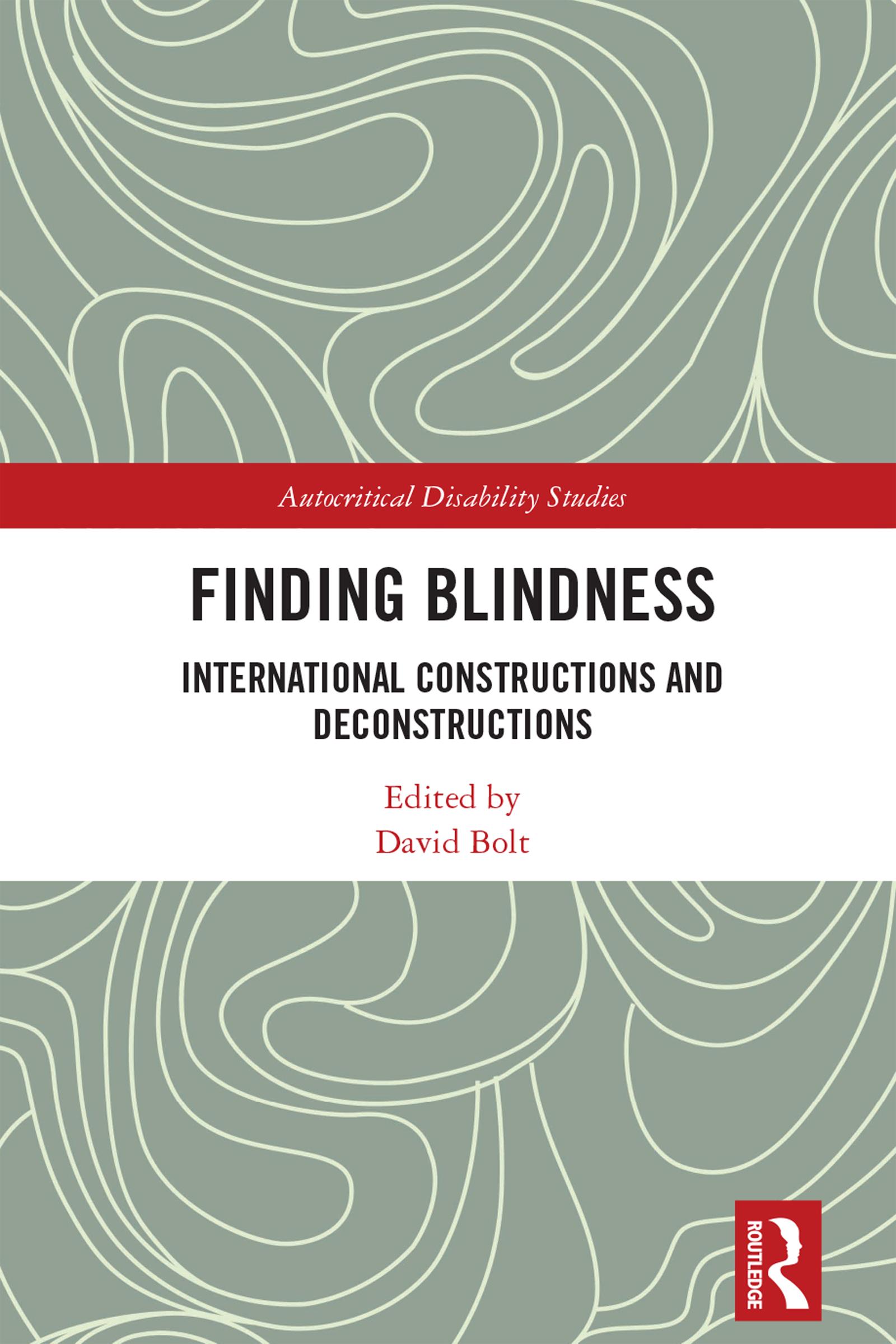
This edited volume explores blindness as a construct with which we the contributors engage as part of our social existence and/or academic research. Irrespective of eye conditions, or the lack thereof, blindness is an understanding at which we have all come to arrive. On the way to this conceptual point, which is in any case unlikely ever to be fixed, we have passed or visited many formative cultural stations.
In the terms of autocritical disability studies (i.e. an explicitly embodied development of critical disability studies), these cultural stations include key moments in education and training; the reflective pursuits of philosophy, aesthetics, and cultural theory; literary works such as autobiography, novels, short stories, drama, and poetry; visual texts ranging from photography to postage stamps; technological developments like television, computer applications, and social media; value systems defined by family and/or religion; and the social phenomenon of hate and war. Each chapter in this volume engages with two of these cultural stations; some ostensibly if not profoundly positive or indeed negative and some that contradict each other within and across chapters.
This book will be of interest to all scholars and students of disability studies, sociology, education, and health.
Płać wygodnie kartą, Klarną, Apple Pay lub Google Pay. Nie jesteś zadowolony? Zawsze masz 14-dniową gwarancję zwrotu pieniędzy. Więcej przeczytasz w naszych warunkach. Masz pytania? Napisz do nas na hello@memmo.org.
Memmo ułatwia naukę – gdziekolwiek jesteś na świecie. U nas znajdziesz podręczniki i sprytne narzędzia do nauki w jednym miejscu: streszczenia, quizy, podcasty i fiszki. A do tego Ted, Twój kumpel do nauki, który odpowie na wszystko, co Cię nurtuje. Ponad 50 000 studentów już tu się uczy – stworzone, byś uczył się szybciej i mniej stresował.