
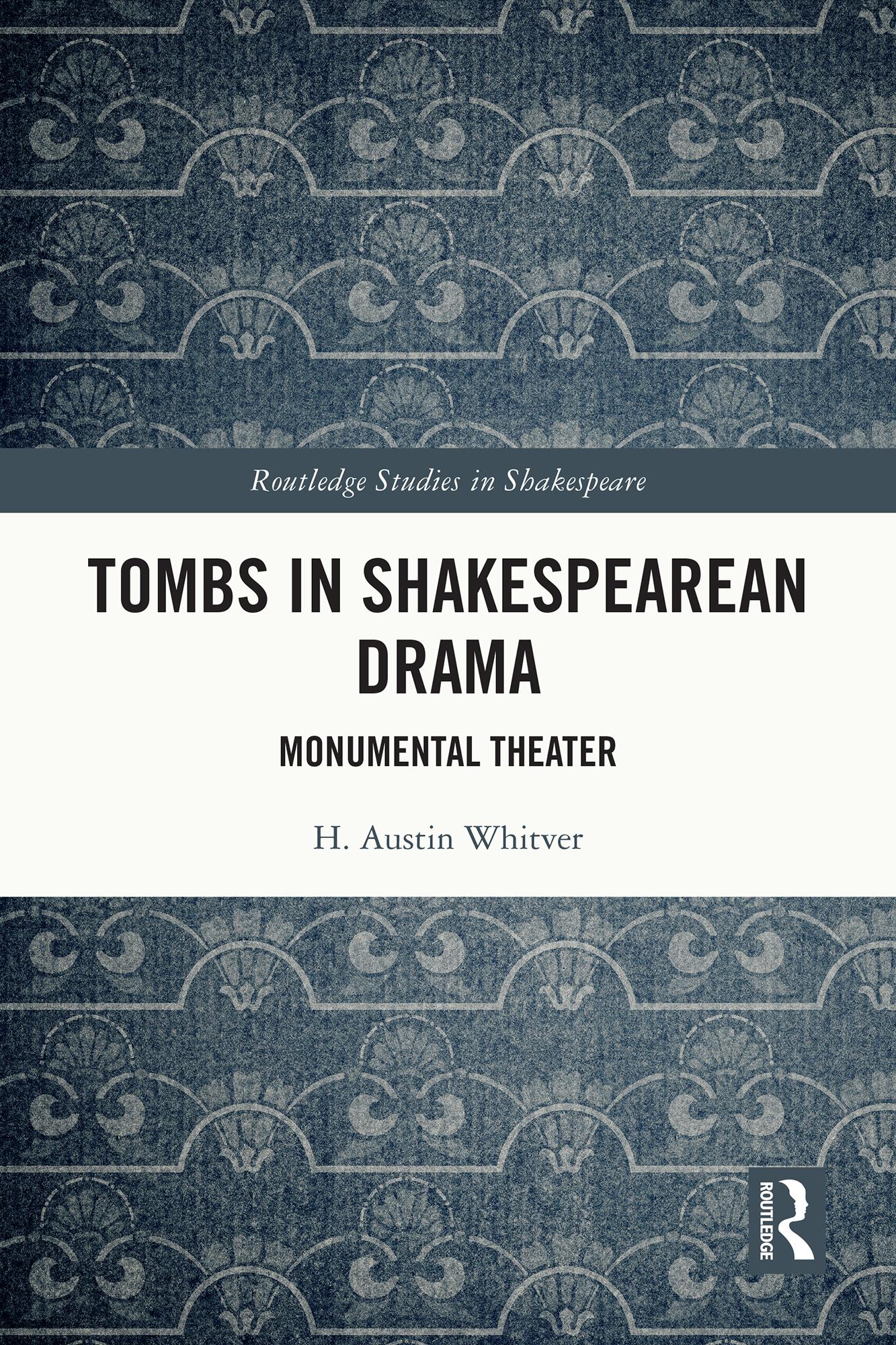
Tombs in Shakespearean Drama explores the rhetorical deployment of tombs and monuments on the early modern stage, demonstrating their historiographic power and mythmaking potential. By analyzing references to tombs in plays by Shakespeare and others in conjunction with extant monuments, this volume demonstrates how these references function in two overlapping ways in period drama: monuments act as repositories of information about the past, and they allow the living to construct and preserve fictive narratives.
The stage exposes the flimsy materiality of paper, placing less value on the written word than period poetry. In this way, critics have perhaps oversold as universal Shakespeare’s poetic praise of stone. Tombs within plays act as a powerful historical and narrative medium, raising the stakes to provide the stage with the illusion of permanency. Playwrights use tombs to anchor the stage action, giving a sense of lasting importance to dramatic events and combatting the ephemeral nature of the playhouse. In drama, Shakespeare and others drew on the persona preserved on tombs; this volume widens our view of how these representations interacted in the commemorative economy of early modern England. Within the playhouse, it was the tomb, not the tome, that stood as a symbol of permanence.
Płać wygodnie kartą, Klarną, Apple Pay lub Google Pay. Nie jesteś zadowolony? Zawsze masz 14-dniową gwarancję zwrotu pieniędzy. Więcej przeczytasz w naszych warunkach. Masz pytania? Napisz do nas na hello@memmo.org.
Memmo ułatwia naukę – gdziekolwiek jesteś na świecie. U nas znajdziesz podręczniki i sprytne narzędzia do nauki w jednym miejscu: streszczenia, quizy, podcasty i fiszki. A do tego Ted, Twój kumpel do nauki, który odpowie na wszystko, co Cię nurtuje. Ponad 50 000 studentów już tu się uczy – stworzone, byś uczył się szybciej i mniej stresował.