
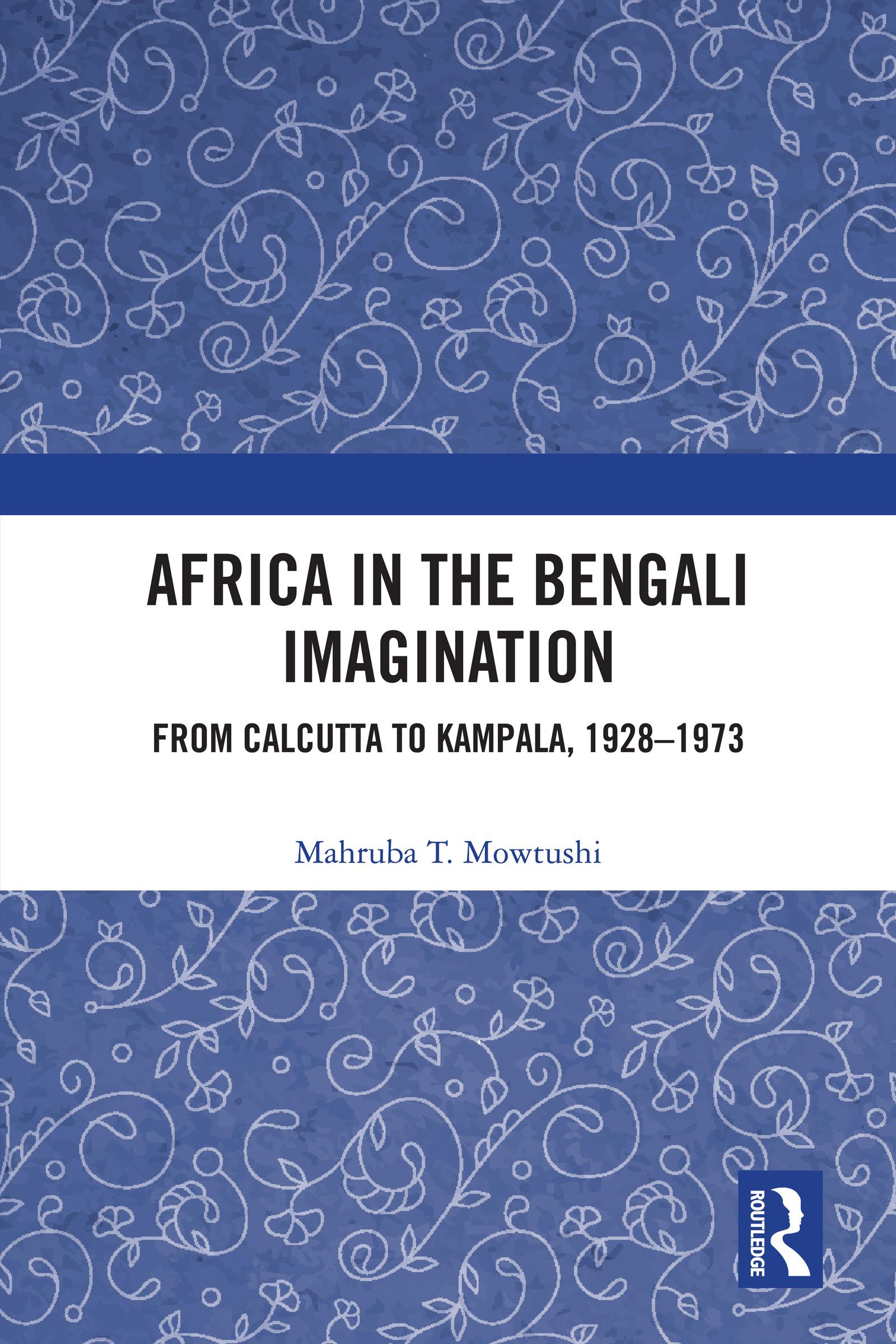
This book examines textual representations of Africa in the Indian imagination from 1928 to 1973. It critically analyses Bengali literature during this period, their imitation of colonial racial prejudices and how it allowed Bengalis to fashion their identity.
It analyses the development of ‘Africa’ as an idea and historical reality through the writings of five Bengali writers including the Bengali novelist Bibhutibhushan Bandyopadhyay, the children’s author Hemendra Kumar Roy, the poet and philosopher Rabindranath Tagore, the playwright Ganesh Bagchi and the surrealist poet and founding editor of Transition magazine Rajat Neogy. The book shows how these writers engage with the idea of Africa and their influence in the construction of the Bengali cultural identity during the freedom struggle, the Partition of Bengal in 1947 and the creation of Bangladesh in 1971. The book offers readers a glimpse of the exotic imaginary locales of Africa while offering an in-depth look into the interconnected histories, cartographic routes and cultural exchange between India and Africa.
A first of its kind, this book will be an excellent read for students and scholars of literature, comparative literature, history, cultural studies, postcolonial studies, South Asian studies, African studies and diaspora studies.
.
Płać wygodnie kartą, Klarną, Apple Pay lub Google Pay. Nie jesteś zadowolony? Zawsze masz 14-dniową gwarancję zwrotu pieniędzy. Więcej przeczytasz w naszych warunkach. Masz pytania? Napisz do nas na hello@memmo.org.
Memmo ułatwia naukę – gdziekolwiek jesteś na świecie. U nas znajdziesz podręczniki i sprytne narzędzia do nauki w jednym miejscu: streszczenia, quizy, podcasty i fiszki. A do tego Ted, Twój kumpel do nauki, który odpowie na wszystko, co Cię nurtuje. Ponad 50 000 studentów już tu się uczy – stworzone, byś uczył się szybciej i mniej stresował.