
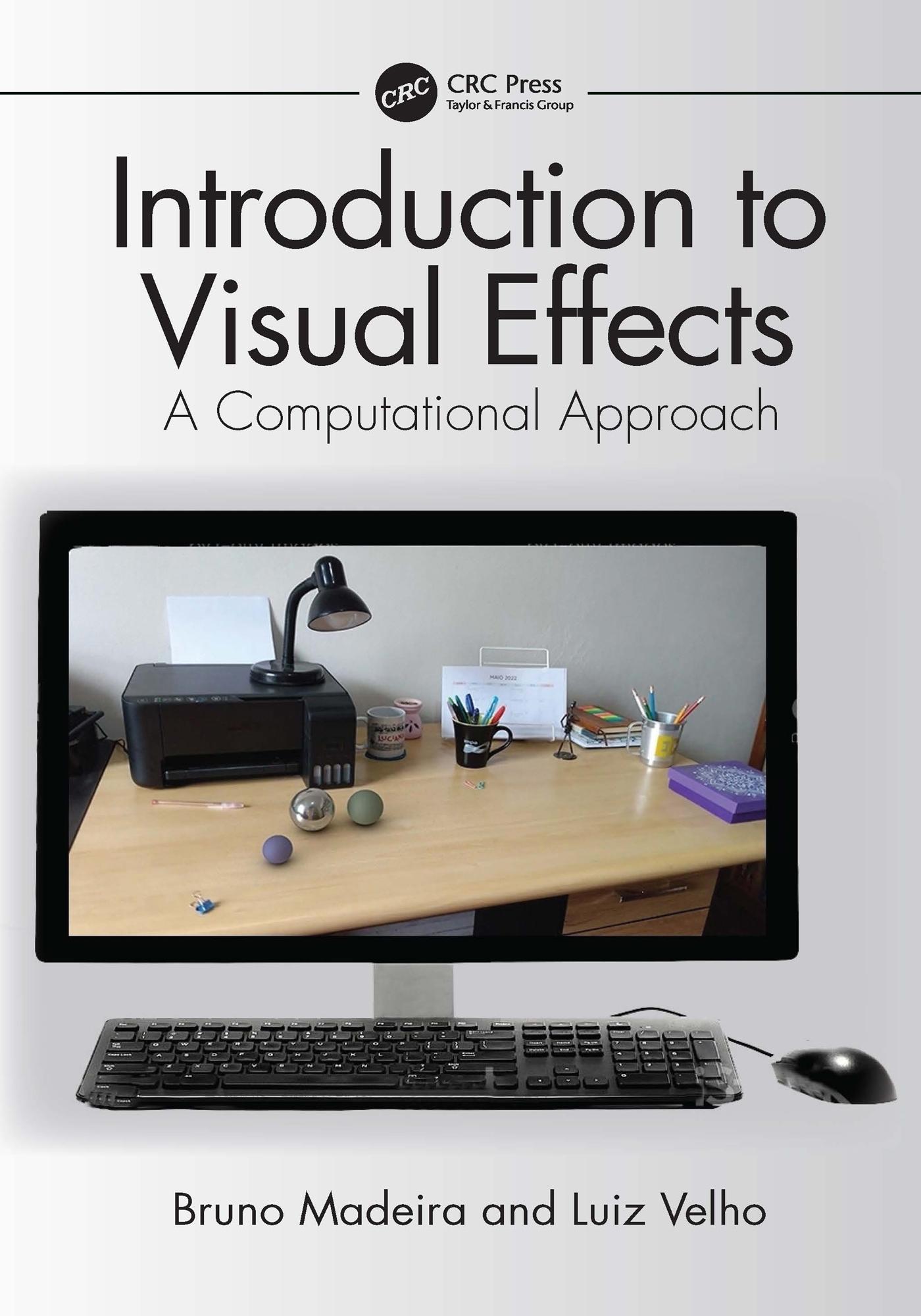
Introduction to Visual Effects: A Computational Approach is the first single introduction to the computational and mathematical aspects of visual effects, incorporating both computer vision and graphics. The book also provides the readers with the source code to a library, enabling them to follow the chapters directly and build up a complete visual effects platform. The book covers the basic approaches to camera pose estimation, global illumination, and image-based lighting, and includes chapters on the virtual camera, optimization and computer vision, path tracing and many more.
Key features include:
- Introduction to projective geometry, image-based lighting (IBL), global illumination solved by the Monte Carlo method (Pathtracing), an explanation of a set of optimization methods, and the techniques used for calibrating one, two, and many cameras, including how to use the RANSAC algorithm in order to make the process robust, and providing code to be implemented using the Gnu Scientific Library.
- C/C++ code using the OpenCV library, to be used in the process of tracking points on a movie (an important step for the matchmove process), and in the construction of modeling tools for visual effects.
- A simple model of the Bidirectional Reflectance Distribution Function (BRDF) of surfaces and the differential rendering method, allowing the reader to generate consistent shadows, supported by a code that can be used in combination with a software like Luminance HDR.
Płać wygodnie kartą, Klarną, Apple Pay lub Google Pay. Nie jesteś zadowolony? Zawsze masz 14-dniową gwarancję zwrotu pieniędzy. Więcej przeczytasz w naszych warunkach. Masz pytania? Napisz do nas na hello@memmo.org.
Memmo ułatwia naukę – gdziekolwiek jesteś na świecie. U nas znajdziesz podręczniki i sprytne narzędzia do nauki w jednym miejscu: streszczenia, quizy, podcasty i fiszki. A do tego Ted, Twój kumpel do nauki, który odpowie na wszystko, co Cię nurtuje. Ponad 50 000 studentów już tu się uczy – stworzone, byś uczył się szybciej i mniej stresował.