
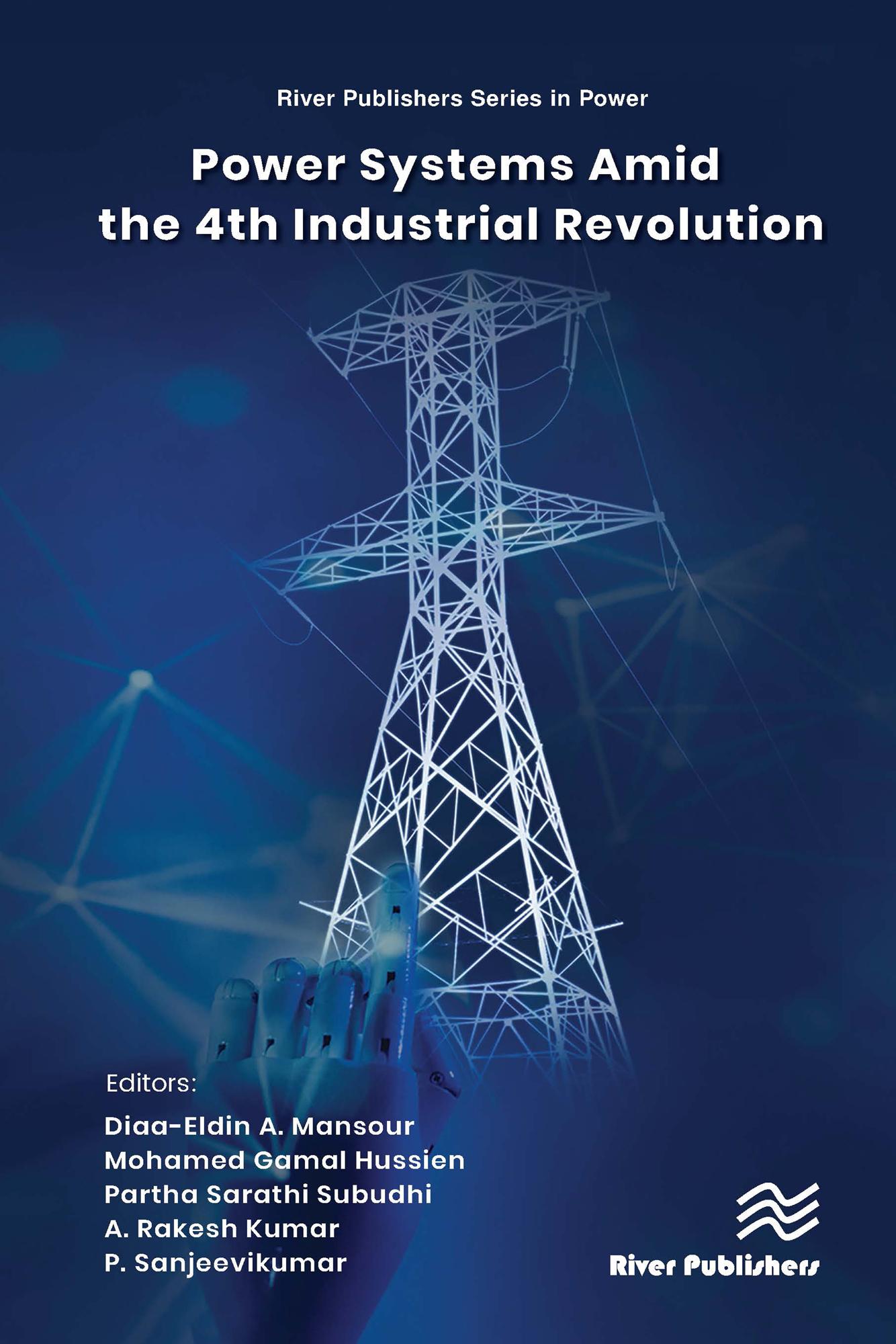
This book discusses the operation of power systems amid the 4th industrial revolution and the value of Industry 4.0 technologies to grid operators and end customers.
The concept of smart grids was introduced years ago, but their practical implementation into power grids was delayed as the information communication technology infrastructure was not ready. The transition to smart grids can be put into three dimensions: decentralization, decarbonization, and digitalization. Industry 4.0 technologies can enable more advanced features that can add value to all parties in smart grids and achieve a more holistic efficiency increase for the entire system via accomplishing business goals and realizing technical requirements.
Technical topics discussed in the book include:
- Structure of the generalized IoT value chain and IoT applications for low carbon technologies.
- Topological improvement of electrical equipment to facilitate a smooth transition to the smart grid infrastructure.
- Improvement of techniques to tackle advanced power system problems such as energy management, power equipment diagnostics, and renewable energy integration.
- Modeling, simulation, and analytic tools for cyber-attacks and cyber security actions for current cyber-physical power systems.
- Artificial intelligence, big data, and machine learning application to power system problems.
- Intelligent controllers for an advanced residential system.
Płać wygodnie kartą, Klarną, Apple Pay lub Google Pay. Nie jesteś zadowolony? Zawsze masz 14-dniową gwarancję zwrotu pieniędzy. Więcej przeczytasz w naszych warunkach. Masz pytania? Napisz do nas na hello@memmo.org.
Memmo ułatwia naukę – gdziekolwiek jesteś na świecie. U nas znajdziesz podręczniki i sprytne narzędzia do nauki w jednym miejscu: streszczenia, quizy, podcasty i fiszki. A do tego Ted, Twój kumpel do nauki, który odpowie na wszystko, co Cię nurtuje. Ponad 50 000 studentów już tu się uczy – stworzone, byś uczył się szybciej i mniej stresował.