
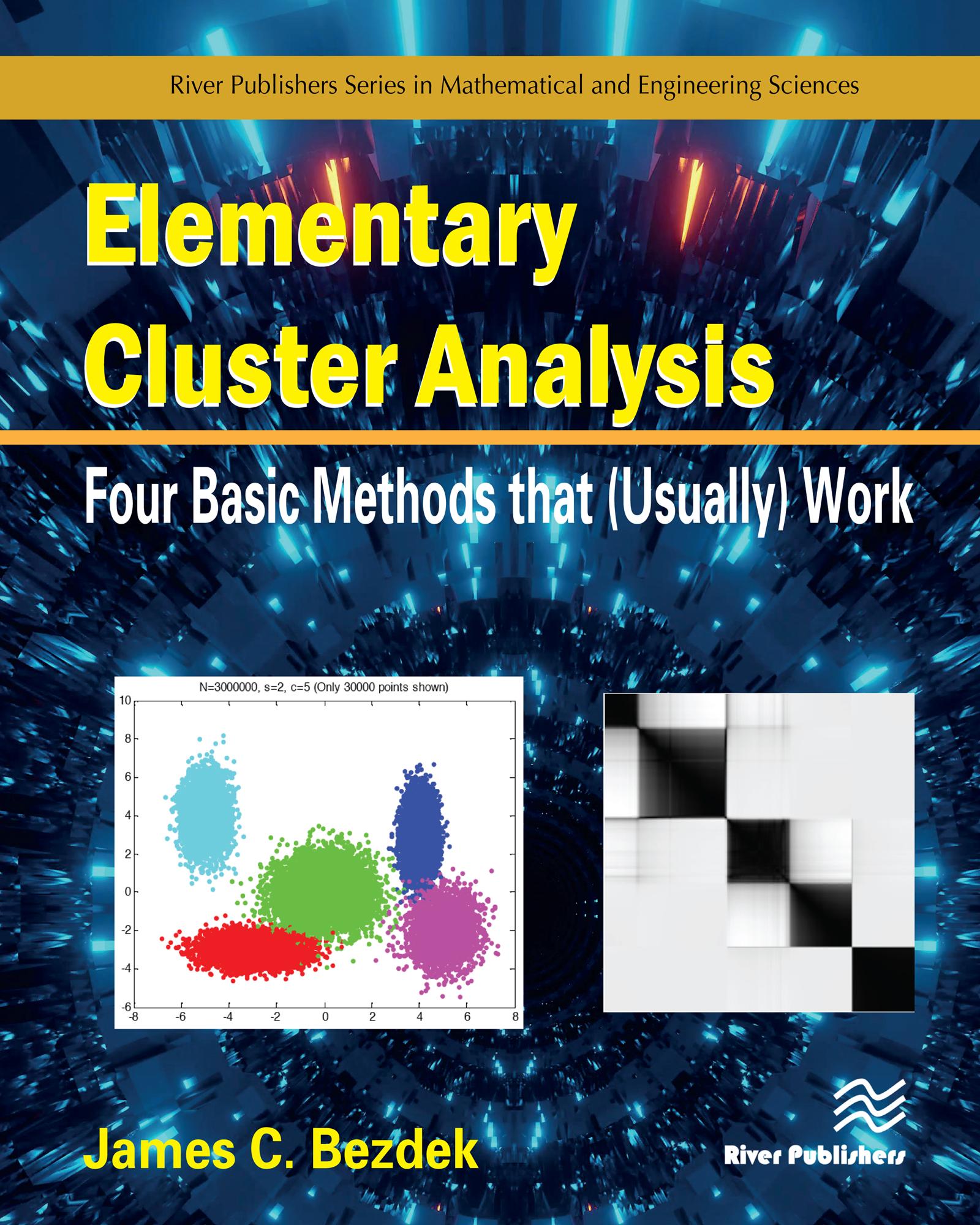
The availability of packaged clustering programs means that anyone with data can easily do cluster analysis on it. But many users of this technology don't fully appreciate its many hidden dangers. In today's world of "grab and go algorithms," part of my motivation for writing this book is to provide users with a set of cautionary tales about cluster analysis, for it is very much an art as well as a science, and it is easy to stumble if you don't understand its pitfalls. Indeed, it is easy to trip over them even if you do! The parenthetical word usually in the title is very important, because all clustering algorithms can and do fail from time to time.
Modern cluster analysis has become so technically intricate that it is often hard for the beginner or the non-specialist to appreciate and understand its many hidden dangers. Here's how Yogi Berra put it, and he was right:
In theory there's no difference between theory and practice. In practice, there is ~Yogi Berra
This book is a step backwards, to four classical methods for clustering in small, static data sets that have all withstood the tests of time. The youngest of the four methods is now almost 50 years old:
- Gaussian Mixture Decomposition (GMD, 1898)
- SAHN Clustering (principally single linkage (SL, 1909))
- Hard c-means (HCM, 1956, also widely known as (aka) "k-means")
- Fuzzy c-means (FCM, 1973, reduces to HCM in a certain limit)
The dates are the first known writing (to me, anyway) about these four models. I am (with apologies to Marvel Comics) very comfortable in calling HCM, FCM, GMD and SL the Fantastic Four.
Cluster analysis is a vast topic. The overall picture in clustering is quite overwhelming, so any attempt to swim at the deep end of the pool in even a very specialized subfield requires a lot of training. But we all start out at the shallow end (or at least that's where we should start!), and this book is aimed squarely at teaching toddlers not to be afraid of the water. There is no section of this book that, if explored in real depth, cannot be expanded into its own volume. So, if your needs are for an in-depth treatment of all the latest developments in any topic in this volume, the best I can do - what I will try to do anyway - is lead you to the pool, and show you where to jump in.
Płać wygodnie kartą, Klarną, Apple Pay lub Google Pay. Nie jesteś zadowolony? Zawsze masz 14-dniową gwarancję zwrotu pieniędzy. Więcej przeczytasz w naszych warunkach. Masz pytania? Napisz do nas na hello@memmo.org.
Memmo ułatwia naukę – gdziekolwiek jesteś na świecie. U nas znajdziesz podręczniki i sprytne narzędzia do nauki w jednym miejscu: streszczenia, quizy, podcasty i fiszki. A do tego Ted, Twój kumpel do nauki, który odpowie na wszystko, co Cię nurtuje. Ponad 50 000 studentów już tu się uczy – stworzone, byś uczył się szybciej i mniej stresował.