
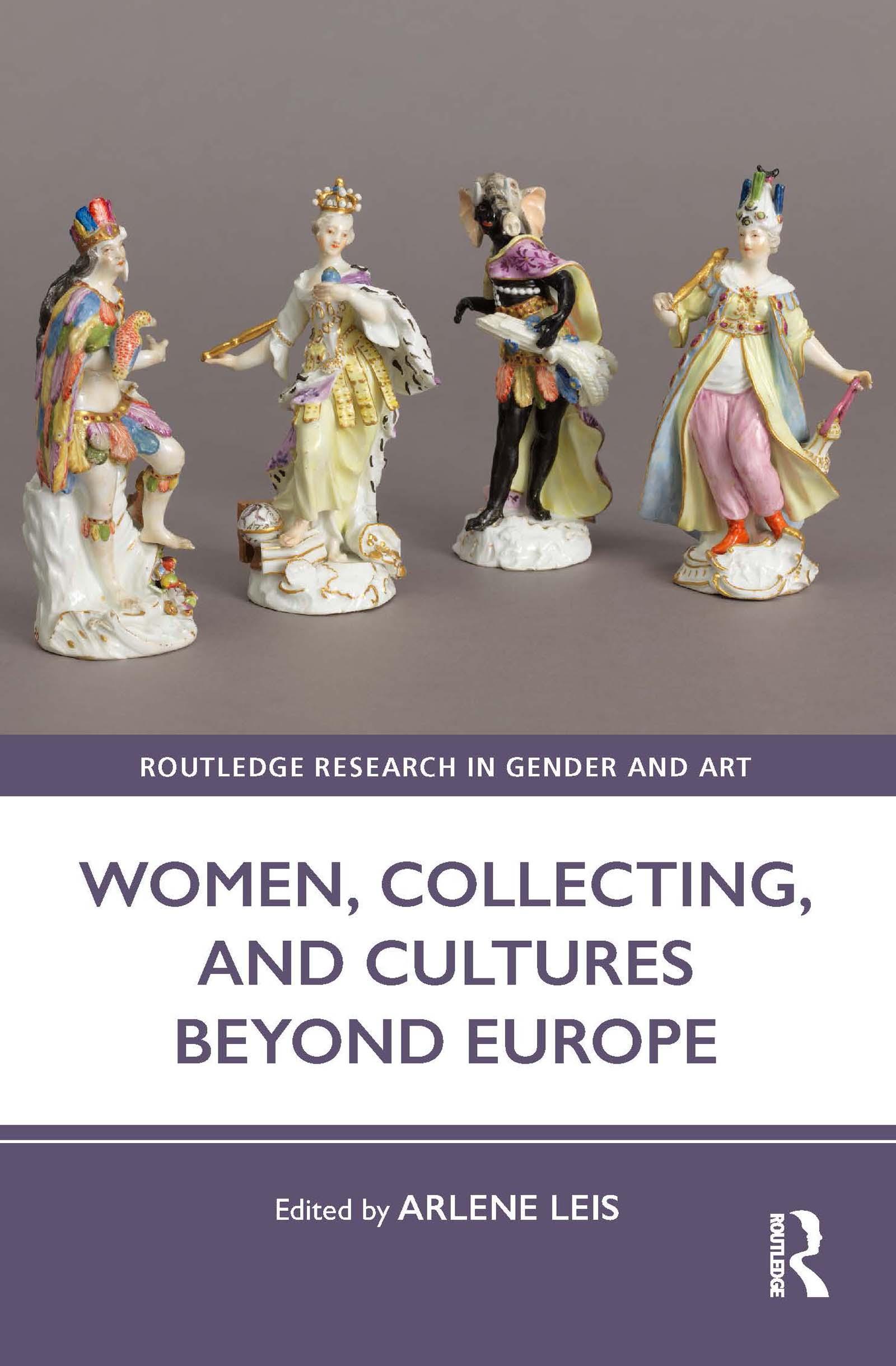
This book examines collecting around the world and how women have participated in and formed collections globally.
The edited volume builds on recent research and offers a wider lens through which to examine and challenge women’s collecting histories. Spanning from the seventeenth century to the twenty-first (although not organized chronologically) the research herein extends beyond European geographies and across time periods; it brings to light new research on how artificiallia and naturallia were collected, transported, exchanged, and/or displayed beyond Europe. Women, Collecting and Cultures Beyond Europe considers collections as points of contact that forged transcultural connections and knowledge exchange. Some authors focus mainly on collectors and what was collected, while others consider taxonomies, travel, patterns of consumption, migration, markets, and the after life of things. In its broad and interdisciplinary approach, this book amplifies women’s voices, and aims to position their collecting practices toward new transcultural directions, including women’s relation to distinct cultures, customs, and beliefs as well as exposing the challenges women faced when carving a place for themselves within global networks.
This study will be of interest to scholars working in collections and collecting, conservation, museum studies, art history, women’s studies, material and visual cultures, Indigenous studies, textile histories, global studies, history of science, social and cultural histories.
Płać wygodnie kartą, Klarną, Apple Pay lub Google Pay. Nie jesteś zadowolony? Zawsze masz 14-dniową gwarancję zwrotu pieniędzy. Więcej przeczytasz w naszych warunkach. Masz pytania? Napisz do nas na hello@memmo.org.
Memmo ułatwia naukę – gdziekolwiek jesteś na świecie. U nas znajdziesz podręczniki i sprytne narzędzia do nauki w jednym miejscu: streszczenia, quizy, podcasty i fiszki. A do tego Ted, Twój kumpel do nauki, który odpowie na wszystko, co Cię nurtuje. Ponad 50 000 studentów już tu się uczy – stworzone, byś uczył się szybciej i mniej stresował.