
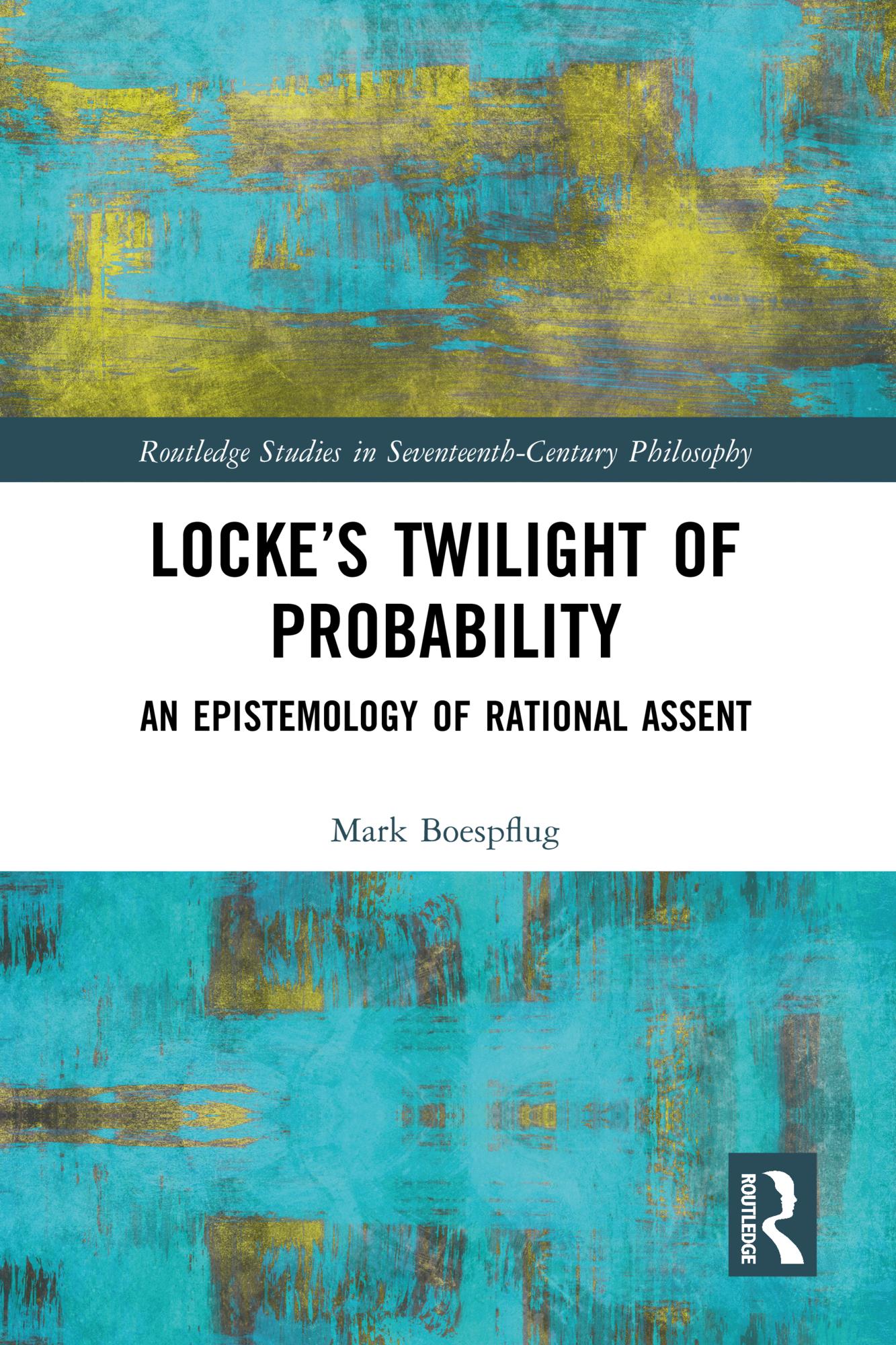
This book provides a systematic treatment of Locke’s theory of probable assent, and shows how the theory applies to Locke’s philosophy of science, moral epistemology, and religious epistemology.
There is a powerful case to be made that the most important dimension of Locke’s philosophy is his theory of rational probable assent, rather than his theory of knowledge. According to Locke, we largely live our lives in the “twilight of probability” rather than in “the sunshine of certain knowledge.” Locke’s theory of probable assent has far-reaching significance insofar as it contains a wealth of novel, independently interesting, and prescient elements that precede the modern field of formal epistemology. In this book, the author argues for the central role of probable assent in Locke’s philosophy. Locke’s theory of probable assent is based on an epistemic modesty that claims, roughly, that our cognitive abilities are limited and that we ought to carry ourselves in believing with due caution. This modesty motivates the author’s discussion of other aspects of Locke’s epistemology, notably his principle of proportionality, his doxastic involuntarism, his epistemological pragmatism, and his theory of testimony. The book concludes by connecting the theory of probable assent with Locke’s views on the limits of science, moral epistemology, and the rationality of faith.
Locke’s Twilight of Probability will appeal to scholars and advanced students working on Locke and the history of early modern philosophy.
Płać wygodnie kartą, Klarną, Apple Pay lub Google Pay. Nie jesteś zadowolony? Zawsze masz 14-dniową gwarancję zwrotu pieniędzy. Więcej przeczytasz w naszych warunkach. Masz pytania? Napisz do nas na hello@memmo.org.
Memmo ułatwia naukę – gdziekolwiek jesteś na świecie. U nas znajdziesz podręczniki i sprytne narzędzia do nauki w jednym miejscu: streszczenia, quizy, podcasty i fiszki. A do tego Ted, Twój kumpel do nauki, który odpowie na wszystko, co Cię nurtuje. Ponad 50 000 studentów już tu się uczy – stworzone, byś uczył się szybciej i mniej stresował.