
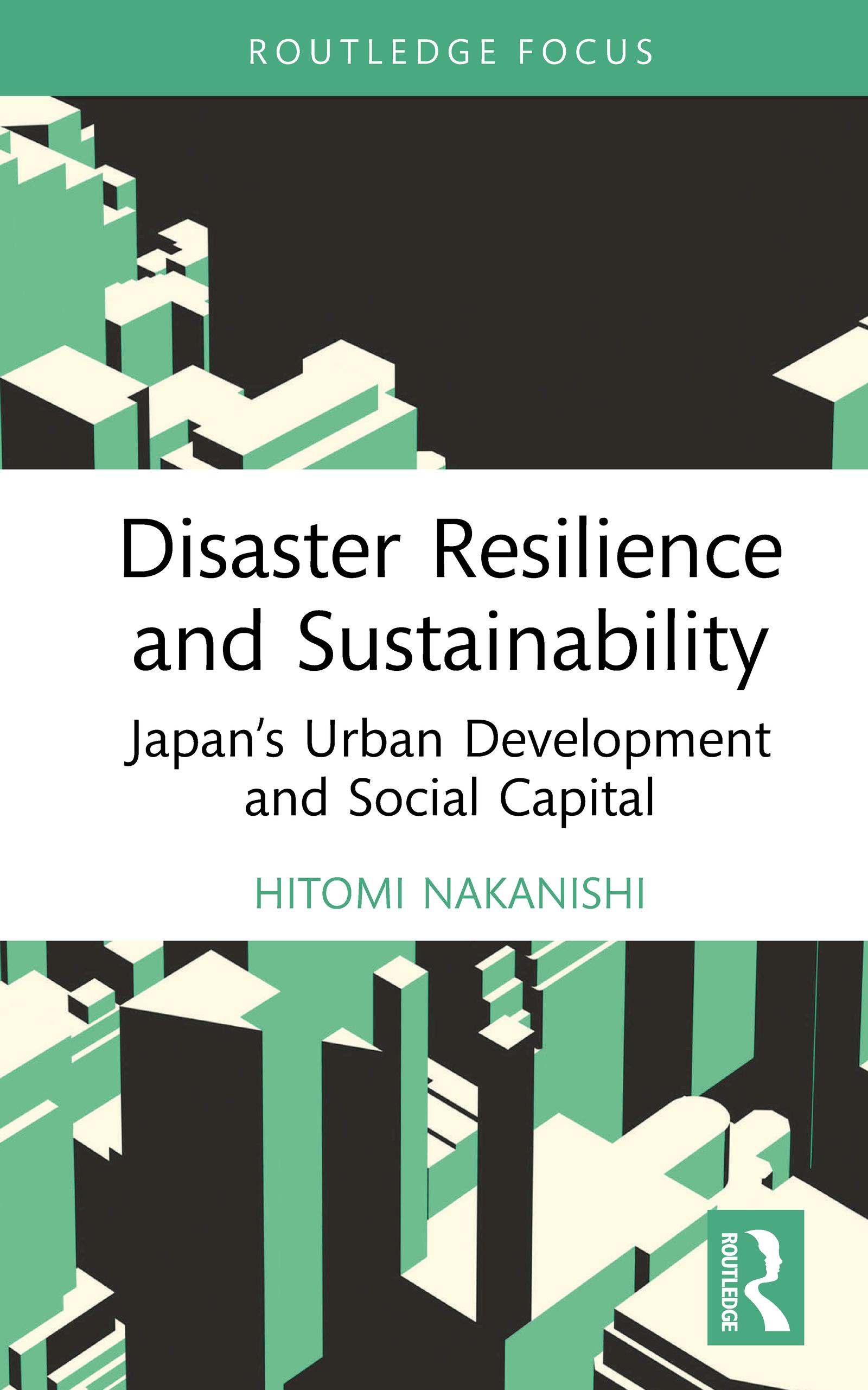
This book examines urban planning and infrastructure development in Japanese cities after the second world war as a way to mitigate the risks of disasters while pursuing sustainable development. It looks at the benefits of social capital and how communities organise to tackle problems during the recovery phase after a disaster. The book also illustrates with case studies to highlight community attitudes which improve recovery outcomes.
The book underlines challenges such as ageing and depopulation which Japan would face should the next disaster occur. These demographic shifts are causing difficulties among neighbourhood associations at a time when communities need to effectively support each other. Nakanishi explains why overcoming these societal issues is imperative for sustainability and the need for a comprehensive approach which would integrate smart technology.
This book will be of interest to scholars in city development and planning, urban studies and human geography, as well as those interested in building resilient communities.
Płać wygodnie kartą, Klarną, Apple Pay lub Google Pay. Nie jesteś zadowolony? Zawsze masz 14-dniową gwarancję zwrotu pieniędzy. Więcej przeczytasz w naszych warunkach. Masz pytania? Napisz do nas na hello@memmo.org.
Memmo ułatwia naukę – gdziekolwiek jesteś na świecie. U nas znajdziesz podręczniki i sprytne narzędzia do nauki w jednym miejscu: streszczenia, quizy, podcasty i fiszki. A do tego Ted, Twój kumpel do nauki, który odpowie na wszystko, co Cię nurtuje. Ponad 50 000 studentów już tu się uczy – stworzone, byś uczył się szybciej i mniej stresował.