
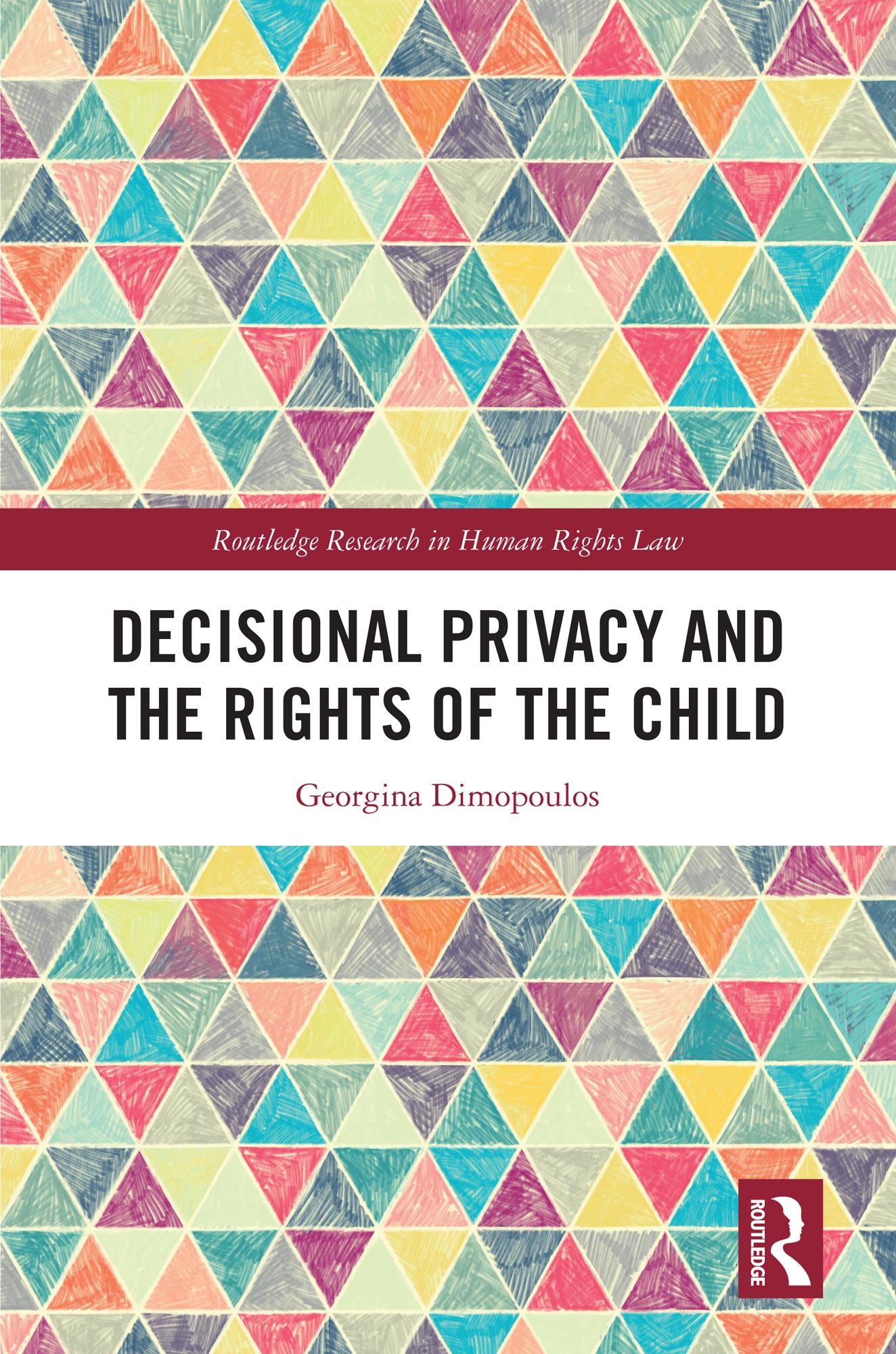
Decisional privacy gives individuals the freedom to act and make decisions about how they live their lives, without unjustifiable interference from other individuals or the state. This book advances a theory of a child’s right to decisional privacy. It draws on the framework of the United Nations Convention on the Rights of the Child and extends the work of respected children’s rights scholars to address a significant gap in understanding the interconnections between privacy, family law and children’s rights. It contextualises the theory through a case study: judicial proceedings concerning medical treatment for children experiencing gender dysphoria.
This work argues that recognising a substantive right to decisional privacy for children requires procedural rights that facilitate children’s meaningful participation in decision-making about their best interests. It also argues that, as courts have increasingly encroached upon decision-making regarding children’s medical treatment, they have denied the decisional privacy rights of transgender and gender diverse children.
This book will benefit researchers, students, judicial officers and practitioners in various jurisdictions worldwide grappling with the tensions between children’s rights, parental responsibilities and state duties in relation to children’s best interests, and with the challenge of better enabling and listening to children’s voices in decision-making processes.
Płać wygodnie kartą, Klarną, Apple Pay lub Google Pay. Nie jesteś zadowolony? Zawsze masz 14-dniową gwarancję zwrotu pieniędzy. Więcej przeczytasz w naszych warunkach. Masz pytania? Napisz do nas na hello@memmo.org.
Memmo ułatwia naukę – gdziekolwiek jesteś na świecie. U nas znajdziesz podręczniki i sprytne narzędzia do nauki w jednym miejscu: streszczenia, quizy, podcasty i fiszki. A do tego Ted, Twój kumpel do nauki, który odpowie na wszystko, co Cię nurtuje. Ponad 50 000 studentów już tu się uczy – stworzone, byś uczył się szybciej i mniej stresował.