
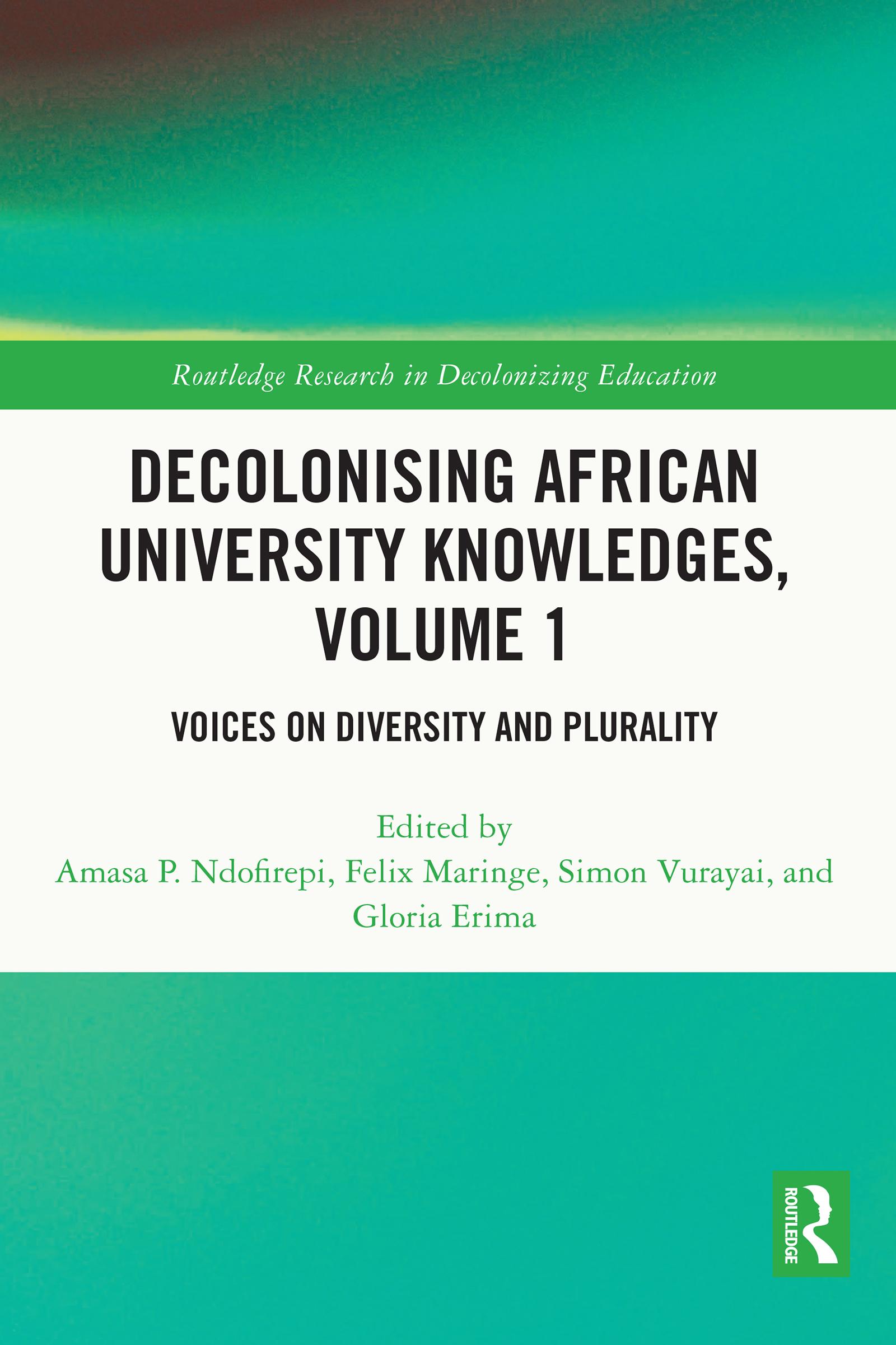
This timely work investigates the possibility of unyoking and decolonising African university knowledges from colonial relics. It claims that academics from socially, politically, and geographically underprivileged communities in the South need to have their voices heard outside of the global power structure.
The book argues that African universities need a relevant curriculum that is related to the cultural and environmental experiences of diverse African learners in order to empower themselves and transform the world. It is written by African scholars and is based on theoretical and practical debates on the epistemological complexities affecting and afflicting diversity in higher education in Africa. It examines who are the primary custodians of African university knowledges, as well as how this relates to forms of exclusion affecting women, the differently abled, the rural poor, and ethnic minorities, as well as the significance of the Fourth Industrial Revolution in the future of African universities. The book takes an epistemological approach to university teaching and learning, addressing issues such as decolonization and identity, social closure and diversity disputes, and the obstacles that come with the neoliberal paradigm.
The book will be necessary reading for academics, scholars, and postgraduate students in the fields of Sociology of Education, decolonising education, Inclusive Education, and Philosophy of Education, as it resonates with existing discourses.
Płać wygodnie kartą, Klarną, Apple Pay lub Google Pay. Nie jesteś zadowolony? Zawsze masz 14-dniową gwarancję zwrotu pieniędzy. Więcej przeczytasz w naszych warunkach. Masz pytania? Napisz do nas na hello@memmo.org.
Memmo ułatwia naukę – gdziekolwiek jesteś na świecie. U nas znajdziesz podręczniki i sprytne narzędzia do nauki w jednym miejscu: streszczenia, quizy, podcasty i fiszki. A do tego Ted, Twój kumpel do nauki, który odpowie na wszystko, co Cię nurtuje. Ponad 50 000 studentów już tu się uczy – stworzone, byś uczył się szybciej i mniej stresował.