
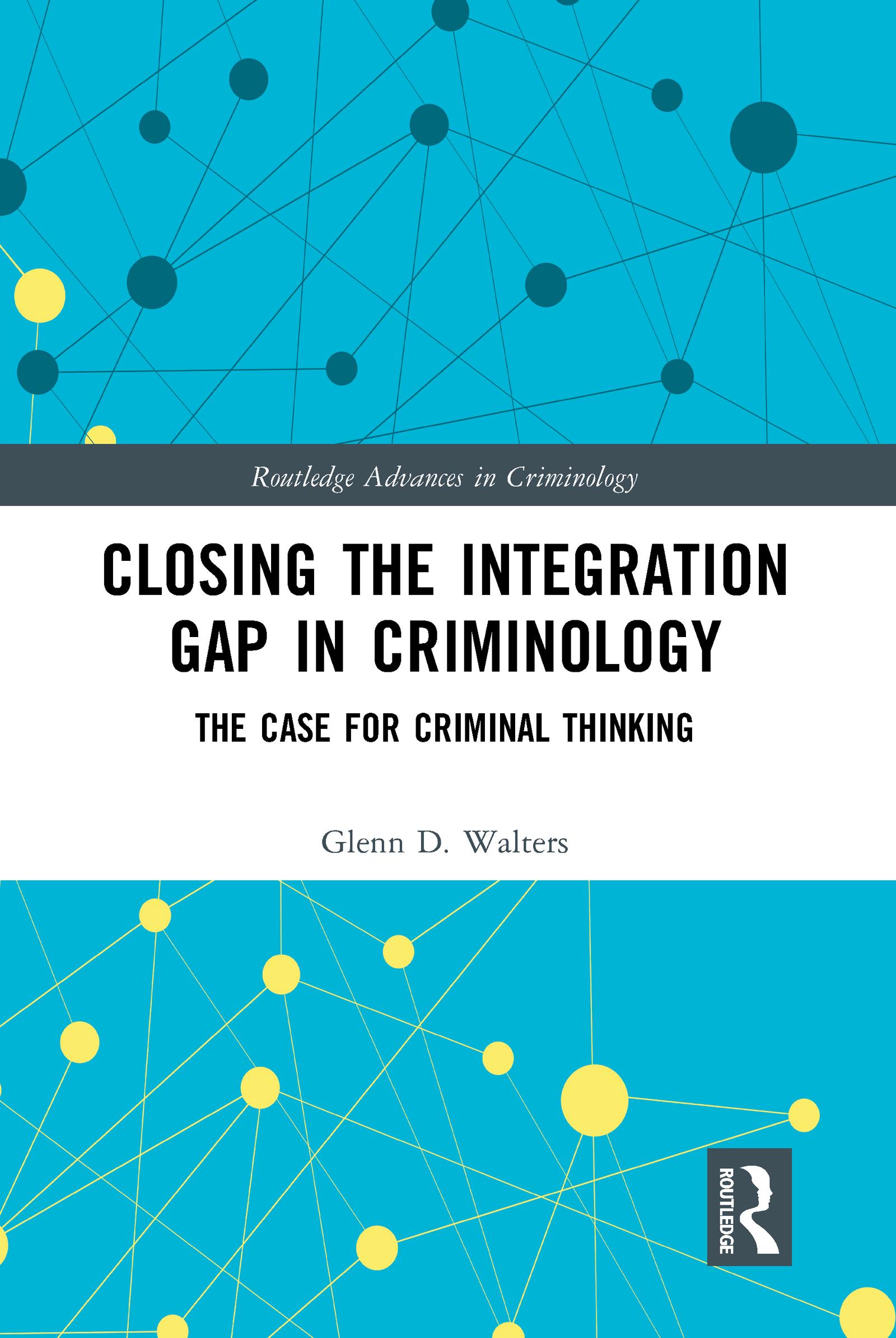
Closing the Integration Gap in Criminology: The Case for Criminal Thinking offers a multi -stage model of theory integration that organizes verified risk factors around the construct of criminal thinking to provide an exemplar working paradigm for criminology. In the model, once relevant risk factors have been identified, they are organized into triads —three-variable networks of antecedent, mediating, or moderating effects—and then those triads are combined into clusters of thematically related constructs.
While debate continues to rage over how to handle the burgeoning number of theories in criminology, little significant progress has been made in reducing the number of criminological theories. This book argues that theoretical integration is vital to the continued viability of criminological theory and to the growth and development of criminology as a scientific discipline. It posits that criminal thinking may be useful as a core variable in constructing a useful integrated theory for criminology, and maps out a plan for scholars to organize information for further study.
The innovative theoretical approach in this book is essential reading for students, academics, and researchers in both criminology and forensic psychology concerned with the reduction of crime via scientific inquiry.
Płać wygodnie kartą, Klarną, Apple Pay lub Google Pay. Nie jesteś zadowolony? Zawsze masz 14-dniową gwarancję zwrotu pieniędzy. Więcej przeczytasz w naszych warunkach. Masz pytania? Napisz do nas na hello@memmo.org.
Memmo ułatwia naukę – gdziekolwiek jesteś na świecie. U nas znajdziesz podręczniki i sprytne narzędzia do nauki w jednym miejscu: streszczenia, quizy, podcasty i fiszki. A do tego Ted, Twój kumpel do nauki, który odpowie na wszystko, co Cię nurtuje. Ponad 50 000 studentów już tu się uczy – stworzone, byś uczył się szybciej i mniej stresował.