
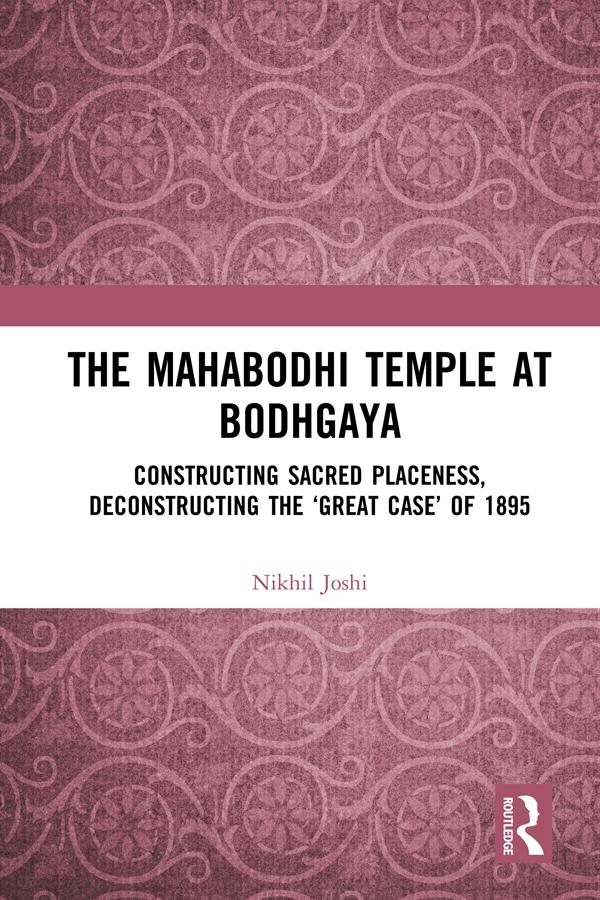
This volume investigates the historic and ethnographic accounts of the ongoing religious contestations over the status of the Mahābodhi Temple complex in Bodhgayā (a UNESCO World Heritage Site since 2002) and its surrounding landscape to critically analyse the working and construction of sacredness. It endeavours to make a ground-up assessment of ways in which human participants in the past and present respond to and interact with the Mahābodhi Temple and its surroundings.
The volume argues that sacredness goes beyond scriptural texts and archaeological remains. The Mahābodhi Temple is complex and its surrounding landscape is a ‘living’ heritage, which has been produced socially and constitutes differential densities of human involvement, attachment, and experience. Its significance lies mainly in the active interaction between religious architecture within its dynamic ritual settings. This endless contestation of sacredness and its meaning should not be seen as the ‘death’ of the Mahābodhi Temple; on the contrary, it illustrates the vitality of the ongoing debate on the meaning, understanding, and use of the sacred in the Indian context.
Please note: Taylor & Francis does not sell or distribute the Hardback in India, Pakistan, Nepal, Bhutan, Bangladesh and Sri Lanka
Płać wygodnie kartą, Klarną, Apple Pay lub Google Pay. Nie jesteś zadowolony? Zawsze masz 14-dniową gwarancję zwrotu pieniędzy. Więcej przeczytasz w naszych warunkach. Masz pytania? Napisz do nas na hello@memmo.org.
Memmo ułatwia naukę – gdziekolwiek jesteś na świecie. U nas znajdziesz podręczniki i sprytne narzędzia do nauki w jednym miejscu: streszczenia, quizy, podcasty i fiszki. A do tego Ted, Twój kumpel do nauki, który odpowie na wszystko, co Cię nurtuje. Ponad 50 000 studentów już tu się uczy – stworzone, byś uczył się szybciej i mniej stresował.