
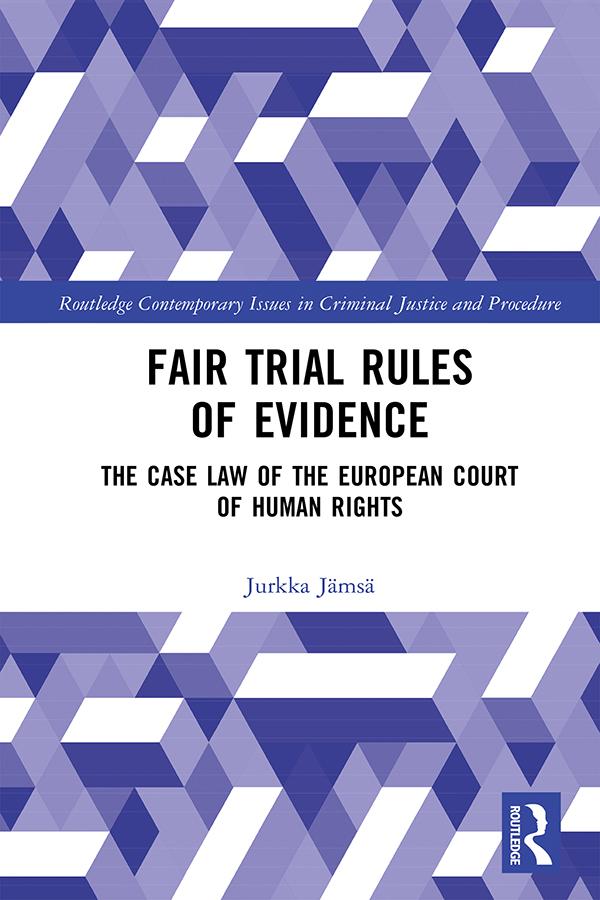
This book examines how the European Court of Human Rights approaches the matter of evidence, and how its judgments affect domestic law. The case law of the Court has affected many areas of law in Europe. One of these areas is the law of evidence, and especially criminal evidence. This work examines the key defence rights that may touch upon evidence, such as the right to adduce evidence, the right to disclosure, the privilege against self-incrimination and access to a lawyer, entrapment, and the right to cross-examine prosecution witnesses. It explains the relevant assessment criteria used by the Court and introduces a simple framework for understanding the various assessment models developed by the Court, including the Perna test, the Ibrahim criteria, and the sole or decisive rule. The book provides a comprehensive overview on the relevant case law, and will be a valuable asset for students and researchers, as well as practitioners, such as judges, prosecutors, and lawyers, working in the areas of criminal procedure and human rights.
Płać wygodnie kartą, Klarną, Apple Pay lub Google Pay. Nie jesteś zadowolony? Zawsze masz 14-dniową gwarancję zwrotu pieniędzy. Więcej przeczytasz w naszych warunkach. Masz pytania? Napisz do nas na hello@memmo.org.
Memmo ułatwia naukę – gdziekolwiek jesteś na świecie. U nas znajdziesz podręczniki i sprytne narzędzia do nauki w jednym miejscu: streszczenia, quizy, podcasty i fiszki. A do tego Ted, Twój kumpel do nauki, który odpowie na wszystko, co Cię nurtuje. Ponad 50 000 studentów już tu się uczy – stworzone, byś uczył się szybciej i mniej stresował.
Może Ci się spodobać
Kup książkę0