
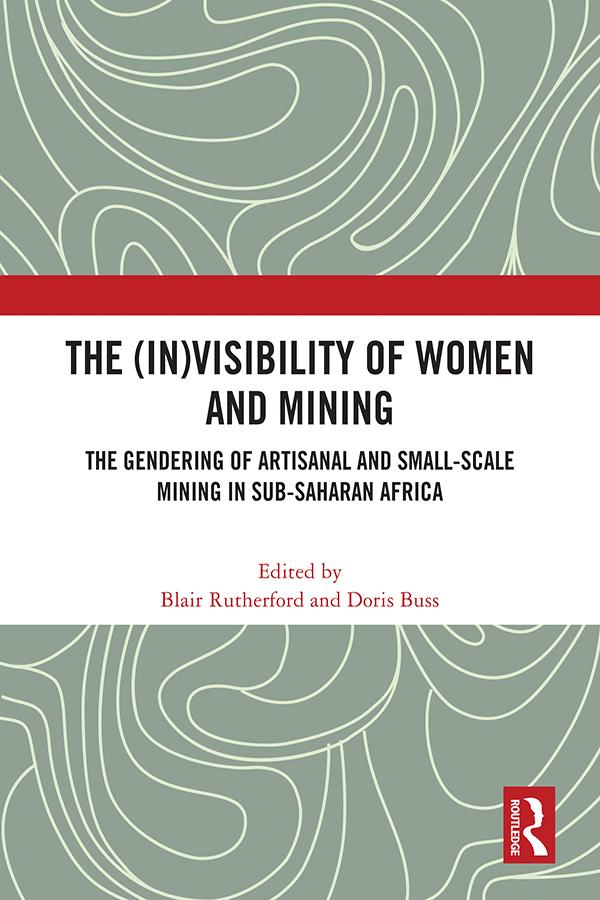
The chapters in this book provide in- depth insight into the gender norms and contexts in which women work in the expanding informal mining sector in sub- Saharan Africa.
Collectively, the research here provides a nuanced account of women’s livelihood strategies in artisanal and small- scale mining (ASM, as its generally known) in ways that challenge images of women— as either victimized by mining or empowered by mining livelihoods, or both— that tend to dominate the growing array of donor and policy interventions in this sector. The authors come from different disciplinary traditions— anthropology, economics, political science, mining engineering, law— but all place questions of gendered power front and centre in their analyses of sociocultural, institutional, economic and political relationships, practices and arrangements within which women navigate their mining livelihoods. The physical or representational presence (and sometimes absence) of women in ASM sites is a linking theme, with the chapters exploring different dimensions of mining and gender— the gendered divisions of labour, migration, land ownership, cultural norms, and gendered authority relations— but also how ‘women’ materialize and are seen and unseen in the growing array of transnational interventions in this sector.
The chapters in this book were originally published as a special issue of the Canadian Journal of African Studies.
Płać wygodnie kartą, Klarną, Apple Pay lub Google Pay. Nie jesteś zadowolony? Zawsze masz 14-dniową gwarancję zwrotu pieniędzy. Więcej przeczytasz w naszych warunkach. Masz pytania? Napisz do nas na hello@memmo.org.
Memmo ułatwia naukę – gdziekolwiek jesteś na świecie. U nas znajdziesz podręczniki i sprytne narzędzia do nauki w jednym miejscu: streszczenia, quizy, podcasty i fiszki. A do tego Ted, Twój kumpel do nauki, który odpowie na wszystko, co Cię nurtuje. Ponad 50 000 studentów już tu się uczy – stworzone, byś uczył się szybciej i mniej stresował.