
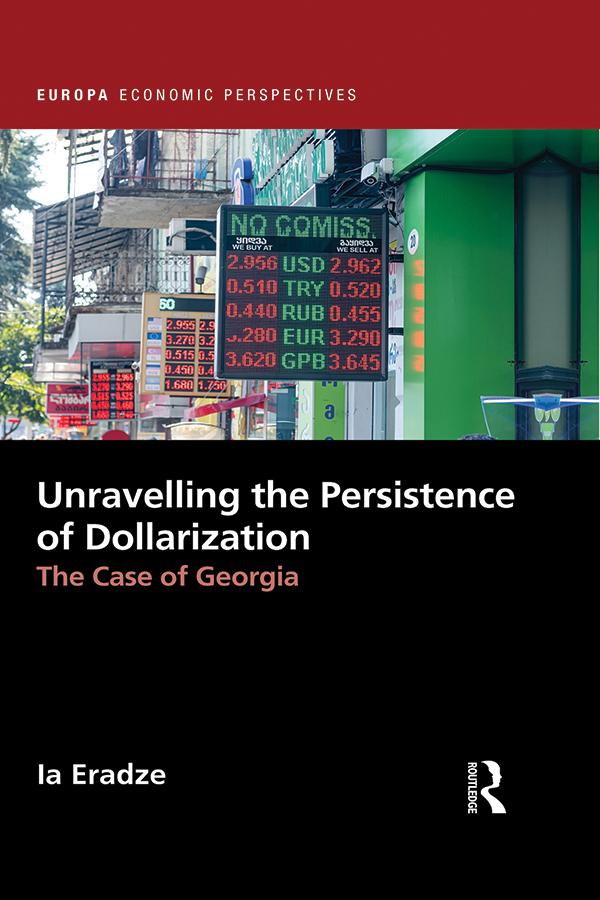
This volume engages with the roots, dimensions, and implications of foreign currency domination in states with a national currency. Referred to as unofficial dollarization in literature, this is a worldwide phenomenon among developing countries and has a long history.
This monograph provides a political economic analysis of dollarization in Georgia and is structured around three themes: the genesis of dollarization (1991–2003), the persistence of dollarization (2003–12) and the politicization of dollarization (2012–19). The case of Georgia is especially representative of the post-socialist transition states, but also has wider applicability.
A high level of dollarization is a significant barrier to economic growth, macroeconomic and political stability, functional monetary policy, as well as social welfare. The Covid-19 crisis and the increasing debt of developing countries in foreign currency exacerbate dollarization-related vulnerabilities for these economies.
This book will be of interest to postgraduate students in global/comparative political economy, development economics or transition economies, researchers in monetary sovereignty, central banking, exchange rate policies, currency hierarchy, money, financialization, and policy makers in dollarized countries and global institutions.
Płać wygodnie kartą, Klarną, Apple Pay lub Google Pay. Nie jesteś zadowolony? Zawsze masz 14-dniową gwarancję zwrotu pieniędzy. Więcej przeczytasz w naszych warunkach. Masz pytania? Napisz do nas na hello@memmo.org.
Memmo ułatwia naukę – gdziekolwiek jesteś na świecie. U nas znajdziesz podręczniki i sprytne narzędzia do nauki w jednym miejscu: streszczenia, quizy, podcasty i fiszki. A do tego Ted, Twój kumpel do nauki, który odpowie na wszystko, co Cię nurtuje. Ponad 50 000 studentów już tu się uczy – stworzone, byś uczył się szybciej i mniej stresował.