
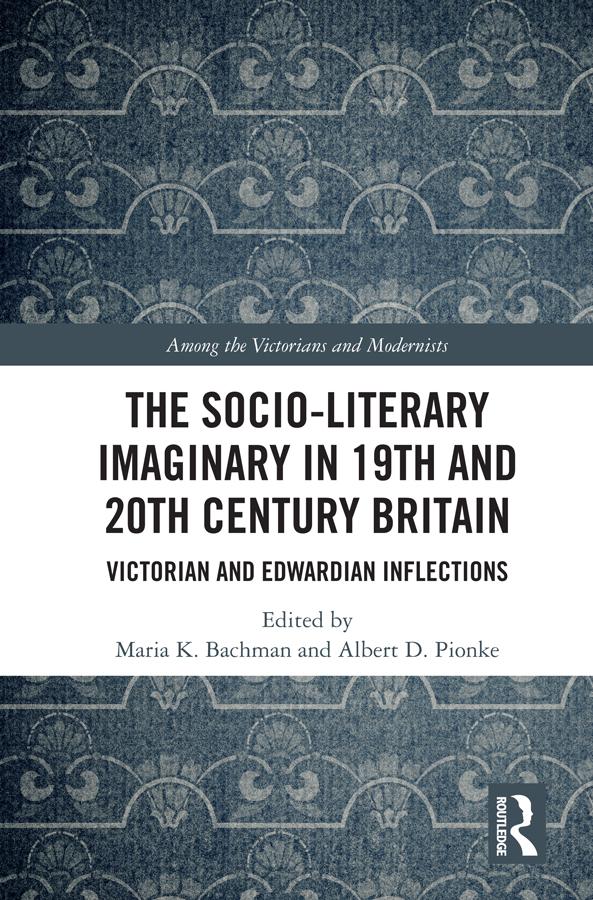
At once an invitation and a provocation, The Socio-Literary Imaginary represents the first collection of essays to illuminate the historically and intellectually complex relationship between literary studies and sociology in nineteenth and early twentieth-century Britain. During the ongoing emergence of what Thomas Carlyle, in "Signs of the Times" (1829), pejoratively labeled a new "Mechanical Age," Britain’s robust tradition of social thought was transformed by professionalization, institutionalization, and the birth of modern disciplinary fields. Writers and thinkers most committed to an approach grounded in empirical data and inductive reasoning, such as Harriet Martineau and John Stuart Mill, positioned themselves in relation to French positivist Auguste Comte’s recent neologism "la sociologie." Some Victorian and Edwardian novelists, George Eliot and John Galsworthy among them, became enthusiastic adopters of early sociological theory; others, including Charles Dickens and Ford Madox Ford, more idiosyncratically both complemented and competed with the "systems of society" proposed by their social scientific contemporaries. Chronologically bound within the period from the 1830s through the 1920s, this volume expansively reconstructs their expansive if never collective efforts. Individual essays focus on Comte, Dickens, Eliot, Ford, and Galsworthy, as well as Friedrich Engels, Elizabeth Gaskell, G. H. Lewes, Virginia Woolf, and others. The volume's introduction locates these author-specific contributions in the context of both the international intellectual history of sociology in Britain through the First World War and the interanimating intersections of sociological and literary theory from the work of Hippolyte Taine in the 1860s through the successive linguistic and digital turns of the late twentieth and early twenty-first centuries.
Płać wygodnie kartą, Klarną, Apple Pay lub Google Pay. Nie jesteś zadowolony? Zawsze masz 14-dniową gwarancję zwrotu pieniędzy. Więcej przeczytasz w naszych warunkach. Masz pytania? Napisz do nas na hello@memmo.org.
Memmo ułatwia naukę – gdziekolwiek jesteś na świecie. U nas znajdziesz podręczniki i sprytne narzędzia do nauki w jednym miejscu: streszczenia, quizy, podcasty i fiszki. A do tego Ted, Twój kumpel do nauki, który odpowie na wszystko, co Cię nurtuje. Ponad 50 000 studentów już tu się uczy – stworzone, byś uczył się szybciej i mniej stresował.