
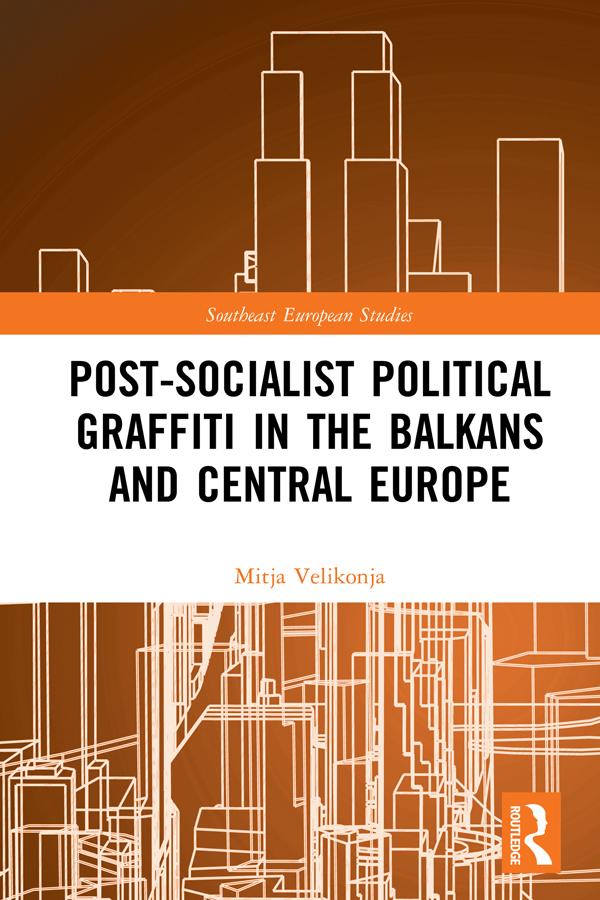
This theoretically and empirically grounded book uses case studies of political graffiti in the post-socialist Balkans and Central Europe to explore the use of graffiti as a subversive political media.
Despite the increasing global digitisation, graffiti remains widespread and popular, providing with a few words or images a vivid visual indication of cultural conditions, social dynamics and power structures in a society, and provoking a variety of reactions. Using qualitative and quantitative methods, as well as detailed interdisciplinary analyses of "patriotic," extreme-right, soccer-fan, nostalgic, and chauvinist graffiti and street art, it looks at why and by whom graffiti is used as political media and to/against whom it is directed. The book theorises discussions of political graffiti and street art to show different methodological approaches from four perspectives: context, author, the work itself, and audience.
It will be of interest to the growing body of literature focussing on (sub)cultural studies in the contemporary Balkans, transitology, visual cultural studies, art theory, anthropology, sociology, and studies of radical politics.
Płać wygodnie kartą, Klarną, Apple Pay lub Google Pay. Nie jesteś zadowolony? Zawsze masz 14-dniową gwarancję zwrotu pieniędzy. Więcej przeczytasz w naszych warunkach. Masz pytania? Napisz do nas na hello@memmo.org.
Memmo ułatwia naukę – gdziekolwiek jesteś na świecie. U nas znajdziesz podręczniki i sprytne narzędzia do nauki w jednym miejscu: streszczenia, quizy, podcasty i fiszki. A do tego Ted, Twój kumpel do nauki, który odpowie na wszystko, co Cię nurtuje. Ponad 50 000 studentów już tu się uczy – stworzone, byś uczył się szybciej i mniej stresował.