
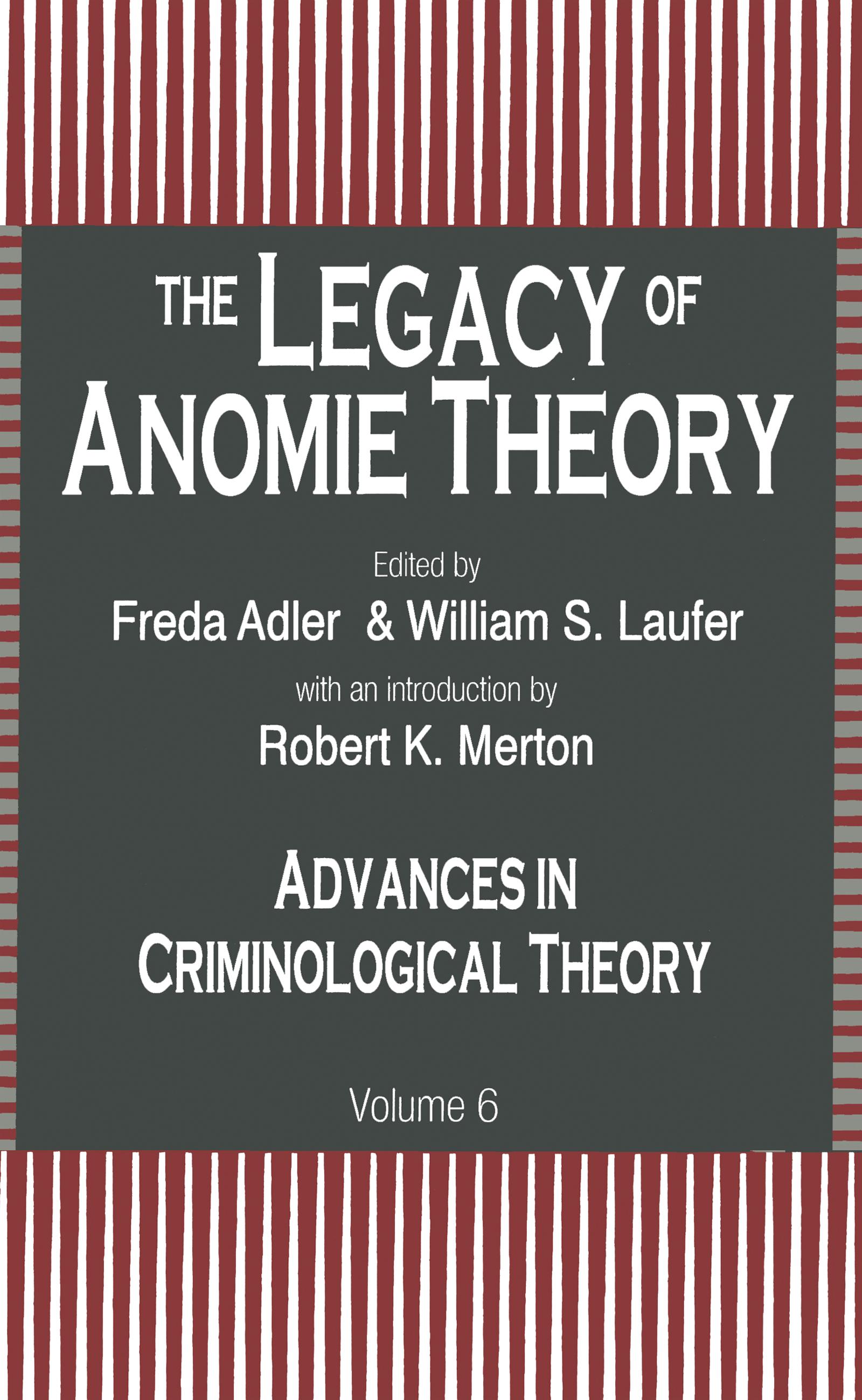
This sixth volume of Advances in Criminological Theory is testimony to a resurgent interest in anomie-strain theory, which began in the mid- 1980s and continues unabated. Contributors focus on the new body of empirical research and theorizing that has been added to the anomie tradition that extends from Durkheim to Merton. The first section is a major, 75-page statement by Robert K. Merton, examining the development of the anomie-and-opportunity-structure paradigm and its significance to criminology., The Legacy of Anomie Theoy assesses the theory's continuing usefulness, explains the relevance of Merton's concept of goals/means disparity as a psychological mechanism in the explanation of delinquency, and compares strain theory with social control theory. A macrosociological theoretical formulation is used to explain the association between societal development and crime rates. In other chapters, anomie is used to explain white-collar crime and to explore the symbiotic relationship between Chinese gangs and adult criminal organizations within the cultural, economic, and political context of the American-Chinese community.
Płać wygodnie kartą, Klarną, Apple Pay lub Google Pay. Nie jesteś zadowolony? Zawsze masz 14-dniową gwarancję zwrotu pieniędzy. Więcej przeczytasz w naszych warunkach. Masz pytania? Napisz do nas na hello@memmo.org.
Memmo ułatwia naukę – gdziekolwiek jesteś na świecie. U nas znajdziesz podręczniki i sprytne narzędzia do nauki w jednym miejscu: streszczenia, quizy, podcasty i fiszki. A do tego Ted, Twój kumpel do nauki, który odpowie na wszystko, co Cię nurtuje. Ponad 50 000 studentów już tu się uczy – stworzone, byś uczył się szybciej i mniej stresował.