
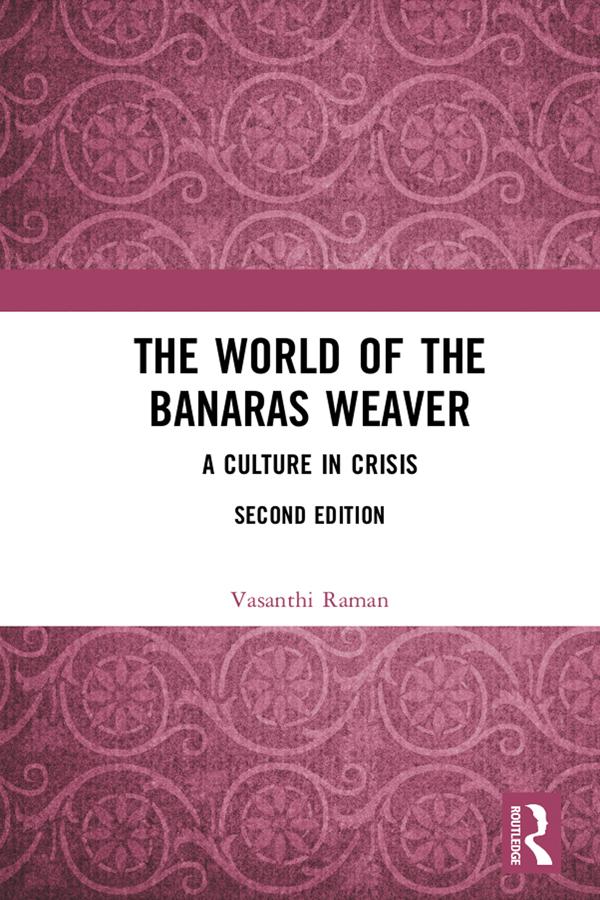
This book is a fascinating investigation into how communalism plays out in everyday India. Using the metaphor of tana-bana – the warp and the weft of the Banarasi sari – the author reproduces the interwoven life of Hindu-Muslim relations in the Banarasi sari industry.
As the city of Banaras in Uttar Pradesh takes the centre stage as the site of this ethnographic study, the author documents the dissonance in representations of Banaras as a sacred Hindu city and its essential plural character. The volume
• examines in-depth the lives of Banaras Muslims in the social and economic matrix of the sari industry;
• highlights how women negotiate between home, family and their place in the artisanal industry; and
• sheds light on their fast-changing world of the Banaras weavers and their responses to it.
With a new introduction and fresh data, the second edition looks at the subsequent developments in the weaving industry over the last decade. This volume will be of immense interest to scholars and researchers of social anthropology, gender studies, development studies, sociology and South Asian studies.
Płać wygodnie kartą, Klarną, Apple Pay lub Google Pay. Nie jesteś zadowolony? Zawsze masz 14-dniową gwarancję zwrotu pieniędzy. Więcej przeczytasz w naszych warunkach. Masz pytania? Napisz do nas na hello@memmo.org.
Memmo ułatwia naukę – gdziekolwiek jesteś na świecie. U nas znajdziesz podręczniki i sprytne narzędzia do nauki w jednym miejscu: streszczenia, quizy, podcasty i fiszki. A do tego Ted, Twój kumpel do nauki, który odpowie na wszystko, co Cię nurtuje. Ponad 50 000 studentów już tu się uczy – stworzone, byś uczył się szybciej i mniej stresował.