
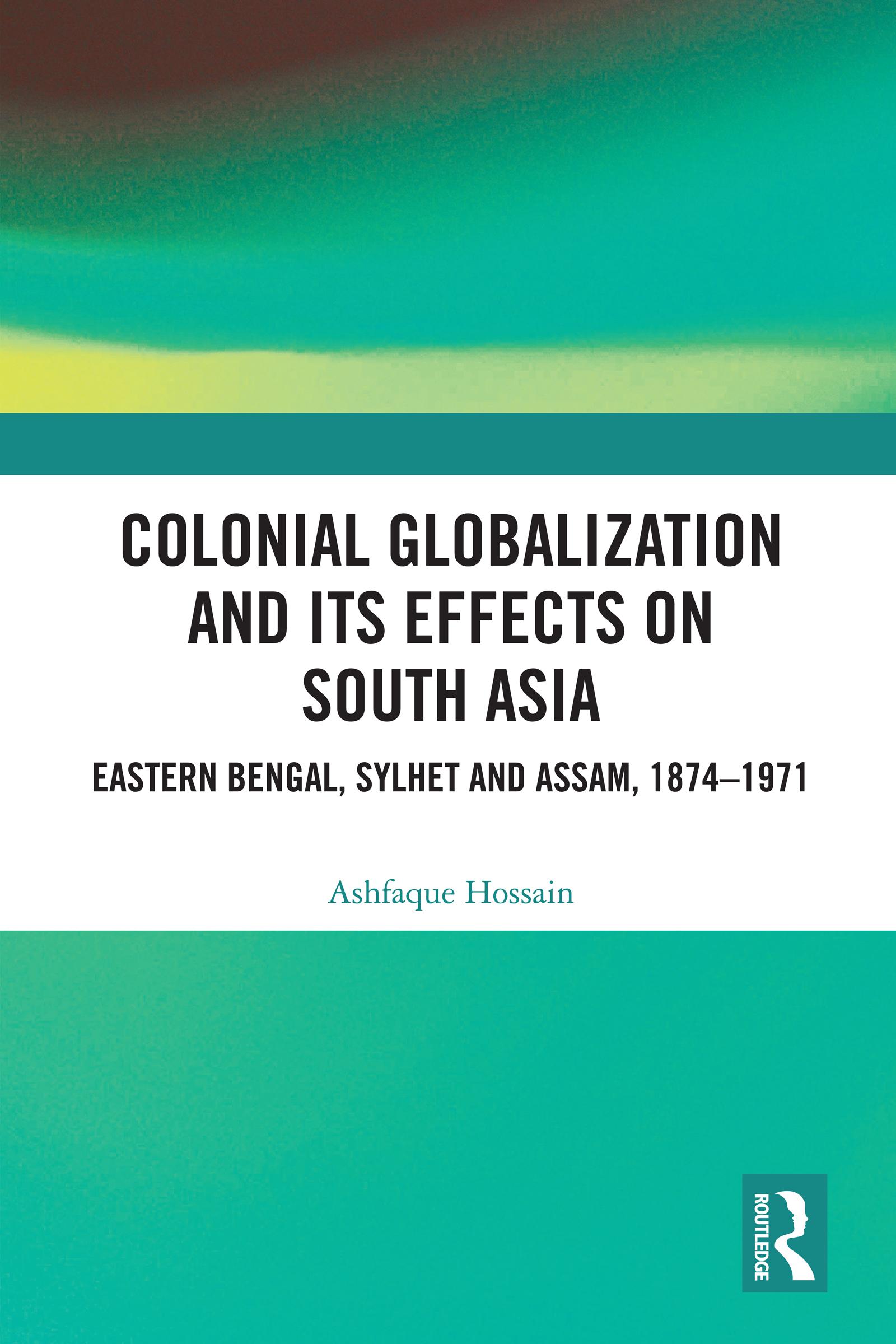
This book investigates the concept of colonial globalization to show how knowledge, information, technology, capital and labour have the potential to move freely across the world. It studies the experience of globalization "from below", rather than from the perspective of the British imperial centre.
Focusing on the impact of colonial globalization on the people of Sylhet, East Bengal, and Assam, the volume seeks to analyse the "global" as a process in constant negotiation with the "local". It discusses various issues such as the opening of the hills of Sylhet and Assam for tea plantation. the involvement of local entrepreneurs with overseas planters in the global tea industry, the phenomenon of regional labour migration into eastern India, and Sylheti seamen and their involvement in the merchant marine. The author also highlights the contribution of peasants, labourers and women in the independence movement and the irreversible changes that they brought about.
A unique contribution to the study of colonial globalisation, this volume will be indispensable for students and researchers of colonial history, modern Indian history, Northeast India, border studies, globalization, political economy, minority studies, globalization studies, third world studies, colonialism and postcolonialism, and South Asian studies.
Płać wygodnie kartą, Klarną, Apple Pay lub Google Pay. Nie jesteś zadowolony? Zawsze masz 14-dniową gwarancję zwrotu pieniędzy. Więcej przeczytasz w naszych warunkach. Masz pytania? Napisz do nas na hello@memmo.org.
Memmo ułatwia naukę – gdziekolwiek jesteś na świecie. U nas znajdziesz podręczniki i sprytne narzędzia do nauki w jednym miejscu: streszczenia, quizy, podcasty i fiszki. A do tego Ted, Twój kumpel do nauki, który odpowie na wszystko, co Cię nurtuje. Ponad 50 000 studentów już tu się uczy – stworzone, byś uczył się szybciej i mniej stresował.