
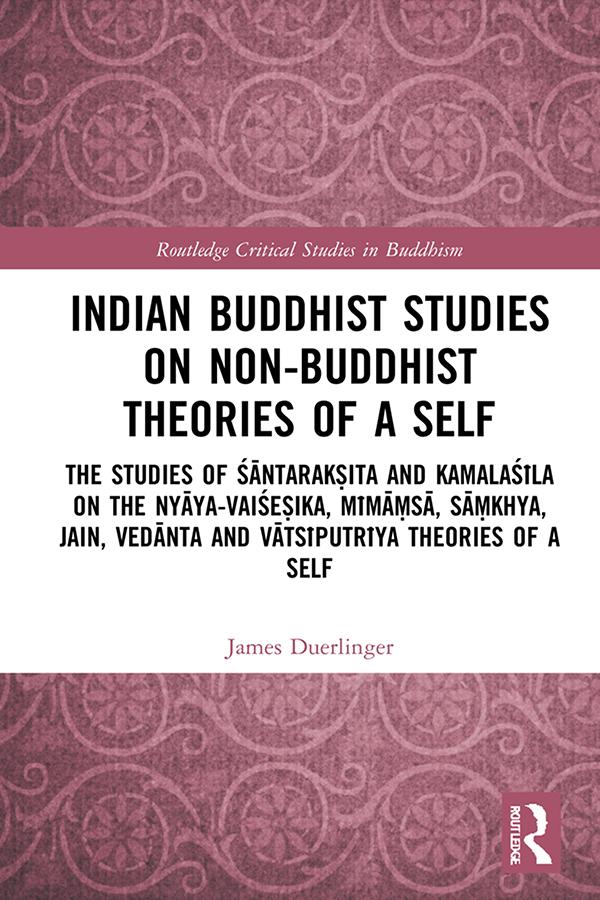
This book addresses prominent views on the nature of the self in Indian philosophical traditions and presents Buddhist critiques of those conceptions through the translation and commentary on Śāntarakṣita’s chapter in the Tattvasaṃgraha on theories of a self and Kamala-śīla’s commentary on it in his Tattvasaṃgrahapañjikā.
The book is comprised of an introduction presenting the theories of a self in the Indian Buddhist Middle Way philosophies and in the different philosophical schools Śāntarakṣita and Kamalaśīla study and offers a background for the translation. The detailed translation that follows reveals the theories of a self that are explained in the philosophical schools in India called the Nyāya-Vaiśeṣika, Mīmāṃsā, Sāṃkhya, Jain, Advaita Vedanta, and Vātsīputrīya. It is complemented by a thorough commentary by the author which brings the text to light for a modern audience.
A useful contribution to Indian philosophy and global philosophy, this book will be of interest to researchers in the fields of Philosophy, Religious Studies and Buddhist Studies.
Płać wygodnie kartą, Klarną, Apple Pay lub Google Pay. Nie jesteś zadowolony? Zawsze masz 14-dniową gwarancję zwrotu pieniędzy. Więcej przeczytasz w naszych warunkach. Masz pytania? Napisz do nas na hello@memmo.org.
Memmo ułatwia naukę – gdziekolwiek jesteś na świecie. U nas znajdziesz podręczniki i sprytne narzędzia do nauki w jednym miejscu: streszczenia, quizy, podcasty i fiszki. A do tego Ted, Twój kumpel do nauki, który odpowie na wszystko, co Cię nurtuje. Ponad 50 000 studentów już tu się uczy – stworzone, byś uczył się szybciej i mniej stresował.