
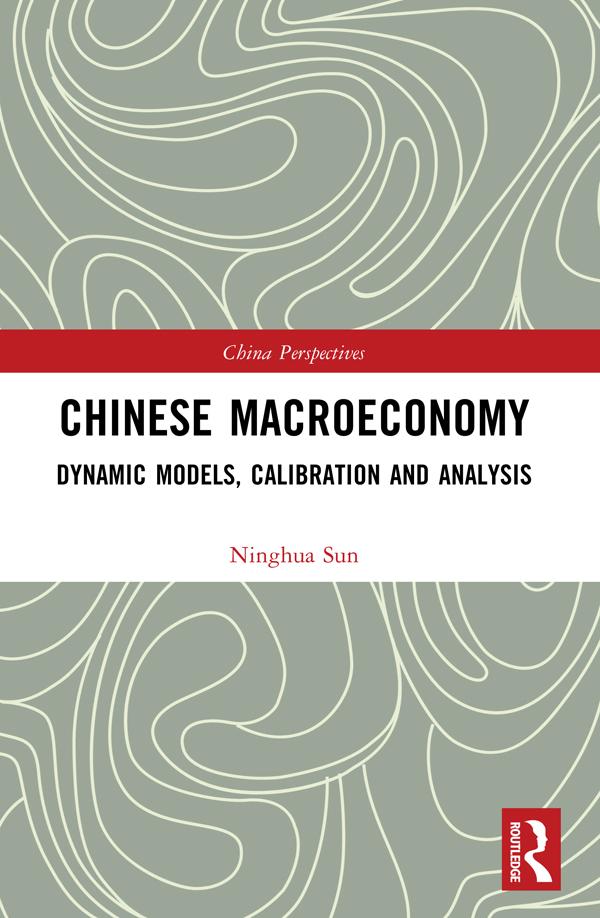
This book deploys quantitative methods to focus on the operation of the Chinese economy as a whole since the reforms in 1978, by combining a range of mathematical, algorithmic and computational methods to analyze rich empirical data, seeking to demonstrate the long-term economic trends and dynamics of economic growth and fluctuations in China.
To answer the core question of how the Chinese economy became what it is, the author draws on dynamic stochastic general equilibrium (DSGE) modeling and calibration, while also exploring microfoundations to reveal optimization behavior within a context of economic change at the macrolevel. The book examines internal shocks in the Chinese economic system, including institutional changes, credit policy and monetary policy, which are all closely associated with issues of enhancing the coordination and sustainability of development and the effectiveness and efficiency of policy reforms. It also elaborates on China’s close interactions with the global economy, shedding light on the dynamic effects of energy prices, the Chinese Yuan exchange rate and foreign direct investment.
This book is an essential reference for researchers and students interested in the Chinese economy, methods of microeconomic dynamics and macroeconomic theory and policy.
Płać wygodnie kartą, Klarną, Apple Pay lub Google Pay. Nie jesteś zadowolony? Zawsze masz 14-dniową gwarancję zwrotu pieniędzy. Więcej przeczytasz w naszych warunkach. Masz pytania? Napisz do nas na hello@memmo.org.
Memmo ułatwia naukę – gdziekolwiek jesteś na świecie. U nas znajdziesz podręczniki i sprytne narzędzia do nauki w jednym miejscu: streszczenia, quizy, podcasty i fiszki. A do tego Ted, Twój kumpel do nauki, który odpowie na wszystko, co Cię nurtuje. Ponad 50 000 studentów już tu się uczy – stworzone, byś uczył się szybciej i mniej stresował.